How Zen Monasteries Tell Time
The person in charge of keeping time in a Zen temple is called the jikido. After the final evening meditation, at all the zendos where I’ve sat in the US, the jikido chants the evening gatha:
Let me respectfully remind you:
Life and death are of supreme importance.
Time swiftly passes by and opportunity is lost.
Each of us should strive to awaken.
Awaken! Take heed:
Do not squander your life.
Here’s a recording of me chanting:
I love these spooky words and the way the jikido moans the final line.
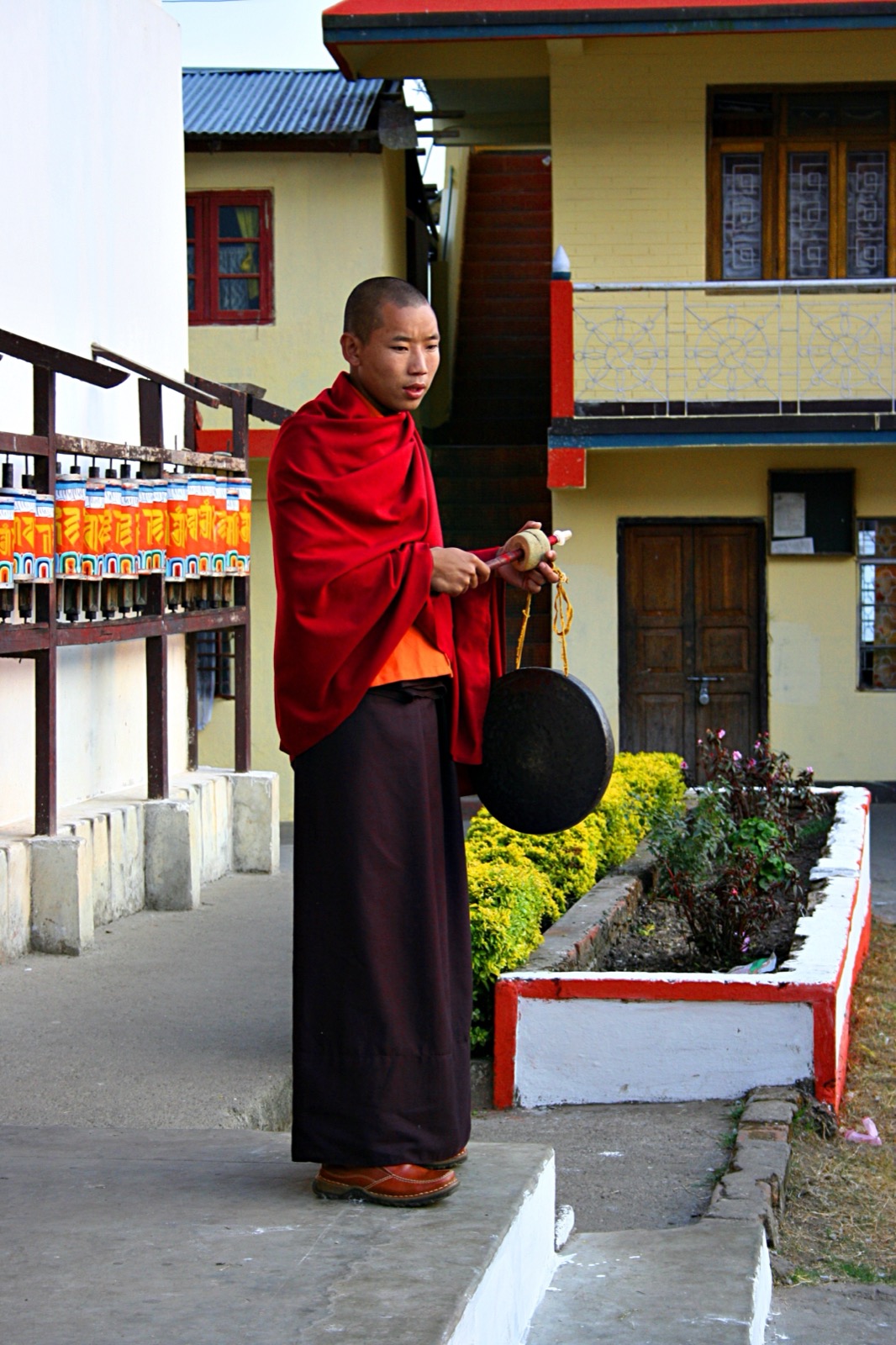
Before this, the jikido hits a drum and bell: one drum strike for each hour of the clock, and one bell strike for each 20-minute segment after the hour. For example, at 7:30pm, I’d hit the drum seven times and the bell twice, because it’s the second third of the hour. I always assumed this came from some medieval Chinese timekeeping protocol. But they didn’t divide the day into hours like we do, right? And how does the jikido know what time it is?
In 1245, when Dōgen had just founded the monastery Eiheiji, he wrote a set of rules called Bendōhō (“How to Train in Buddhism”). Bendōhō lays out the daily life of the meditation hall: when to put on your robe, how to fold your bedding, how to hold your hands while walking. He wrote:
The drum and bell are struck at the end of evening Zazen in order to tell the time at which the Abbot wishes to do his morning meditation; both hour and minutes are struck and then the han is struck thrice.
Dōgen wrote that the han strike is what releases the trainees to fold their robes and prepare for bed. We use the same instruments to tell time, 800 years later on the other side of the planet. But in Bendōhō the bell and drum don’t announce the current time, they announce when meditation will start the next morning. I understand why this announcement is encoded nonverbally: one of monastic life’s great beauties is the way we coordinate without the disruption of words. But what use is this announcement?—the monks didn’t have alarm clocks. The jikido woke them in the morning with the temple bell. (I had this job for a few months when I lived at Yokoji. I woke before everyone and rang the huge bell in the early morning darkness. It was glorious.)
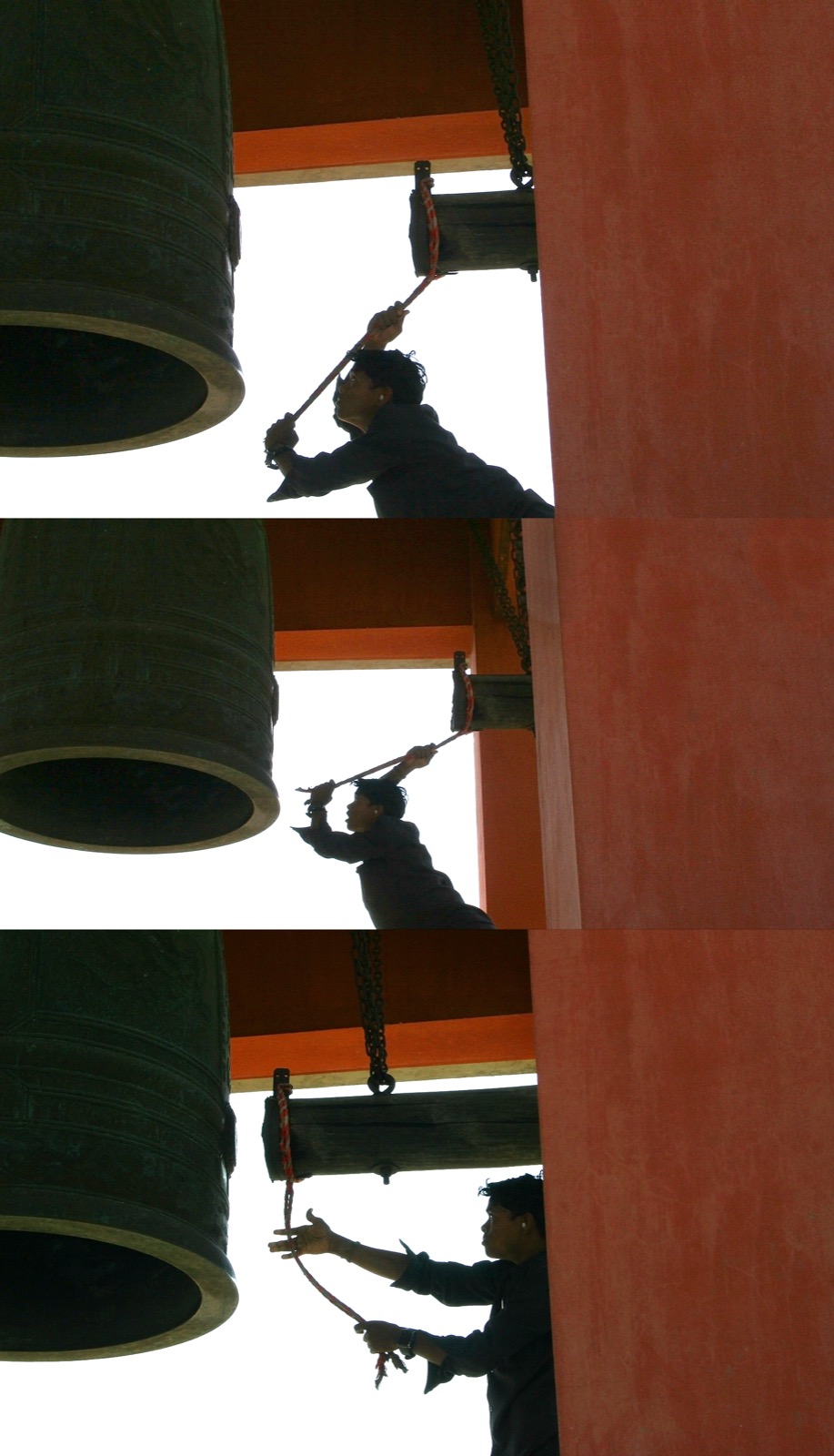
Dōgen says that wakeup varies with the abbot’s preference: “The han in front of the Chief Junior’s room is usually struck at three in the morning… however, the exact hour depends upon the Abbot’s wishes.” I can imagine the monks’ suppressed groans when the drum announced they’d be getting up at 2am instead.
The Chinese origin #
Dōgen didn’t invent this system. He traveled to China in 1223 to learn the true, traditional Zen and bring it back to Japan. His monastic rules are modeled on the Chinese Chanyuan Qinggui (“Pure Rules for the Zen Monastery”), which says:
Whenever the bell, drum, or fish-shaped board is struck, the monks must know what they are expected to do. At the fifth gēng, the big bell is tolled as a signal for the monks to wake up and rise from bed.
What’s a gēng? It’s one fifth of the night in medieval China. Each gēng was struck on a drum in a drum tower at the center of a city or by a night watchman on his rounds; the diǎn, one sixth of a gēng, was struck on a bell, at a bell tower or a local temple. Every Chinese city had its paired drum and bell towers, and every monastery had a smaller drum and bell tower too. So my understanding is that temple bells in Chinese cities helped mark the diǎn, and inside the monastery walls the same drum-and-bell logic regulated the monks’ day.
So our practice of playing hours on the drum and smaller units on the bell doesn’t descend from just Dōgen, but from prior centuries of Chinese time announcements. The numbers got adapted to the 24-hour day, but the structure is intact.
The wider Edo-period Japanese public also inherited the Chinese pattern. Bells installed at temples around Edo were struck at each toki (one of twelve daily periods, roughly two hours each), with a count that descended 9, 8, 7, 6, 5, 4 through the day and then began again. The bell count was the public clock.
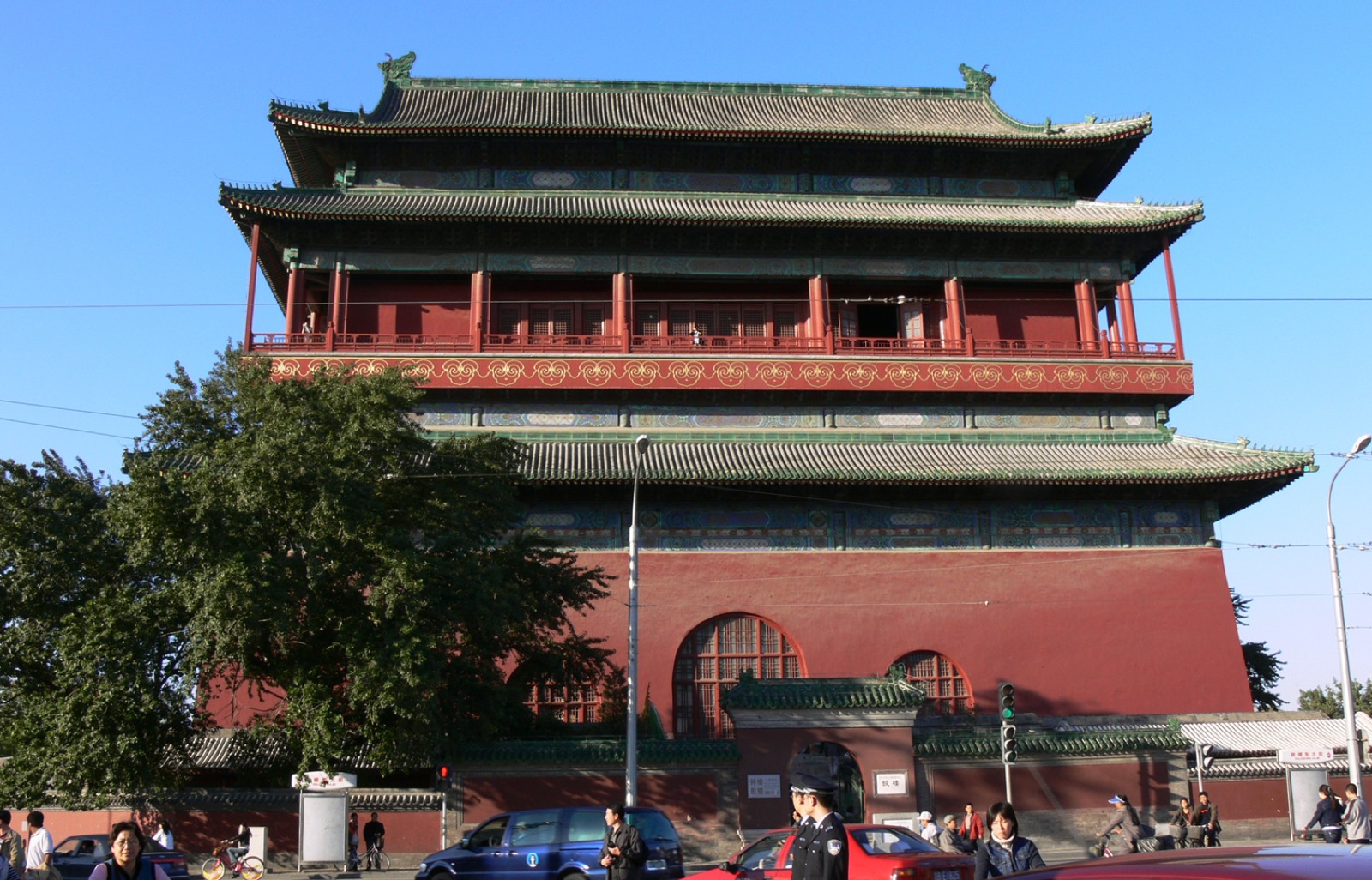
The Beijing Drum Tower was the city’s official timekeeper from 1272 until early in the twentieth century. It is paired with a bell tower behind it. Source.
How do they know the time? #
I assumed the drummers and bell-ringers must be reading a master clock somewhere—a clepsydra or a pendulum, or a sundial during the day. But it’s cooler than that: incense clocks.
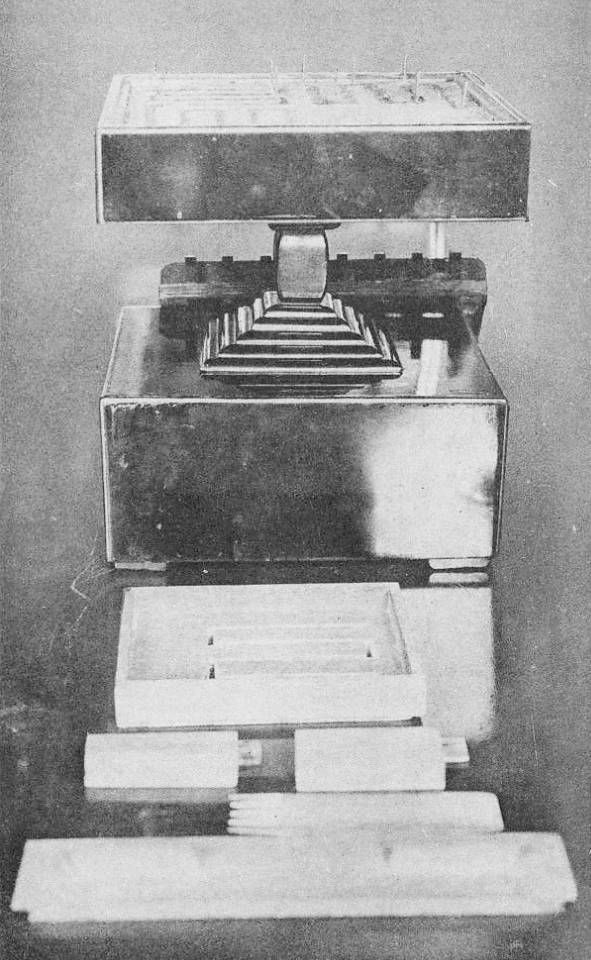
Calibrated incense sticks, manufactured to burn at a known rate, were used in Chinese Buddhist monasteries starting in the Song dynasty or earlier. Some Chinese clocks used powdered incense laid out in lines that formed characters. Different kinds of incense indicated subdivisions of time by varying scents! Dogen referred to the length of a meditation period as one stick of incense. The Seiko Museum says incense clocks were used in Japan to measure, among other things, the wages owed to a geisha.
I don’t know when we adapted the drum-and-bell system from gēngs and diǎns to hours and thirds of hours, or from announcing the wakeup time to announcing the current time. Zen was transmitted from Japan to the US by teachers to students, not written instruction manuals. Monks like Suzuki Roshi and Maezumi Roshi taught their American students the same way they’d been taught, side by side in the zendo. At the Yokoji monastery in California, the liturgy master taught me to play the drum and bell at night, and I’ve taught other people. Much of what is now standard American Zen practice was never written down. The Eihei Shingi gives us an incomplete thirteenth-century snapshot, our practice gives us a present-day one, and the centuries between are mostly forgotten.