Bengaluru
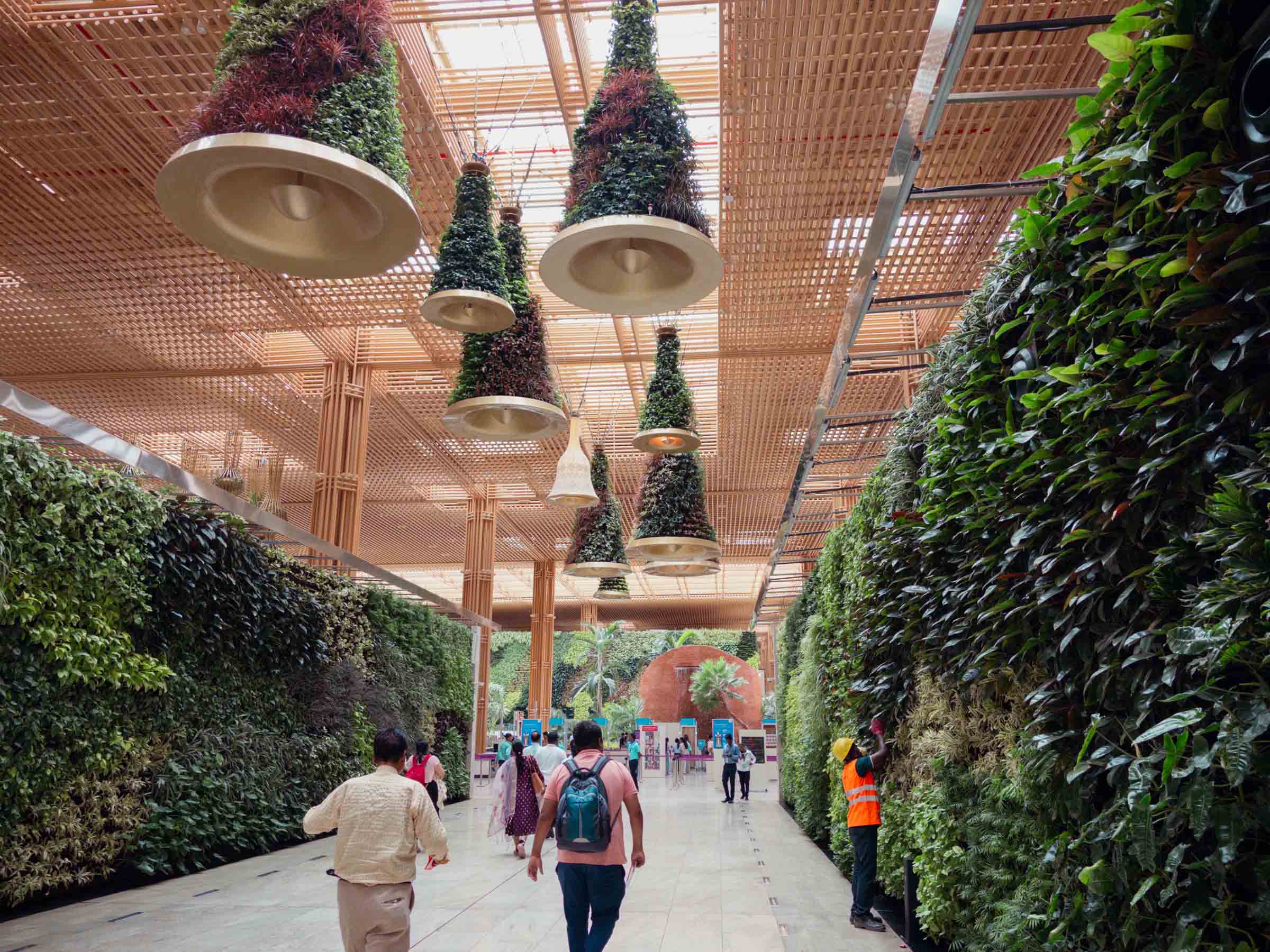
After a short trek in Nepal and a few days in Kathmandu, I flew to Bengaluru (which everyone still seems to call Bangalore) for the SIGMOD conference. The opulence of the airport shocked me. The terminal was a massive hanging garden, with living plants lining all the walls, bamboo-like pillars supporting the ceiling, and a tremendous fountain in the center. I didn’t know anything this magnificent and modern existed in India. I was last in India in 2006, and before that I lived in Pune for five months while I was in high school. Compared to my experience of India back then, and my recent time in Nepal, this seemed like a leap into the 22nd century. I gushed to the driver who picked me up: The airport is so beautiful, I’ve never seen so much marble. He was blasé. “Marble is cheap here, it comes from nearby.” Well, he was young, maybe the new India was all he’d known.
I arrived at the conference hotel, the Sheraton Grand Whitefield. The lobby was a polished marble ocean. Even my bathroom had marble floors and walls.
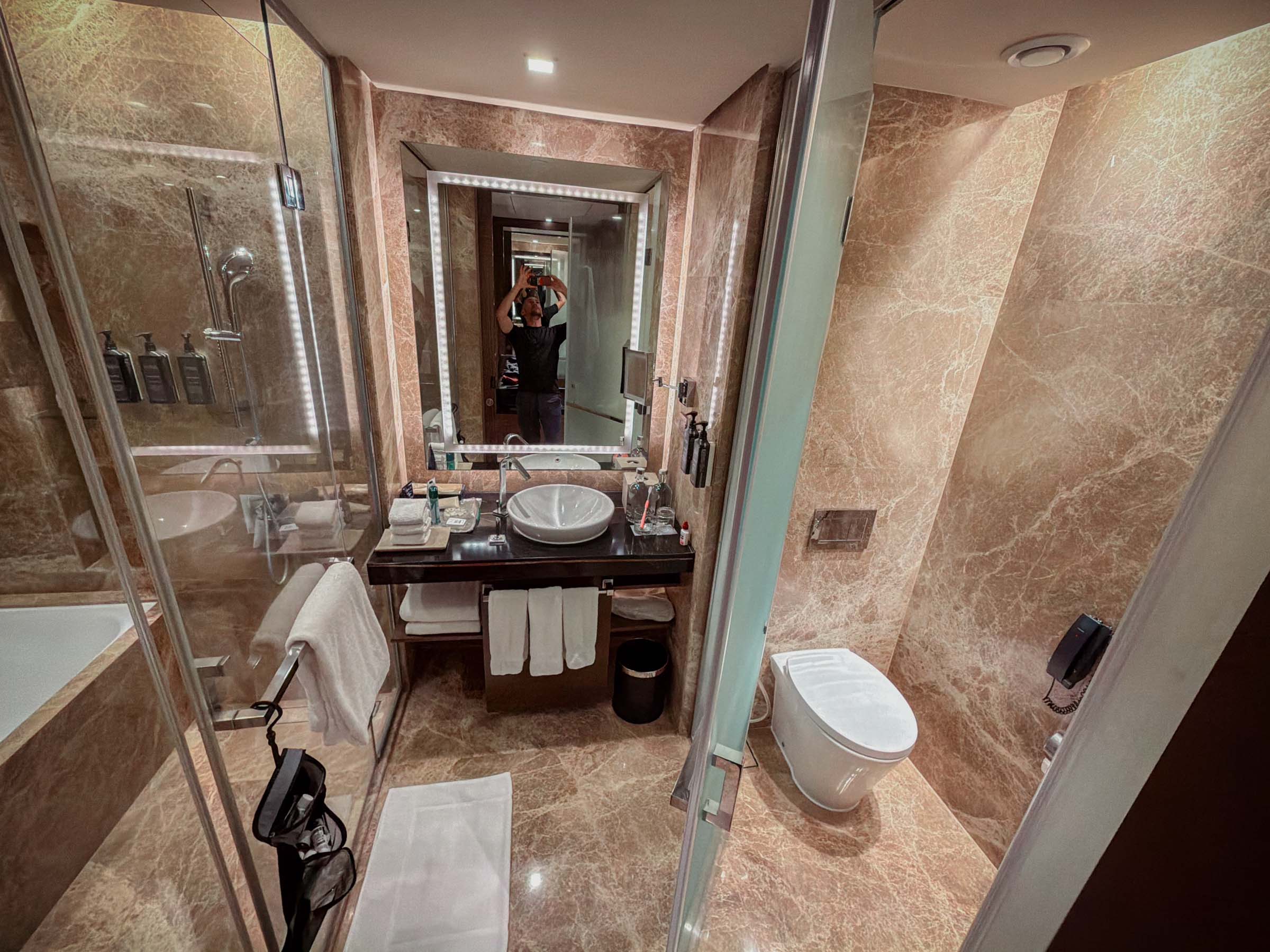
Marblemaxxing.
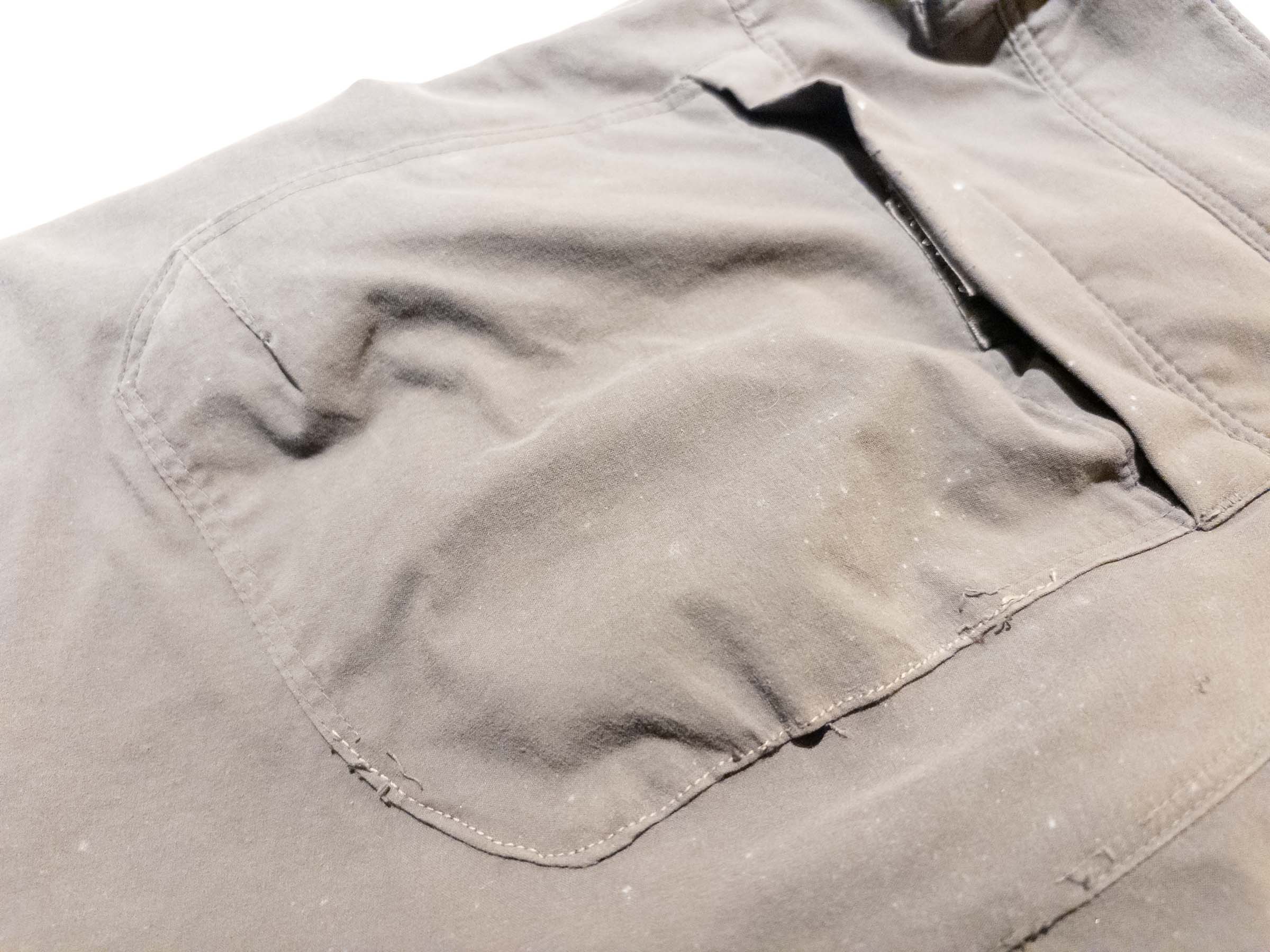
I planned to discard these old hiking pants before I flew home, but when the Sheraton staff washed them they also sewed up the rips without asking. Now I have to keep them a while longer.
My first full day in Bangalore, I spent in the Whitefield area. The Sheraton is part of a giant luxury development, Prestige Shantiniketan, that includes highrises, offices, and a mall with a Benetton and a Starbucks. Once I walked out of the complex, the main road was more like the India I remembered: anarchic traffic, heaps of trash, shantytowns, roadside food stalls selling lassi and mangoes, small colorful temples and shrines. I walked 20 minutes to the Equilibrium climbing gym. As in Kathmandu, I found the climbing gym was a great place to hang out and talk with locals on friendly terms, without any hierarchy or agenda.
The next day I rode Bangalore’s shiny metro to the city center, and walked around Cubbon Park with a new friend from the conference. A sign warned us to watch for snakes.
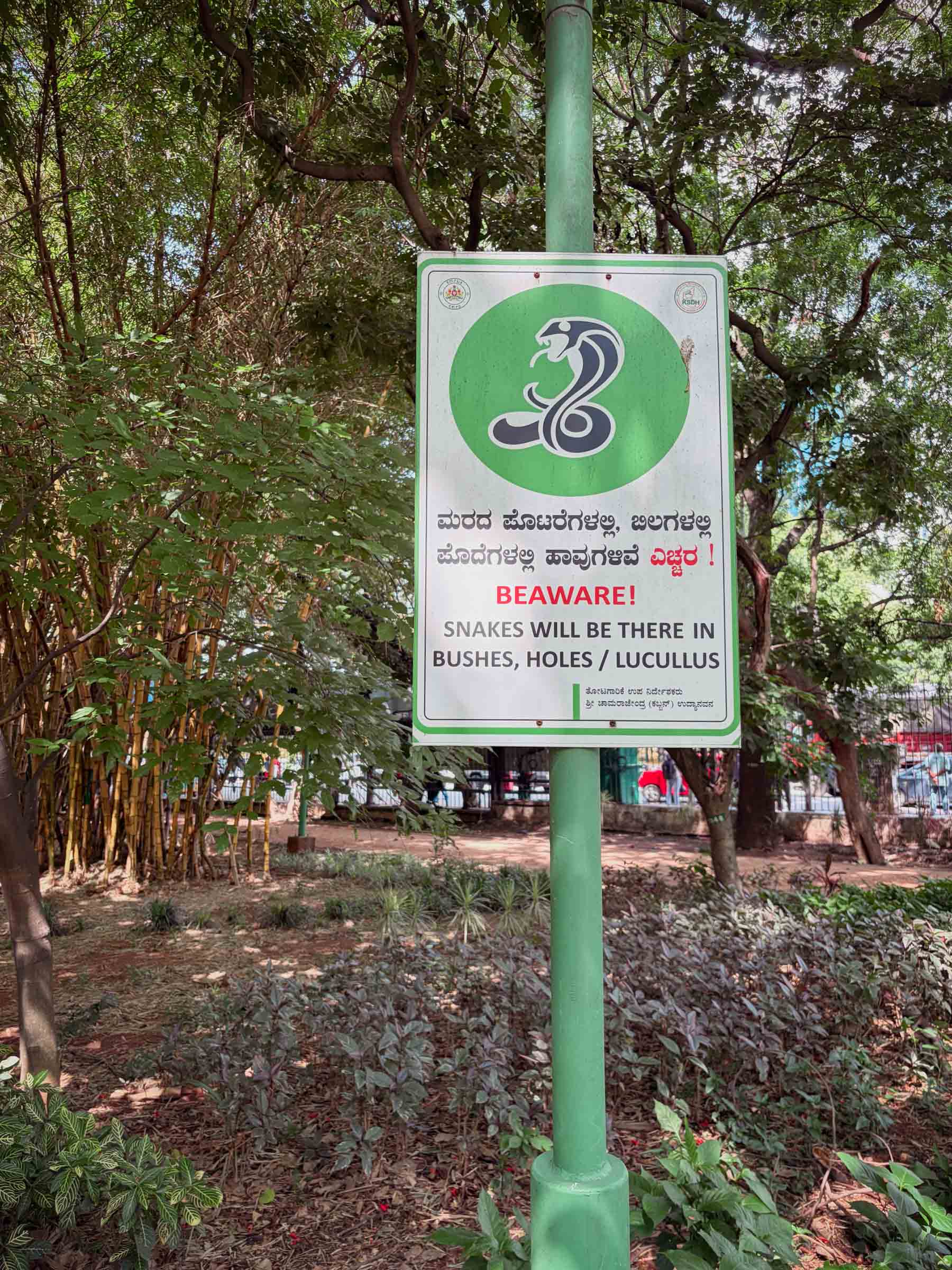
(“Lucullus” is a variety of Swiss chard, named for the Roman gourmand.)
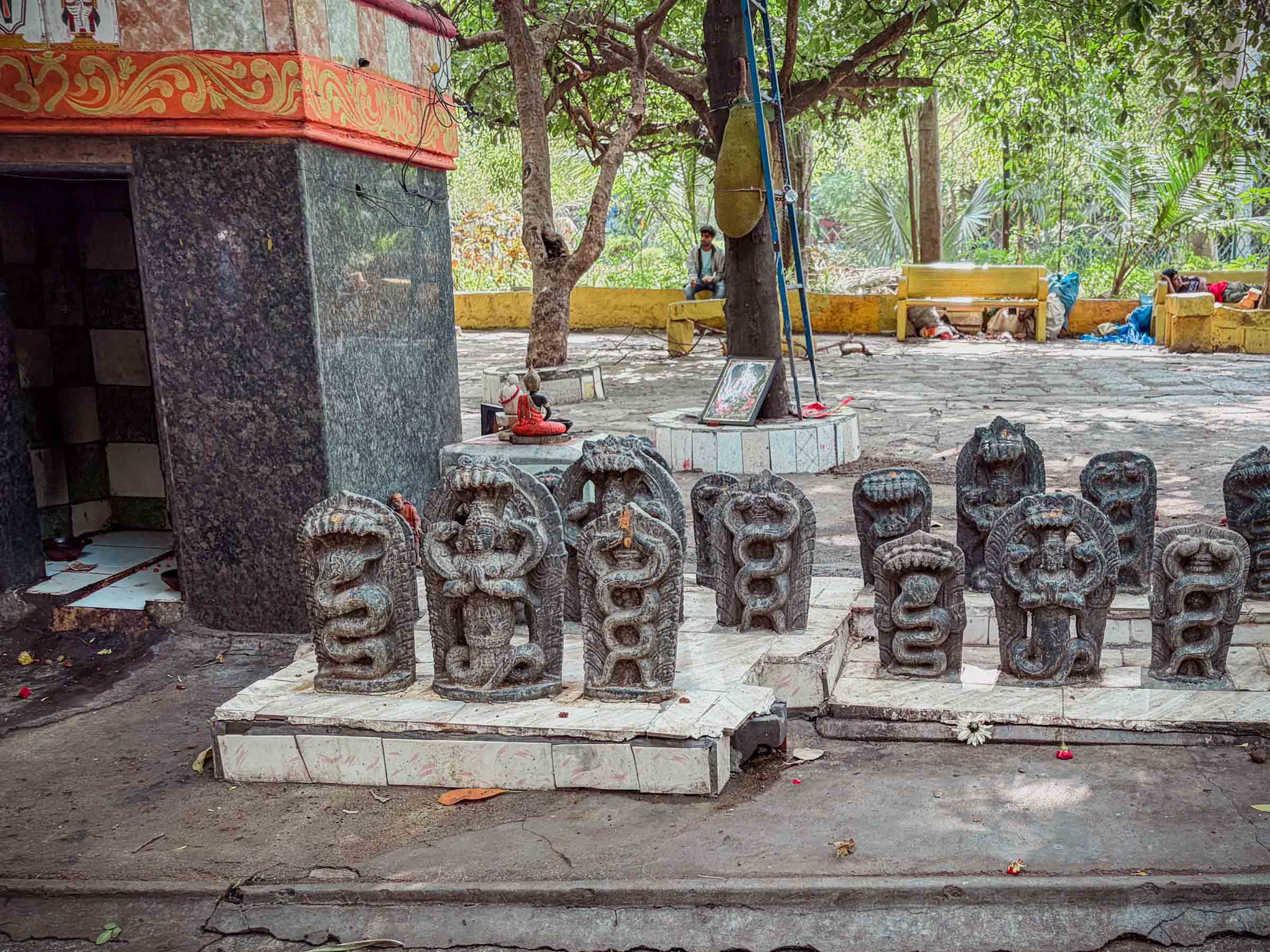
In the middle of the park was a shrine with a collection of naga statues: some were full cobras, and some had human bodies with two snake tails.
We walked to the state legislature building (Vidhana Soudha) nearby and took some photos of it. Then some Indian tourists asked to take photos with us. We were charmed for a minute, until a circle of Indians formed around us, all insisting on photos with the white people. We pushed past them and hurried away. I’ve experienced this in rural India but it surprised me in modern Bangalore; I guess they were out-of-towners who were still curious about foreigners.
We wanted to go shopping on Mahatma Gandhi Road, but a friendly gentleman rushed up to warn us about a “fight” on that street—there was a political protest that had turned violent, and we should turn around and go to a shop a few blocks away. As he attached himself to us and led us onward, I realized we’d fallen for a ploy. Nevertheless, his co-conspirator’s Kashmiri craft shop was great. I bought a wooden Ganesh to put on my car’s dashboard back home. We extricated ourselves, backtracked to the entirely peaceful Mahatma Gandhi Road, and observed where India’s middle class gets their Levis and cappuccinos.
I’ll cover SIGMOD and the DBTest workshop in a separate blog post. I got a bad case of the poops halfway through the week—it never fails, it’s when I’m staying at a polished-marble hotel and eating at five-star restaurants that Campylobacter finally catches up with me. After the conference I had a few more days in Bangalore, and I was feeling recovered enough to risk a daytrip. I packed some Imodium and took a car to Nandi Hills, two hours from the city. A minute after we’d left the hotel and turned onto the main road, a big mobile crane sideswiped us and bashed in one of our doors. They tried to hit and run, but my driver, Mr. Shashi, accelerated, cut the crane off, and forced them to pull over. There was a 45-minute negotiation between Mr. Shashi and the two crane operators over who’d pay for his door—it was his personal car, he’d painted the steering wheel with white stripes and a red dot like Shiva’s forehead, and a Ganesh sat on the dashboard. How bad would the accident have been without all this protection? Mr. Shashi at one point broke down crying, wiping his eyes and sitting on the pavement. The older of the two crane operators, a dignified gentleman with a long beard and a hardhat, patted him on the shoulder. Finally Mr. Shashi prevailed and got a digital payment from the crane crew that satisfied him.
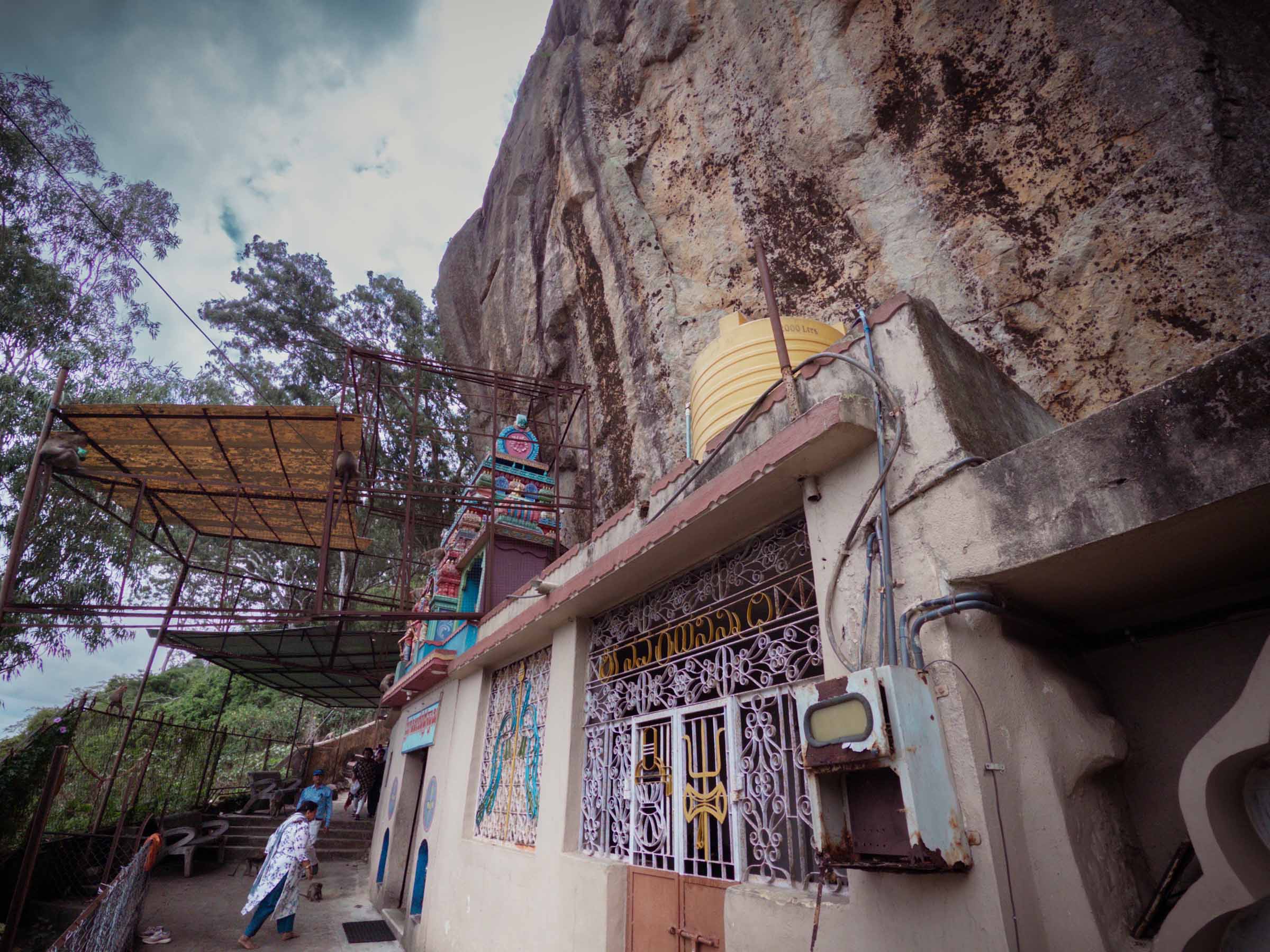
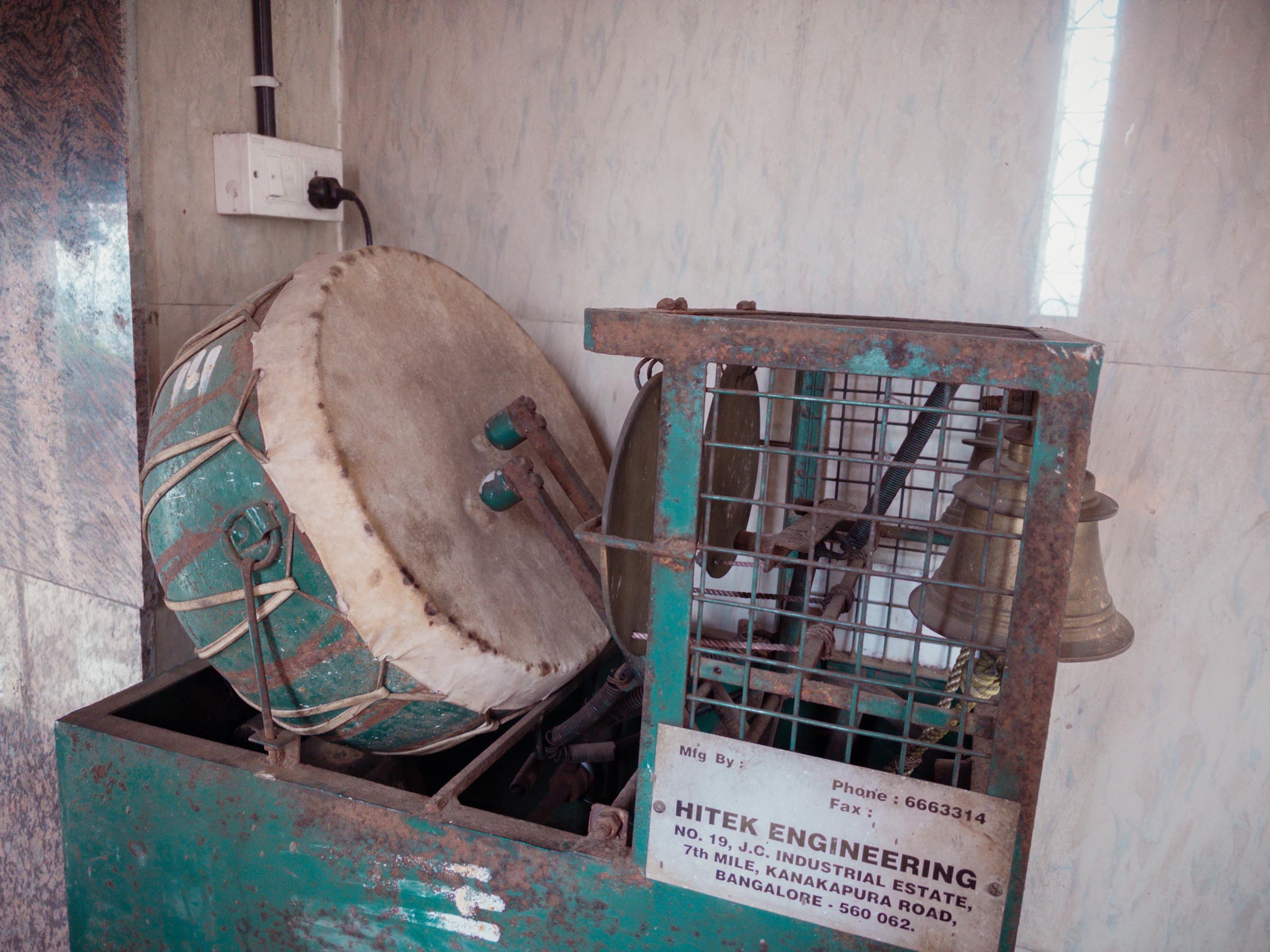
The Nandi Hills are some of the oldest visible rocks on the planet, lumps of granite pushing up thousands of feet from the earth. They are billions of years old, from before Gondwanaland formed and broke apart, before India rammed into Asia and raised the Himalaya, before the dinosaurs. I walked up the stone steps and paths of the main hill, Nandi Giri, and came to a Shiva temple carved directly into the primordial rock. In the foyer there was a mechanical drum and bell player, useful for rituals in a temple with a small staff.
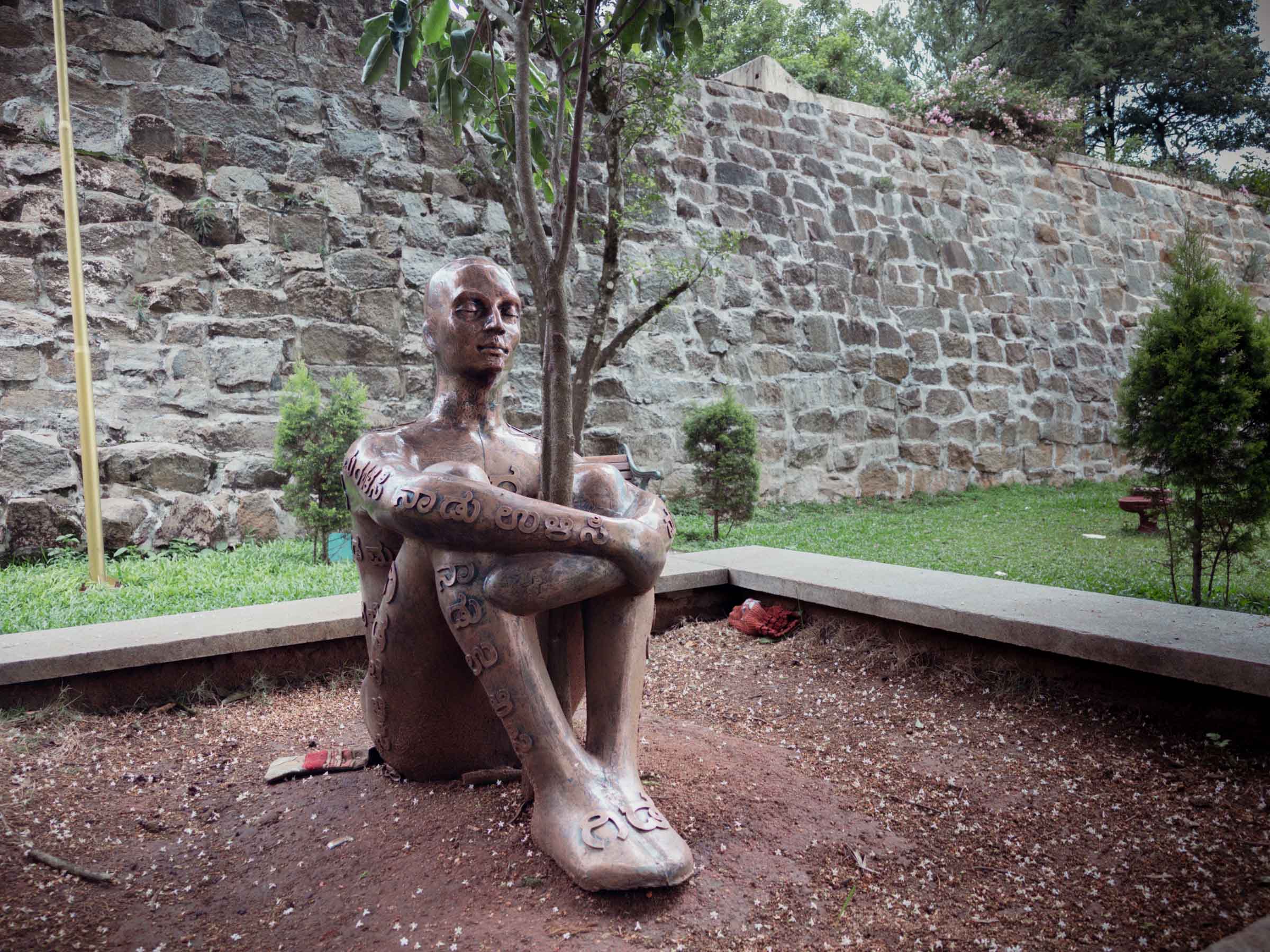
A modern statue embracing a sapling.
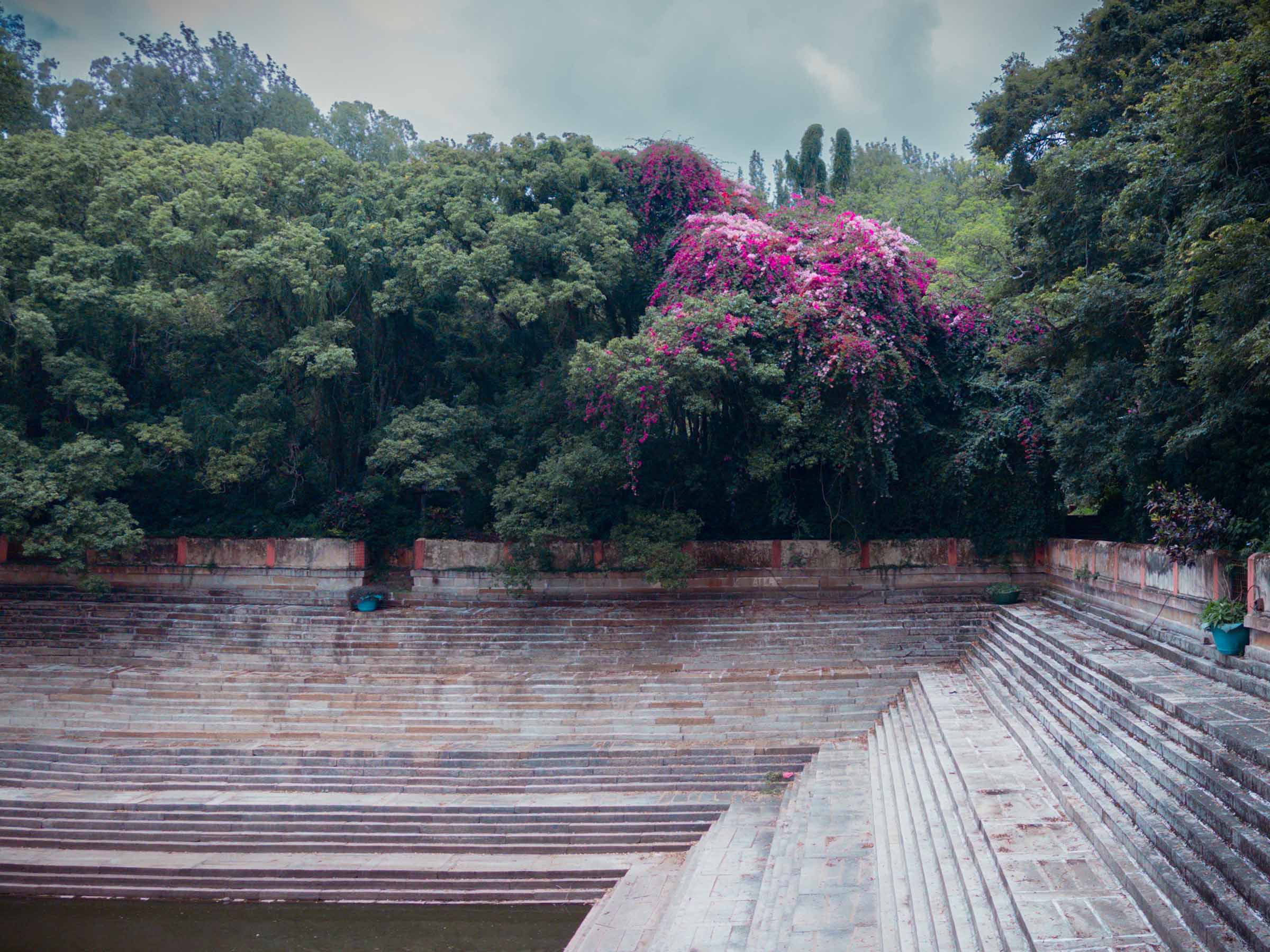
A stepped temple tank on Nandi Hills, bougainvillea spilling over the far wall.
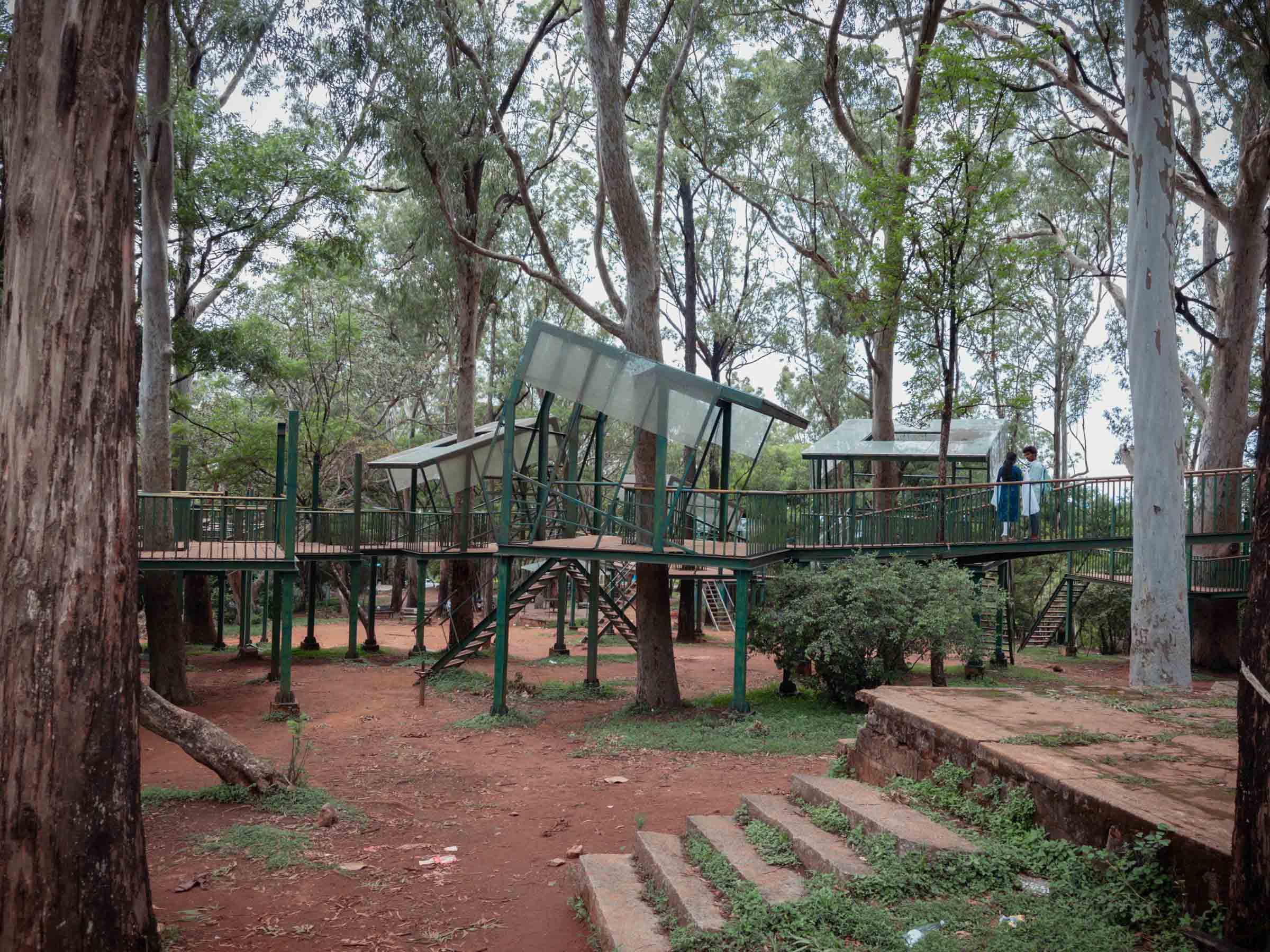
Cool platforms and glass pavilions built around trees. I don’t know their purpose.
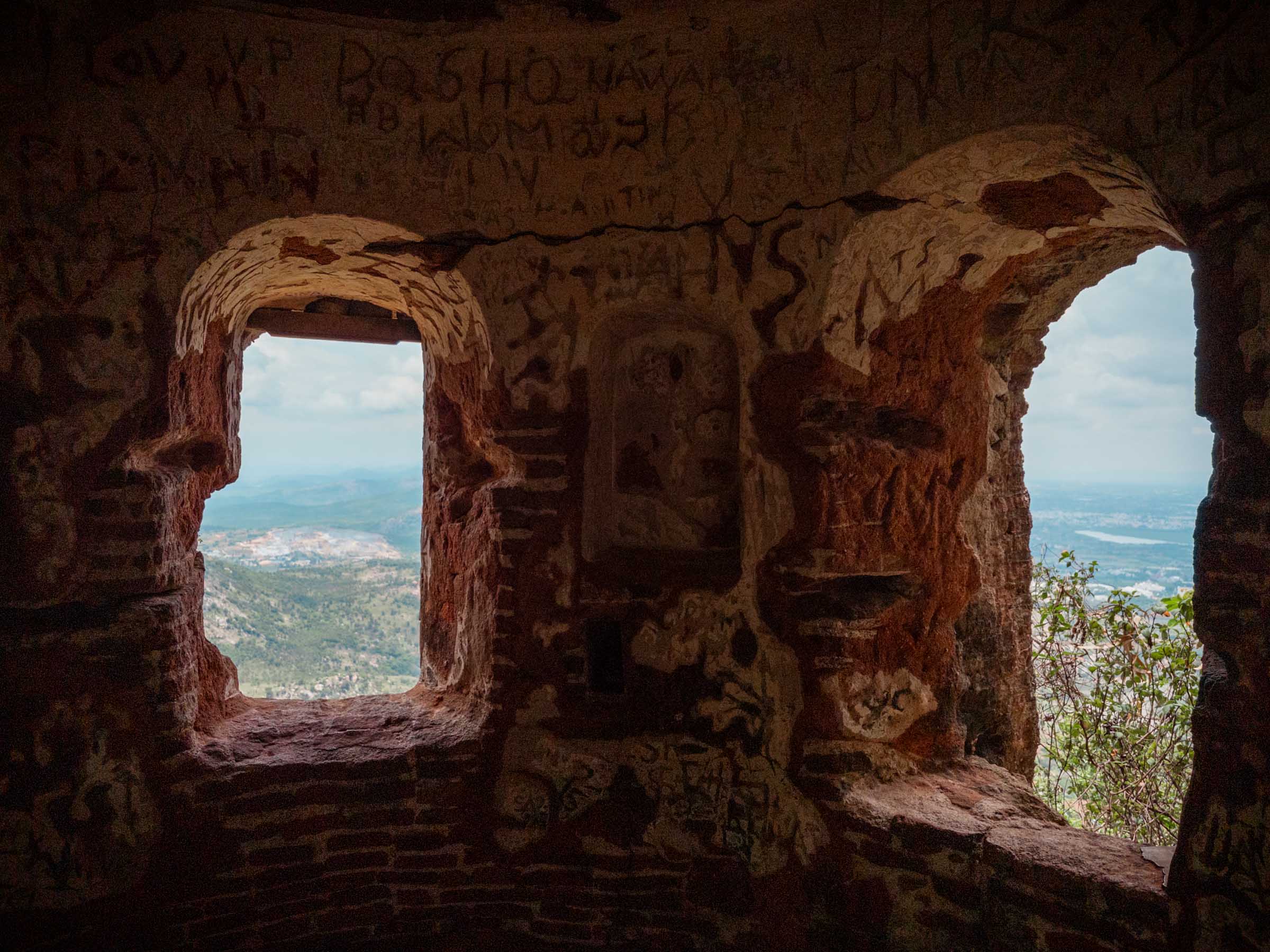
A watchtower.
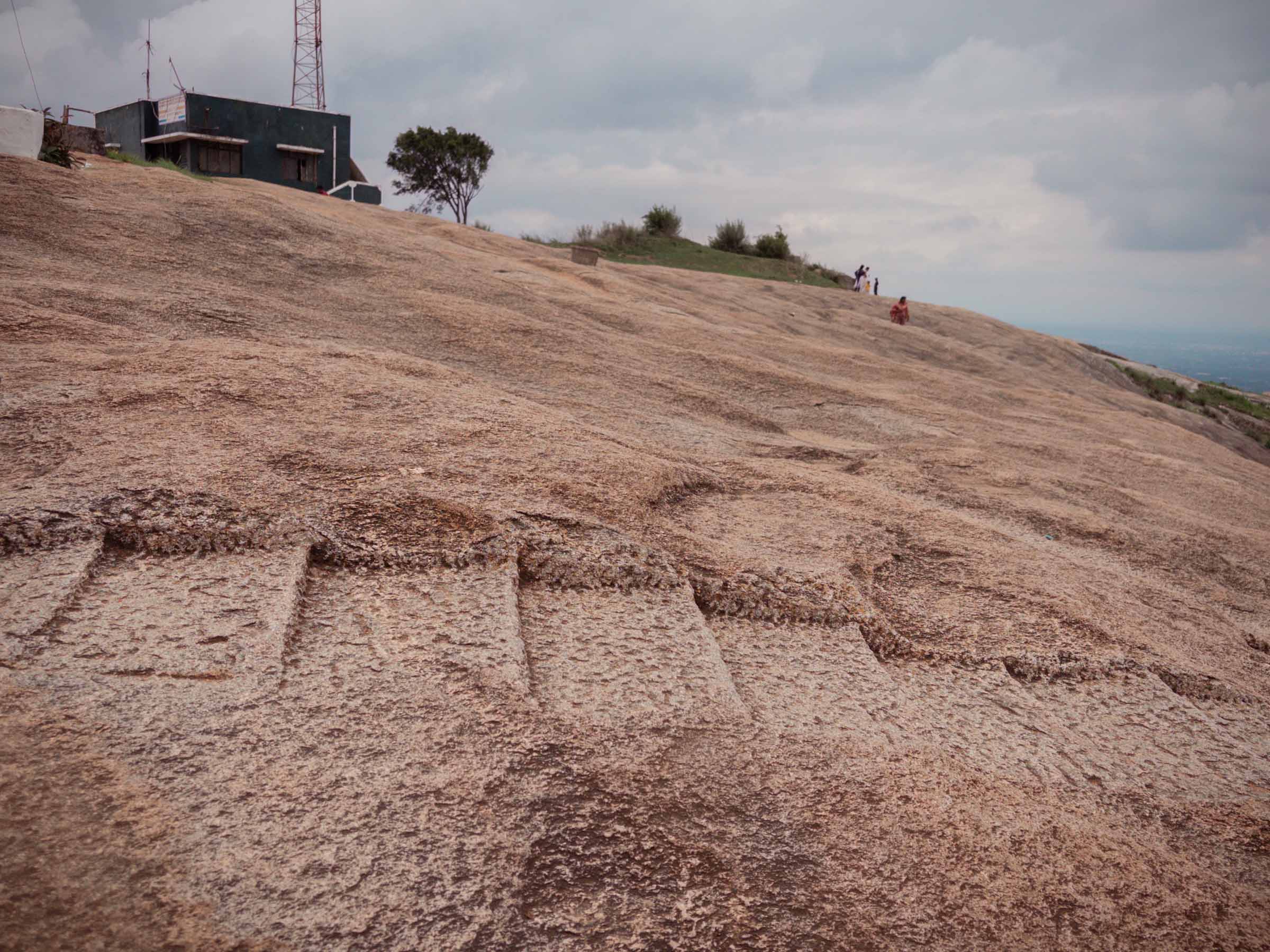
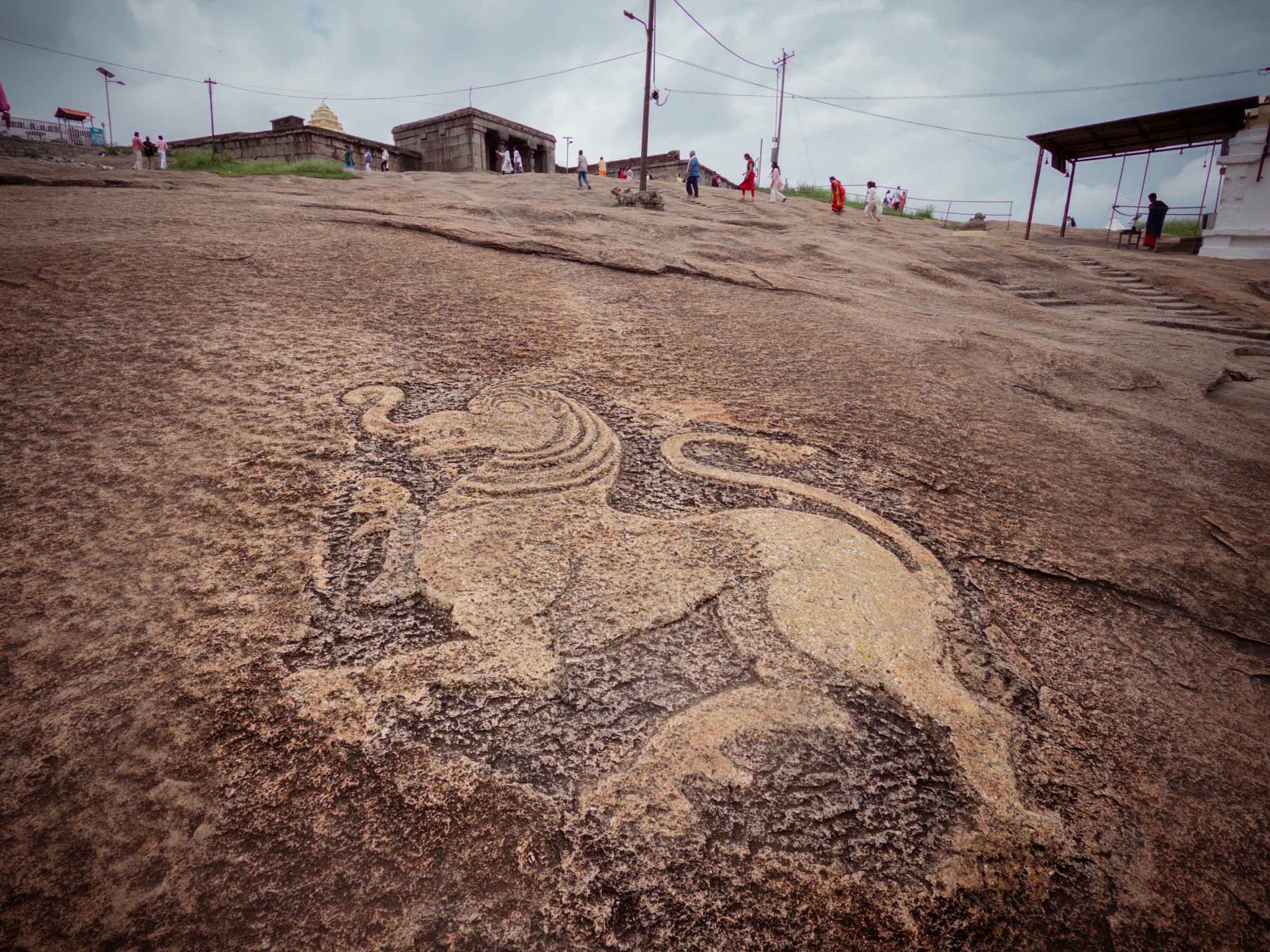
At the top of the hill were ancient steps and a yali (elephant-lion) carved into the smooth rock, polished by centuries of feet.
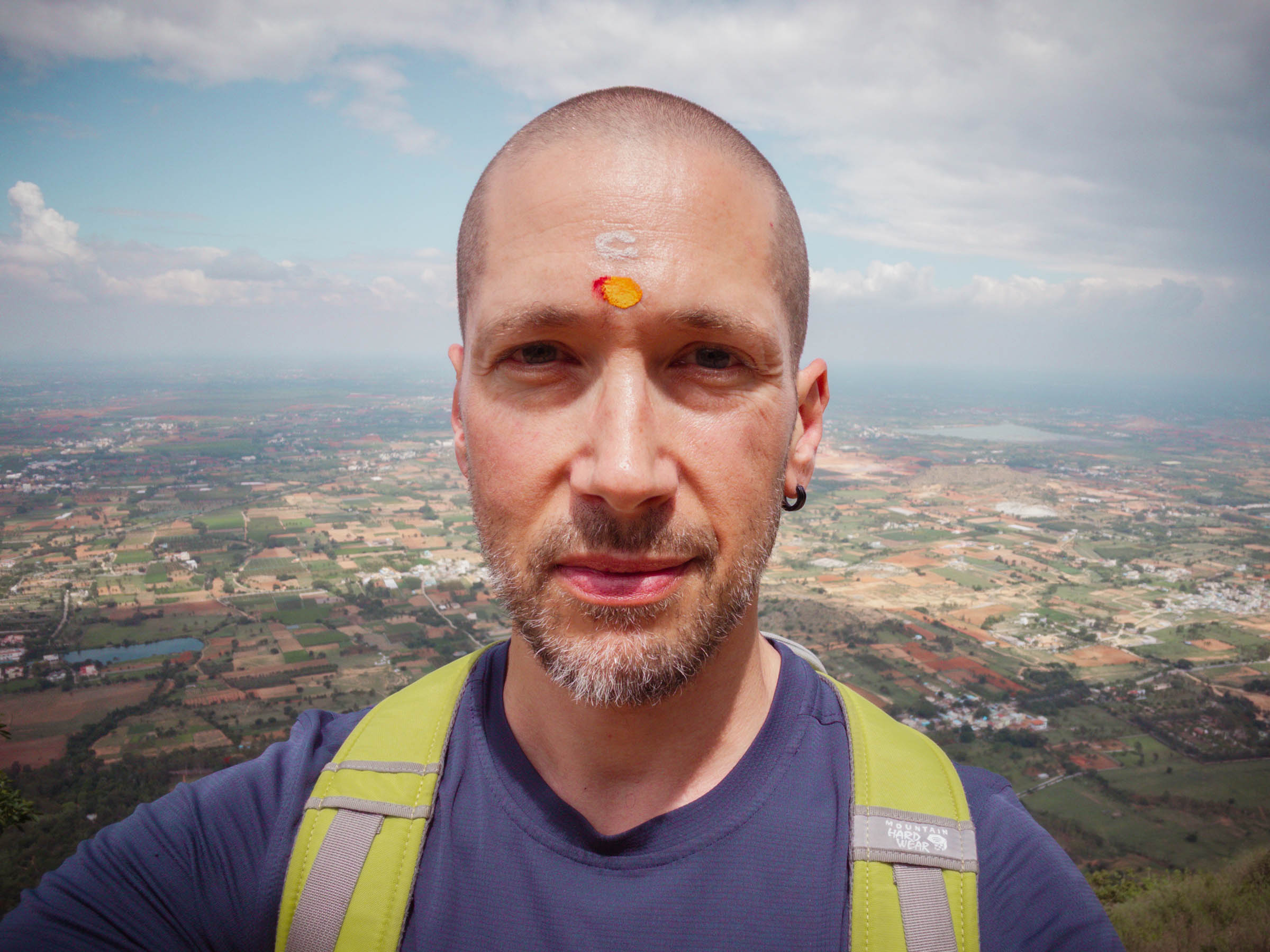
There was another temple hewn from the stone, this one dedicated to Hanuman. The priest there was blaring some catchy music on his stereo. He invited me in and blessed me: I stood by his side with my hands in namaste while he faced the statue of Hanuman. He rang a bell with his left hand and waved a ghee lamp in a clockwise circle with his right hand, and sang something. He drew a red dot on my forehead, accepted my donation, and asked me where I’m from.
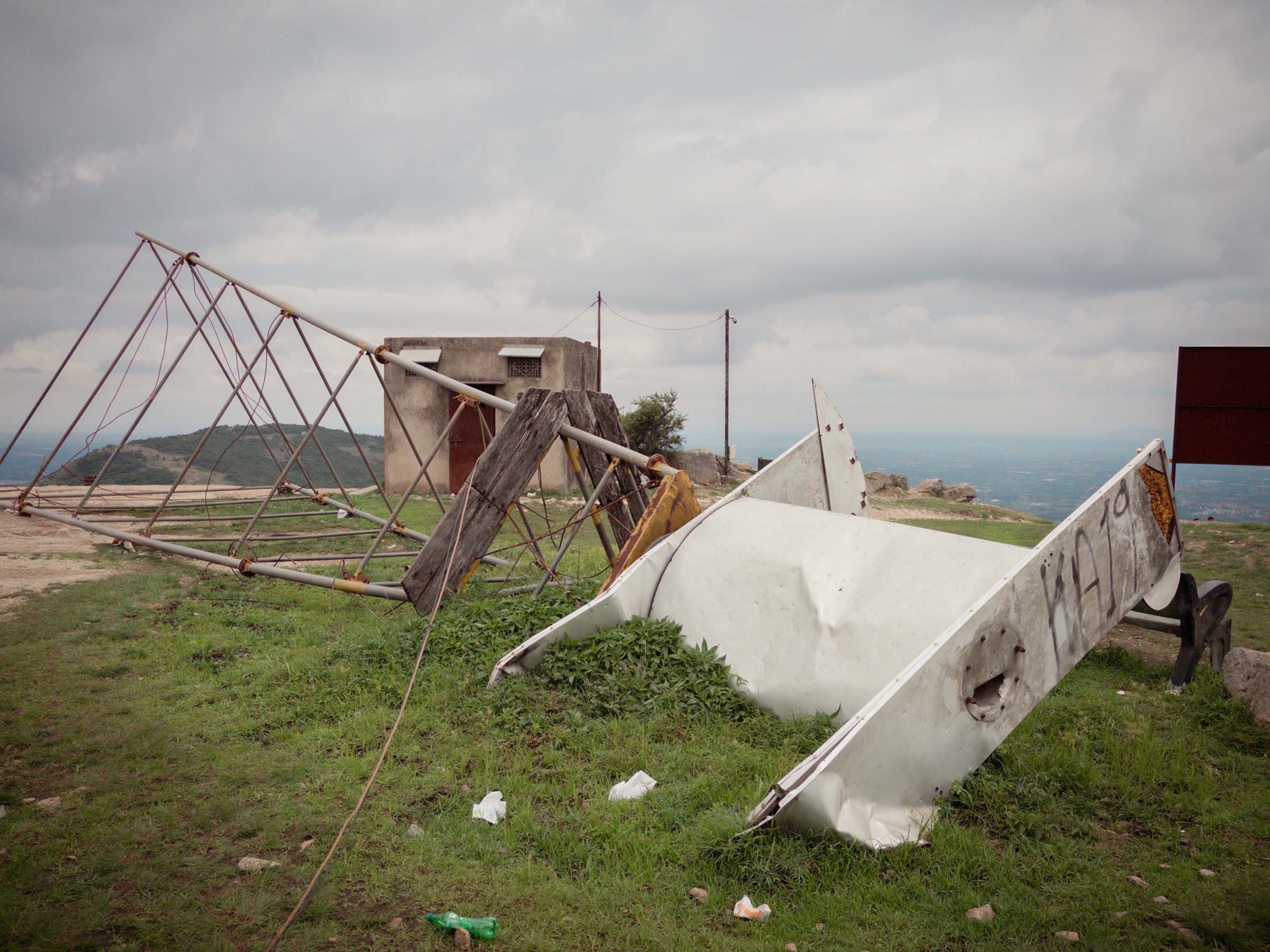
Ruins of a microwave transmission tower.
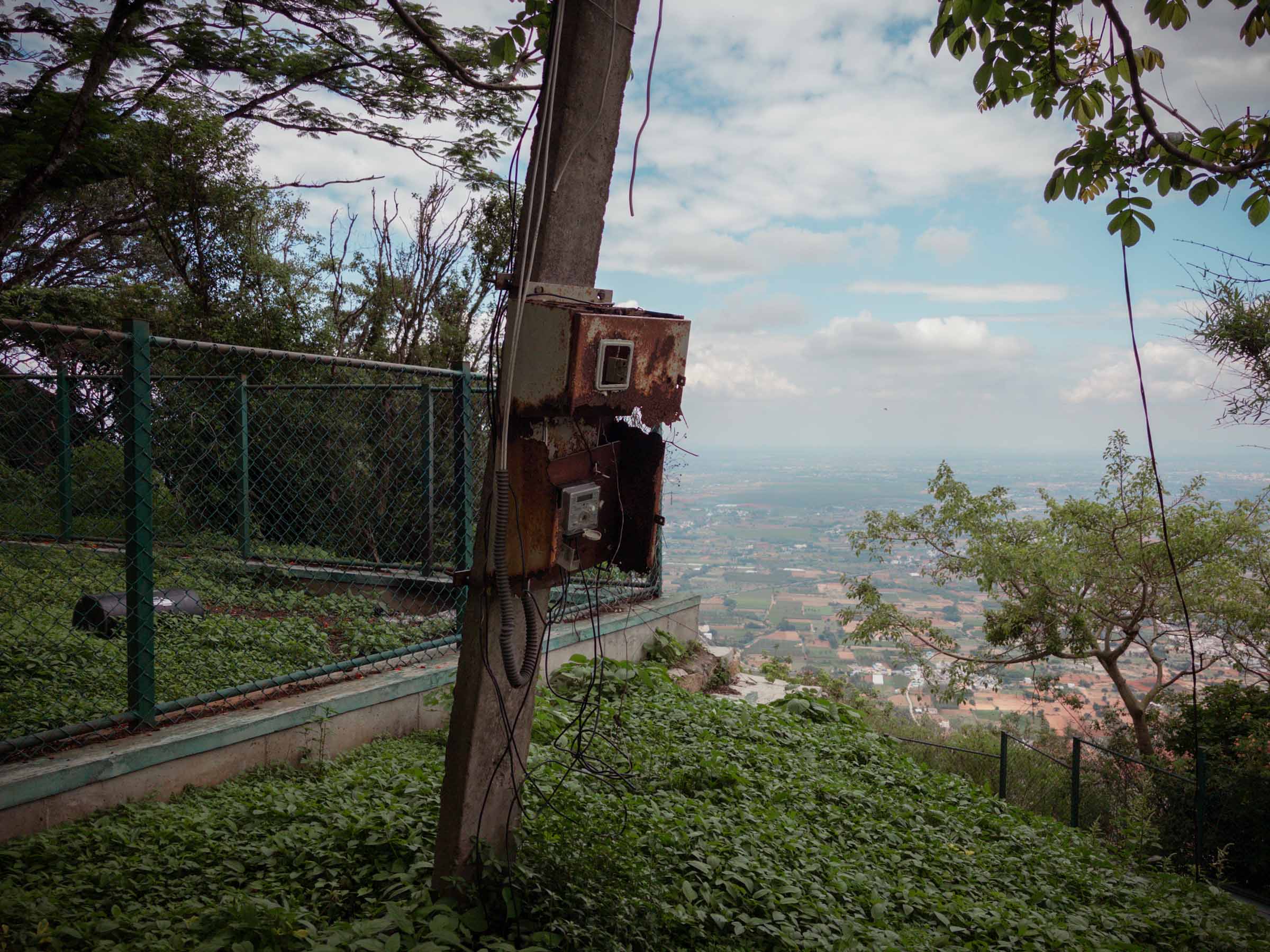
More ruined communications gear.
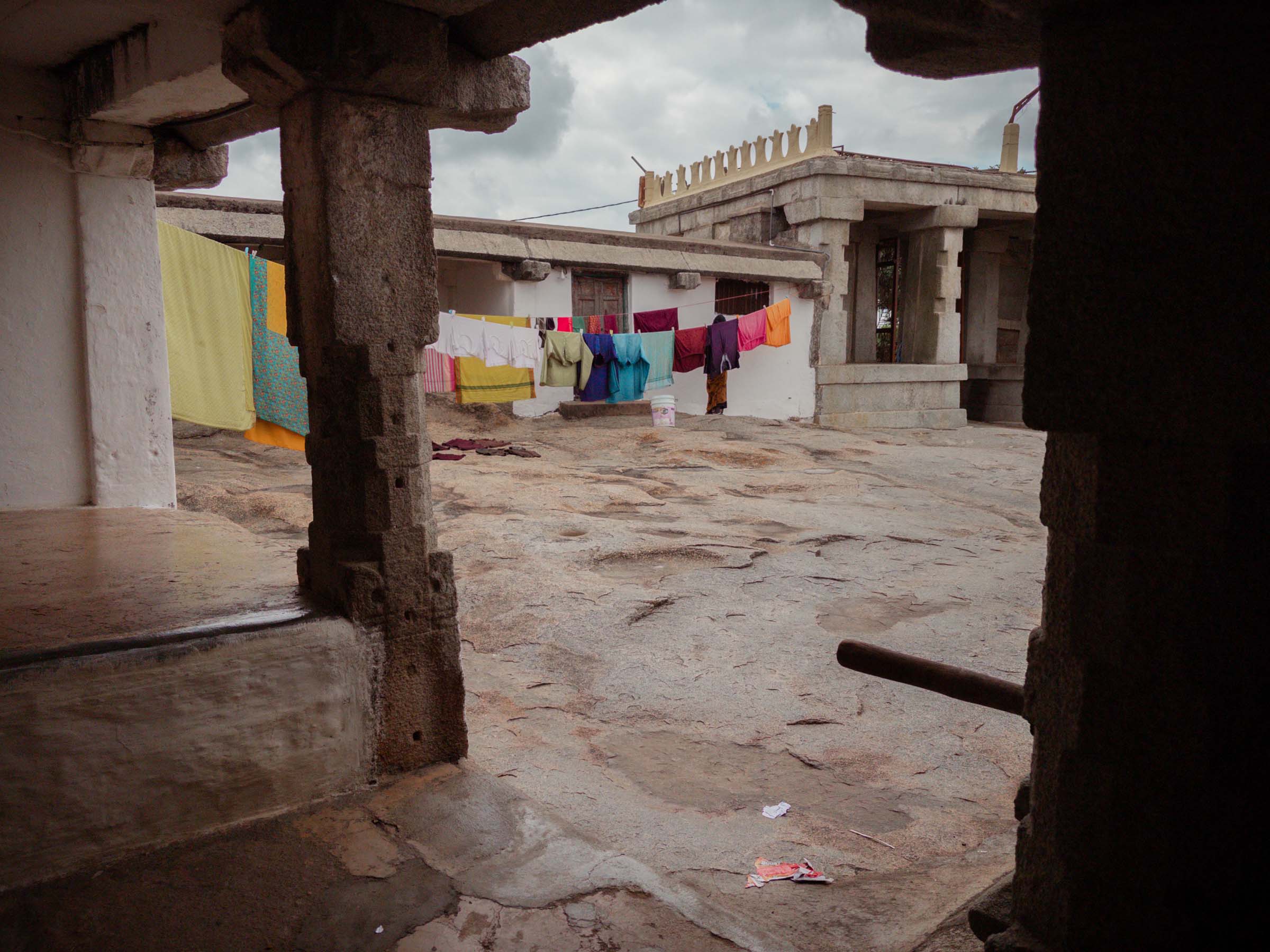
Courtyard of the Yoga Nandeeshwara Temple.
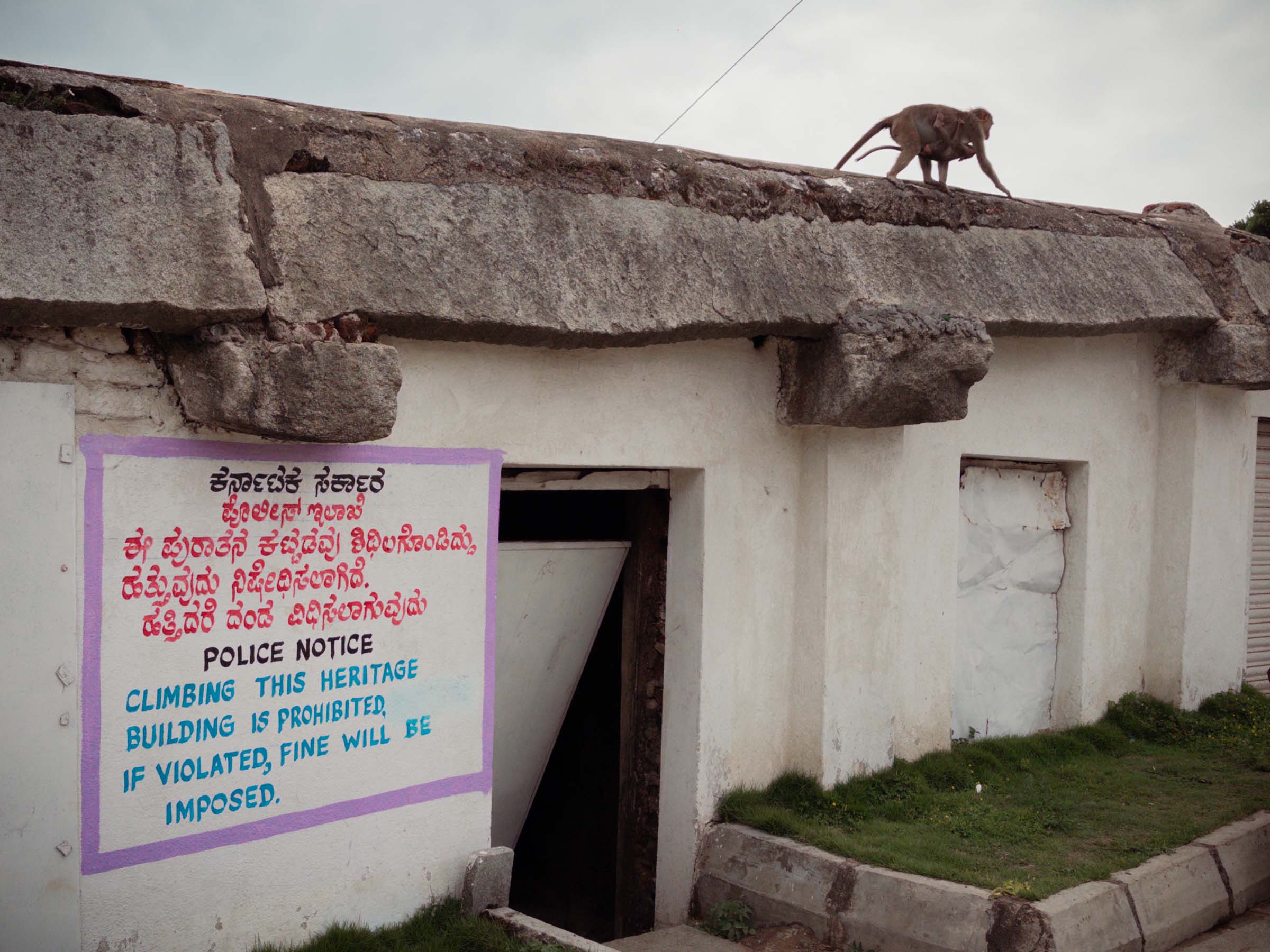
A monkey flouting the rules, as usual.
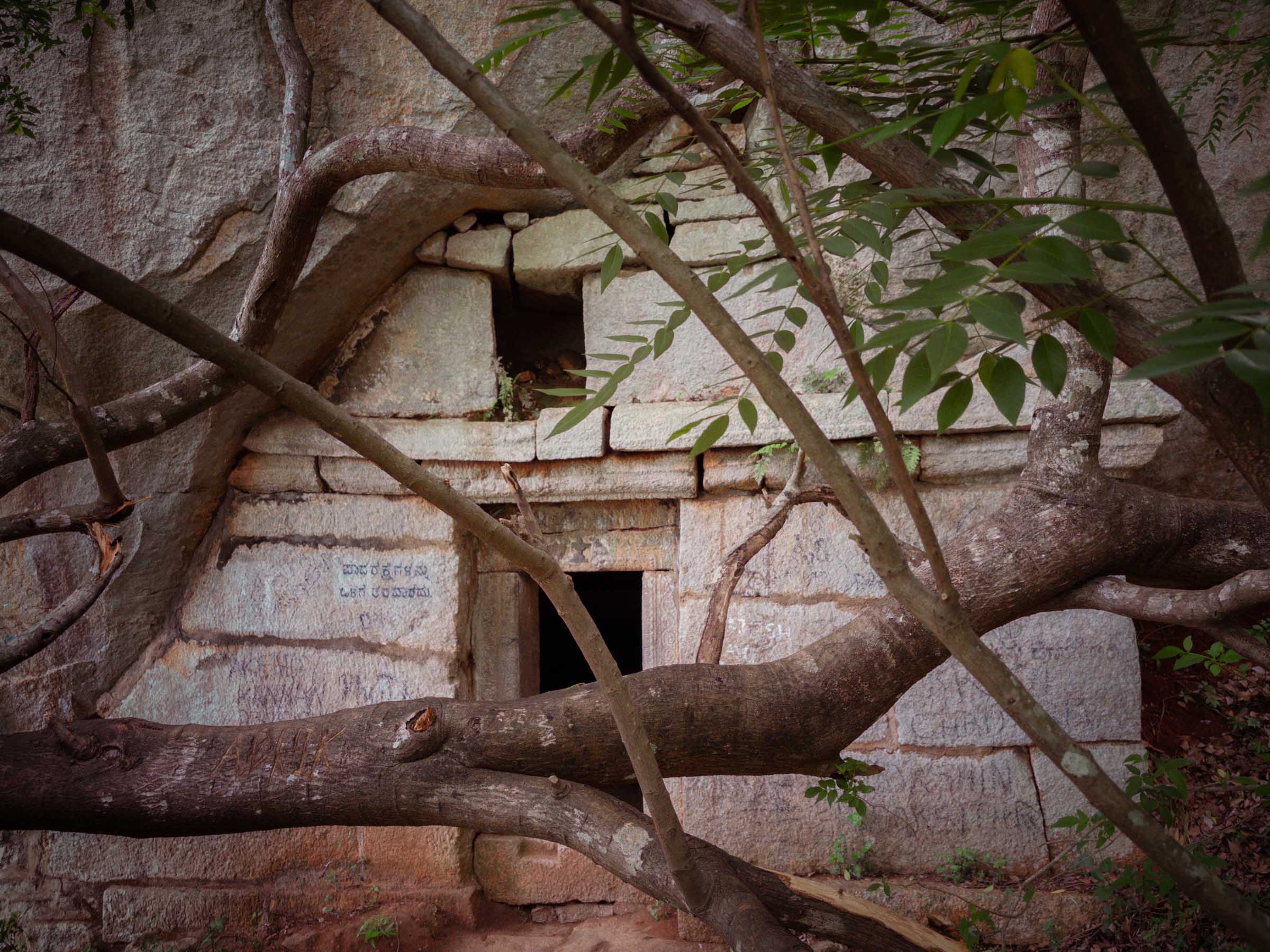
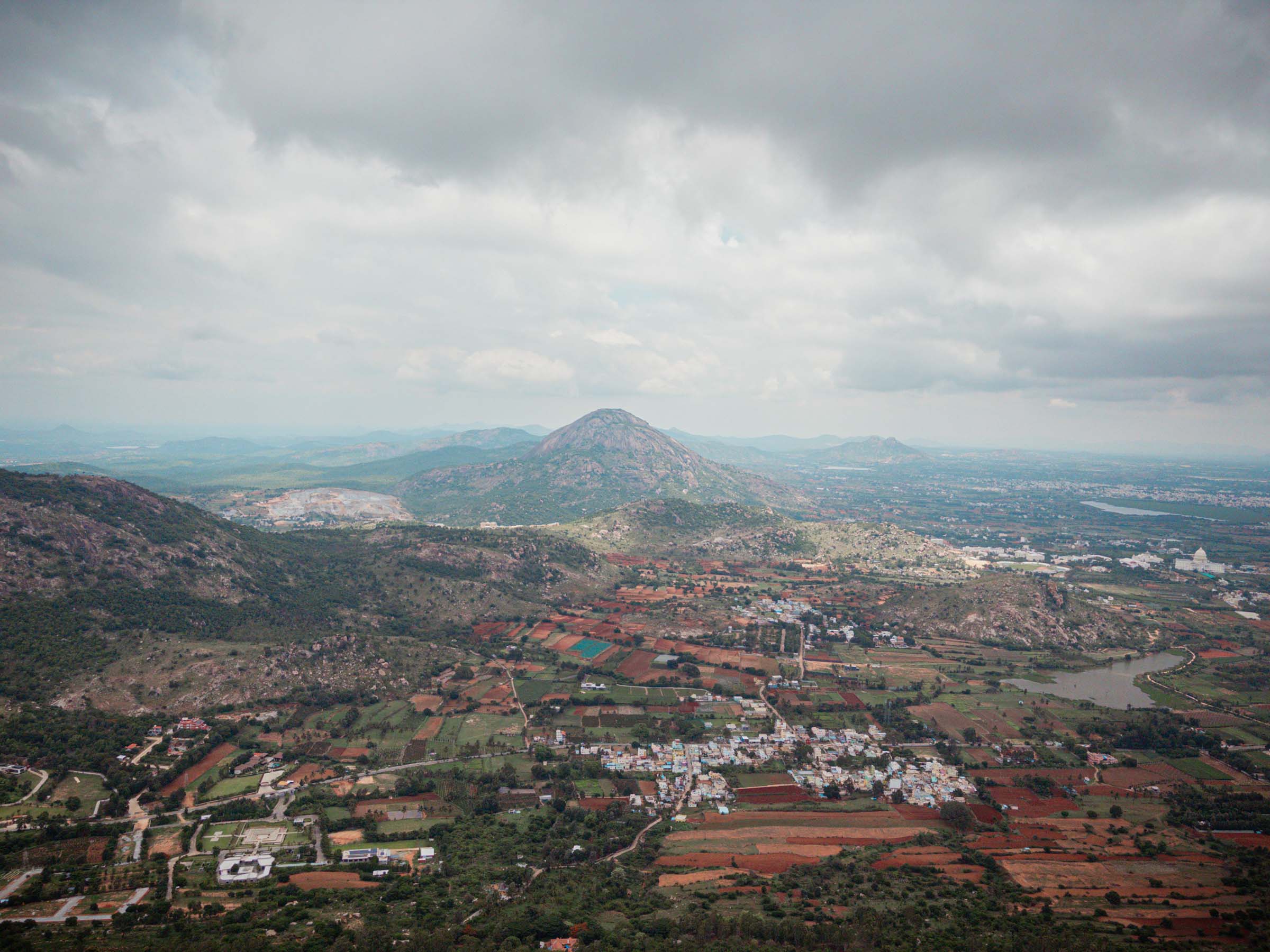
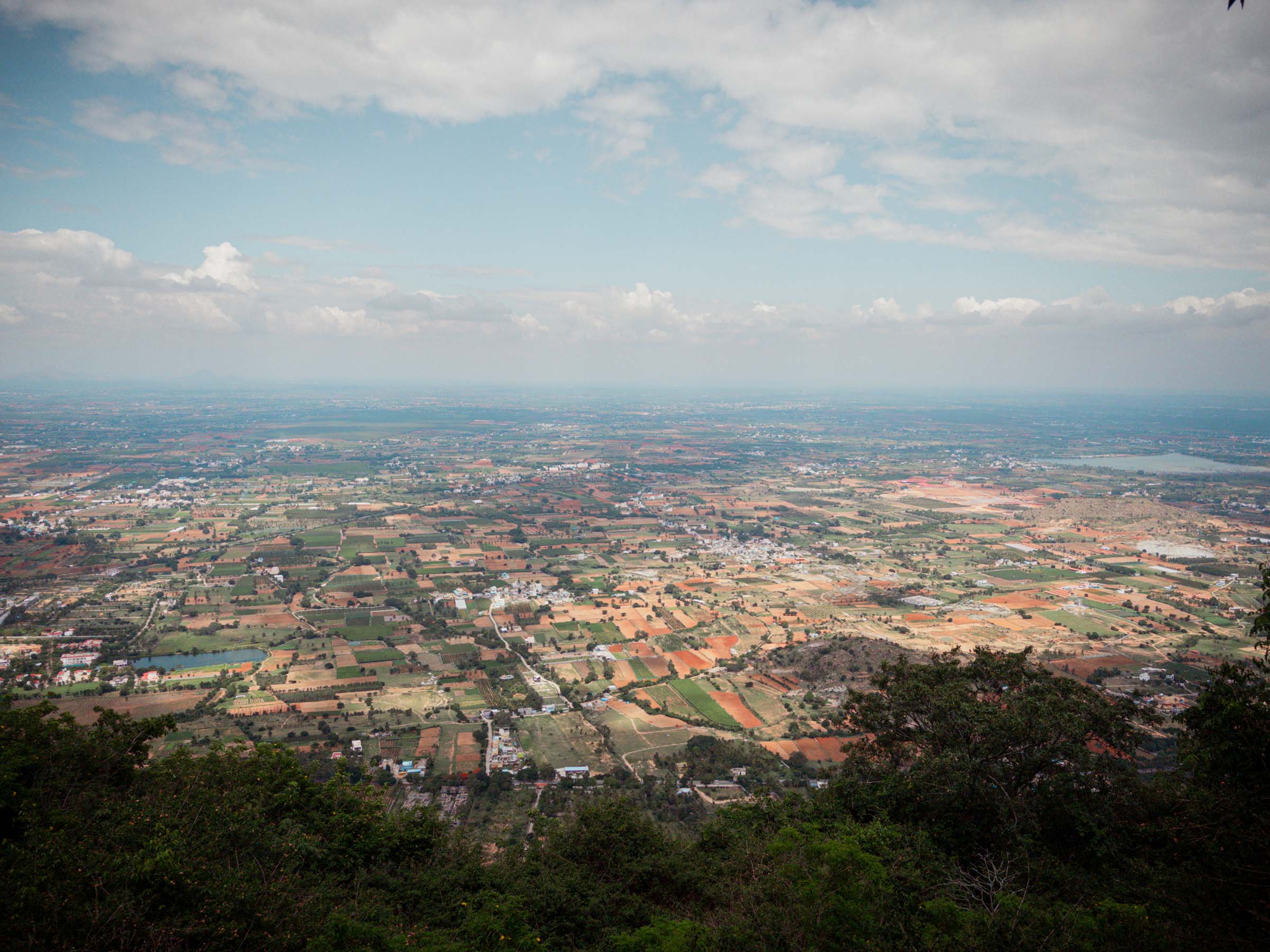
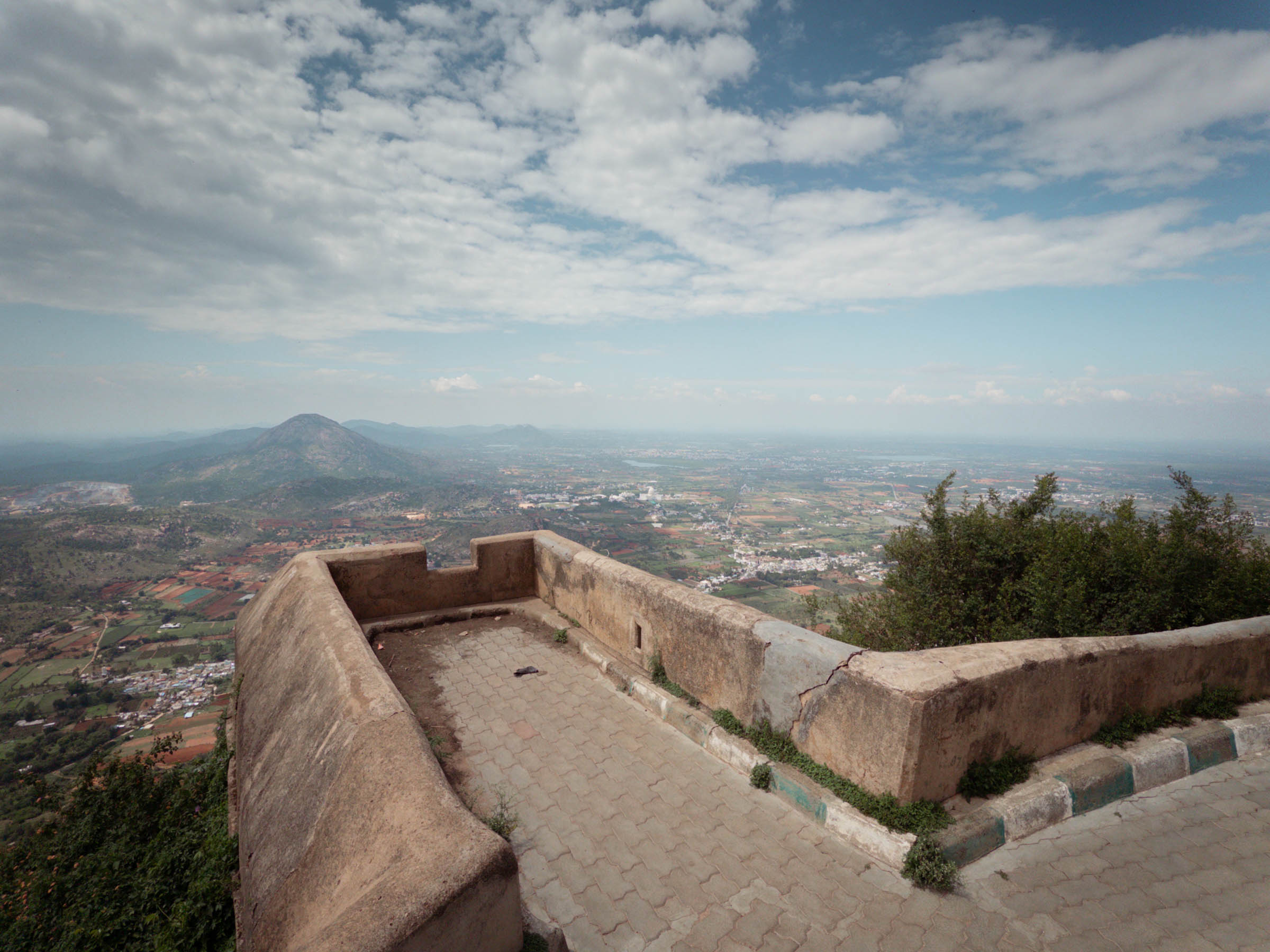
I wandered to another Shiva temple, received another blessing and got another forehead mark, this time in white. I had lunch at the hilltop restaurant very cautiously, given my recent intestinal excitement, and started downhill by a different path. I stopped at a shrine with a massive black Nandi, the bull who attends Shiva. He was taller than me while sitting down, and slathered with butter from nose to tail, with colored powder and marigold garlands adorning his head. The priest there instructed me: I stood to his right while he did the bell-and-ghee-lamp invocation. He put a yellow mark on my forehead and told me to walk around Nandi clockwise, stopping at his right ear to whisper my request. I asked Nandi to heal my guts and grant me a smooth trip home. Miraculously, my belly felt fine the rest of the day.
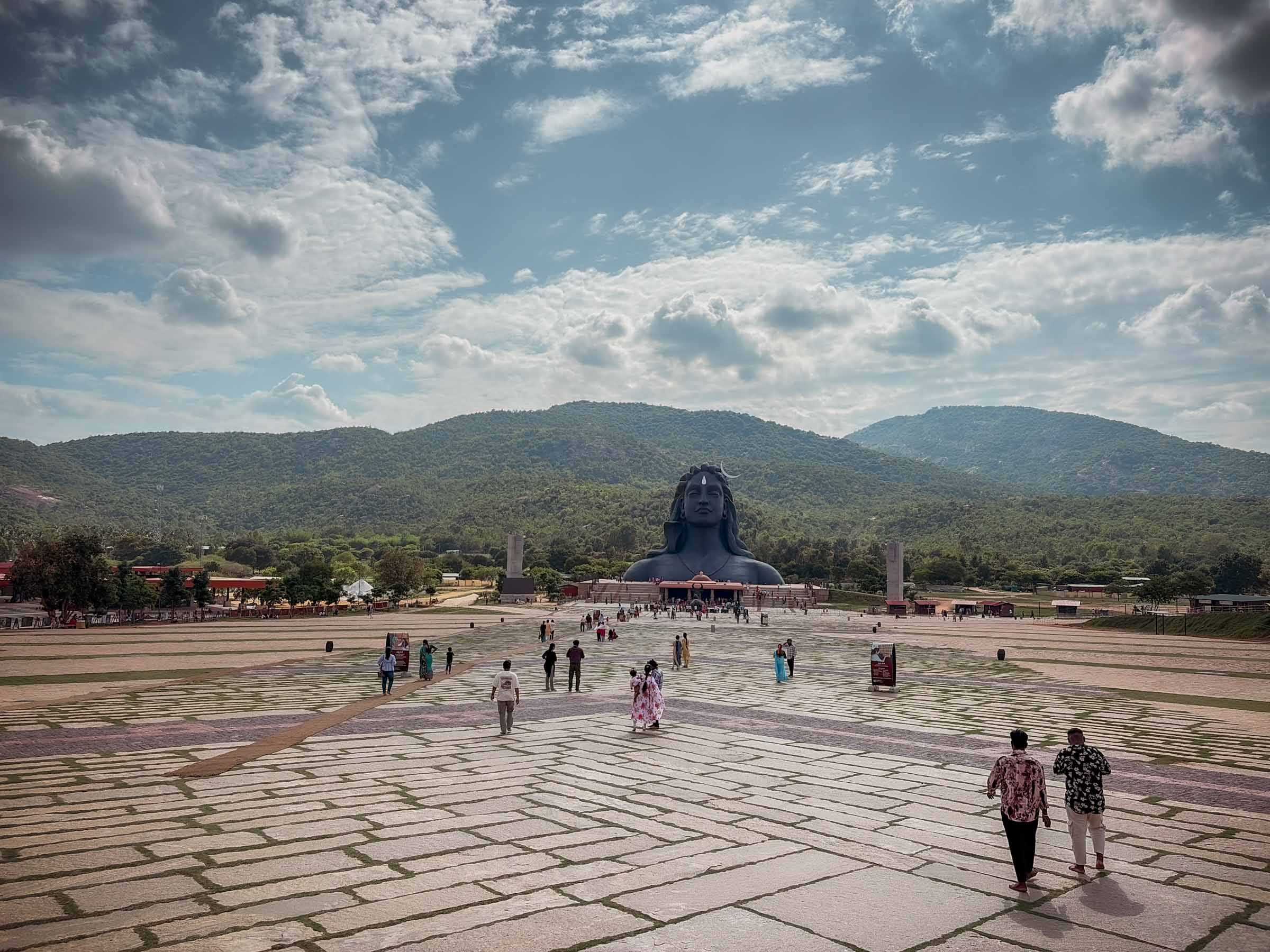
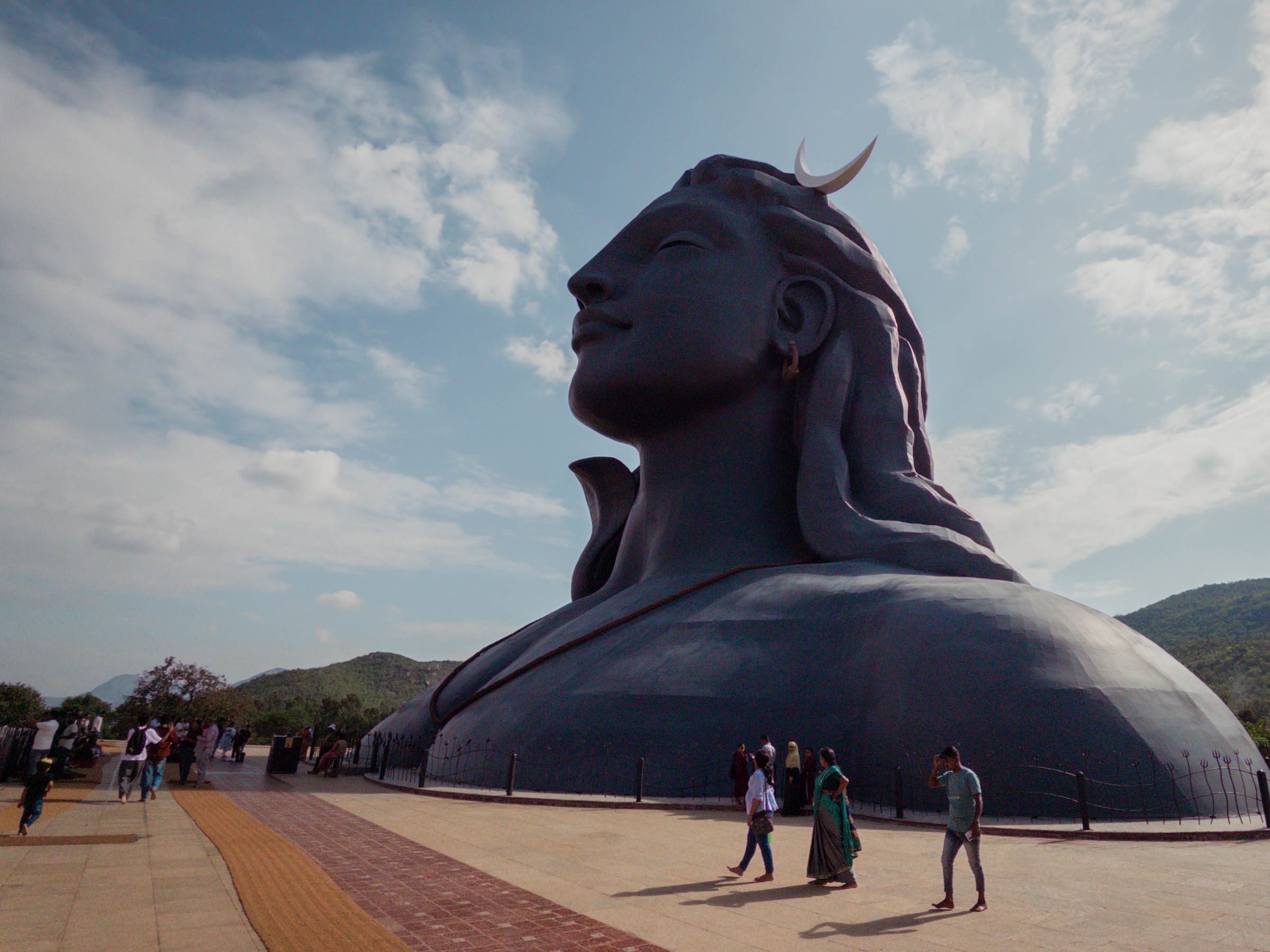
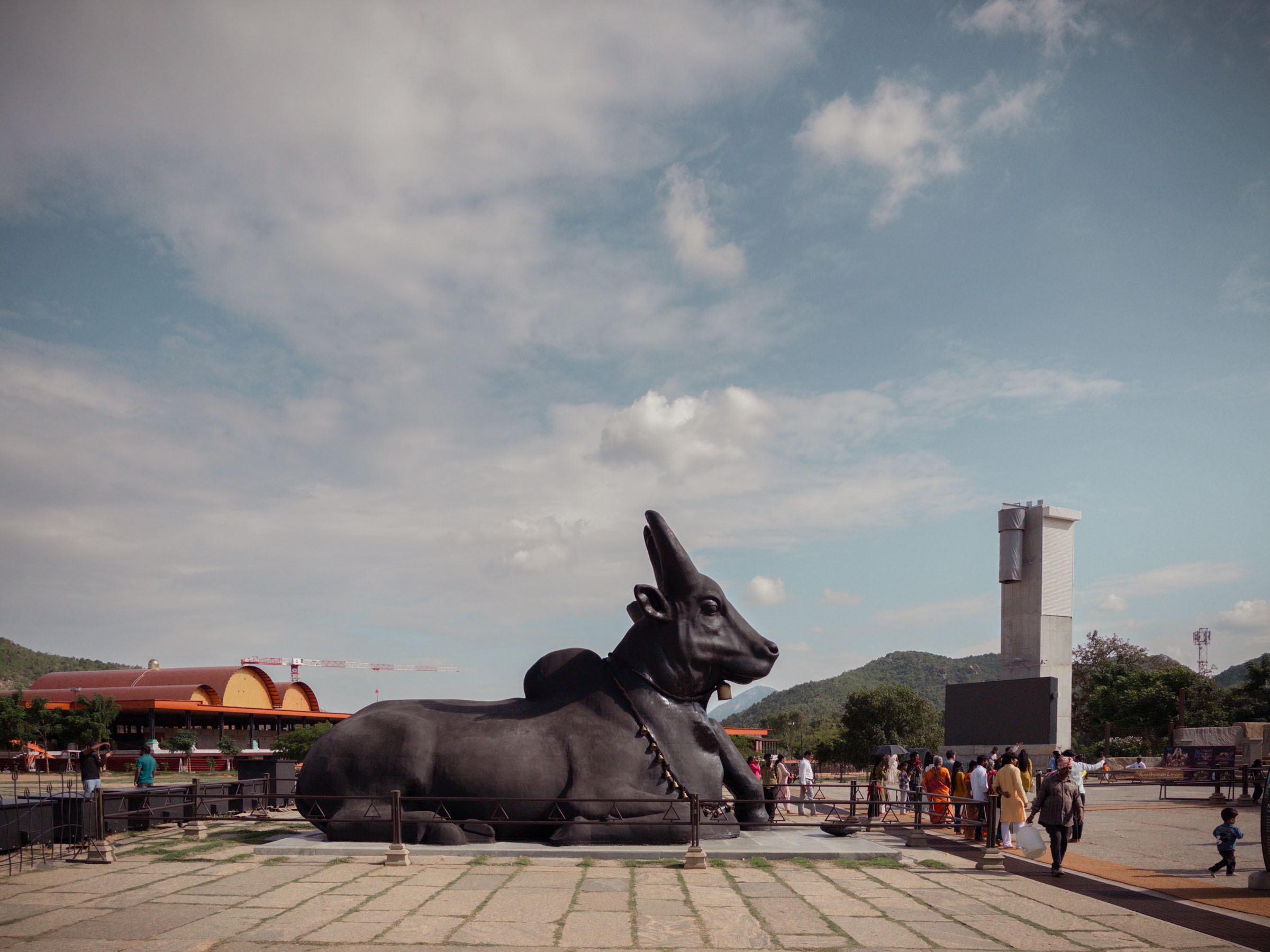
After Nandi Hills, Mr. Shashi and I drove to Sadhguru Sannidhi, a vast modern yoga campus with the biggest Nandi, Shiva, and lingam I’ve seen anywhere. I’d been the only white tourist at Nandi Hills and that was fun, it felt like a little adventure, the Hindu priests had welcomed me the same as anyone else and guided me through the rituals. Here, people seemed startled to see me, especially when I approached the lingam in a cave beneath the colossal Shiva. I wasn’t quite supposed to be there and I hurried out. Above, I circumambulated Shiva and paid my respects.
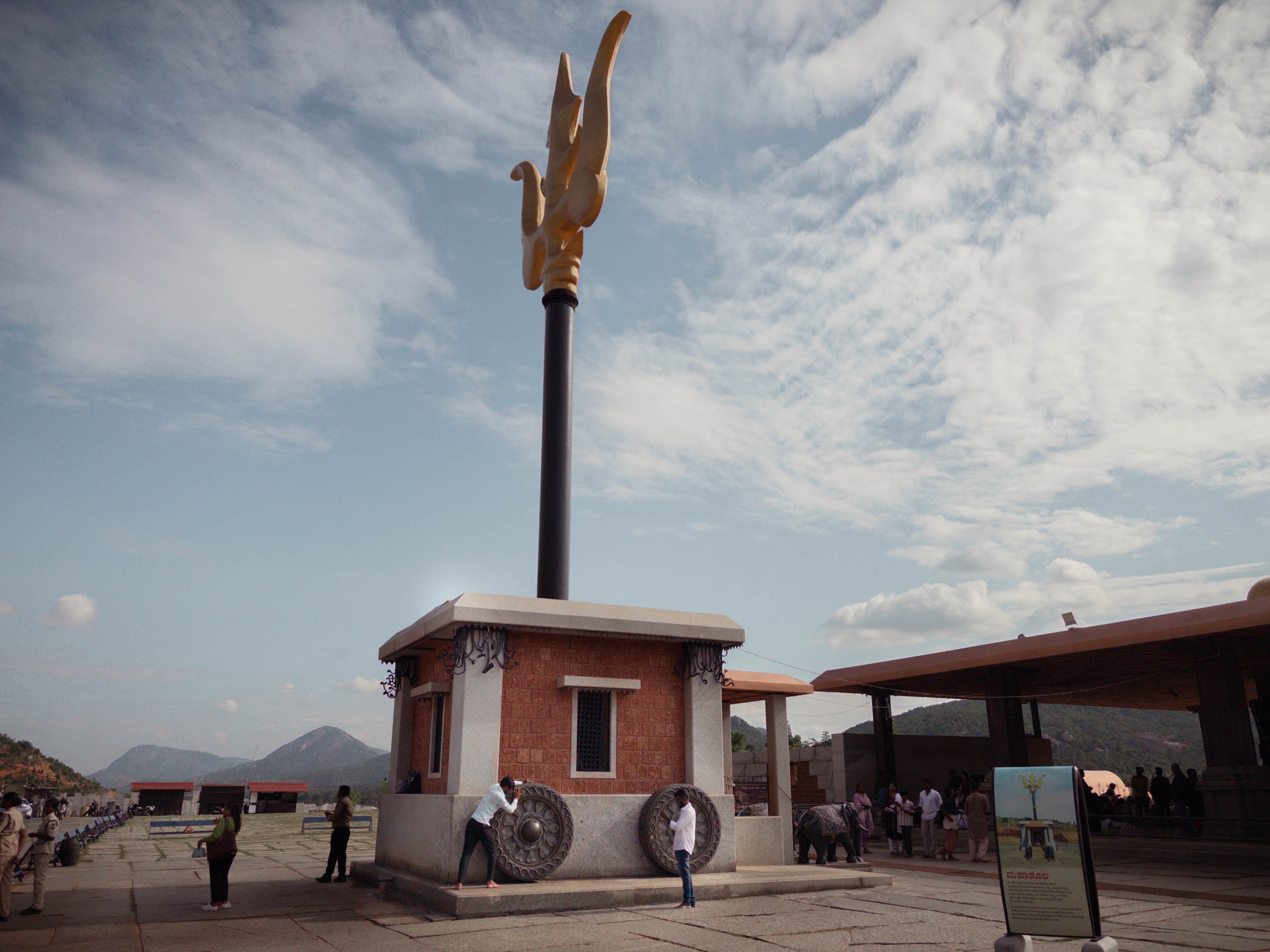
At the entrance to Sadhguru Sannidhi is a little lingam shrine in the shape of a wagon, with Shiva’s trident emerging from the roof. The wheels actually turn, and a young man was turning the wheels clockwise (a universal of Hindu and Buddhist ritual) while his friend shot video (a universal of human ritual).
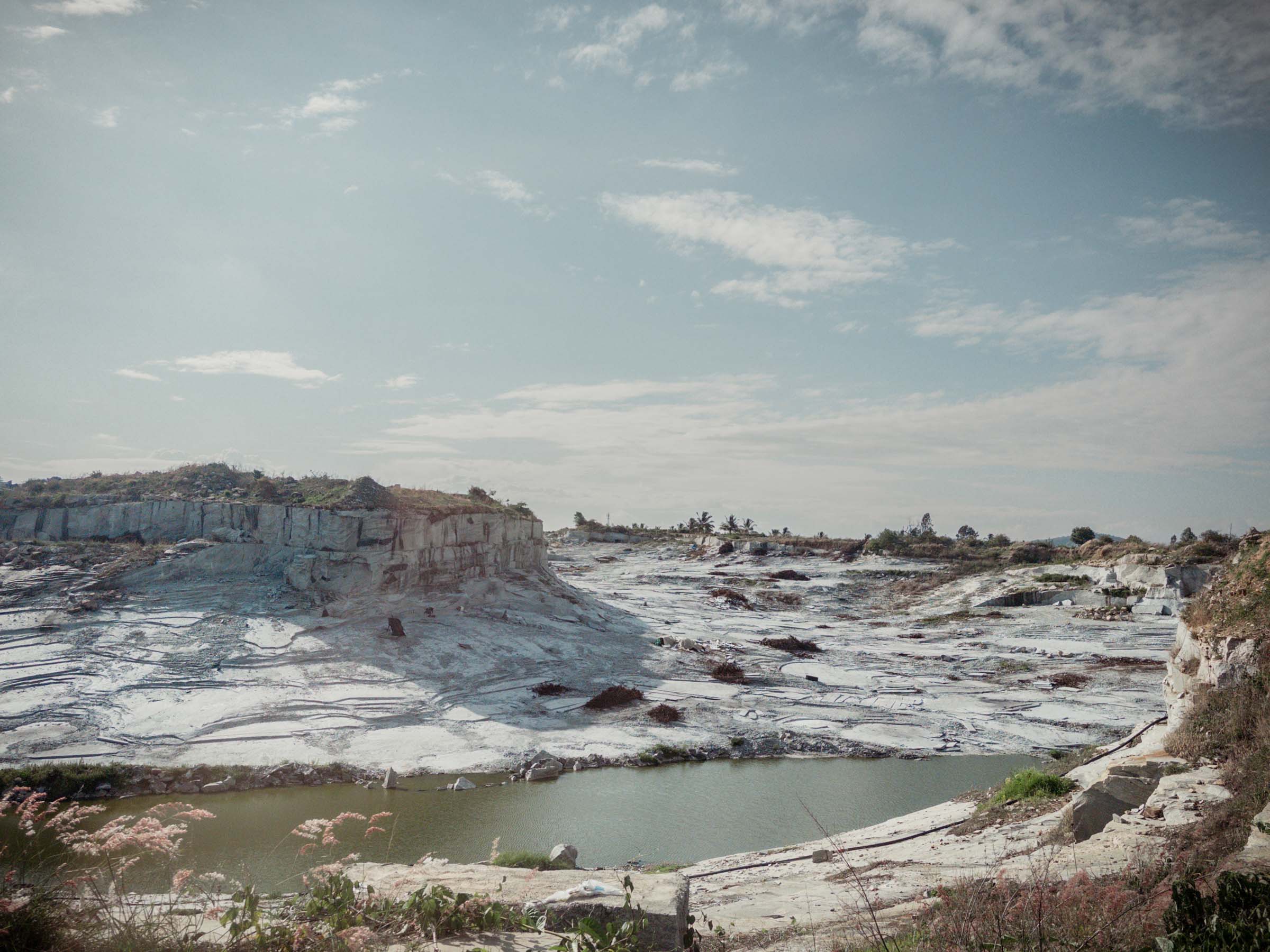
I located Mr. Shashi and his banged-up car, and we headed back to the marble palace Sheraton. On the road down from Nandi Hills to Bangalore we passed quarries of shining white stone. “Marble,” said Mr. Shashi. So it’s ubiquitous after all!