Nepal trek
I spent two days visiting temples in the Kathmandu valley, then four days on the Ghorepani Poon Hill trek in the Annapurna region. I was with my friend Emily and a guide named Bijaya from the Aarya Village travel agency.
The trek was surprising in a lot of ways. I was pretty confident I could handle the exertion and altitude, and in fact those were even easier than I expected. On the other hand, the gross bathrooms were a psychological challenge. As an anthropological experience, the trek was disappointing: I didn’t see a lot of temples, or talk to many people, or eat anything weird. The “teahouses” where we stayed were little trekker hostels with boring food. Luckily our Kathmandu time had been culturally fulfilling.
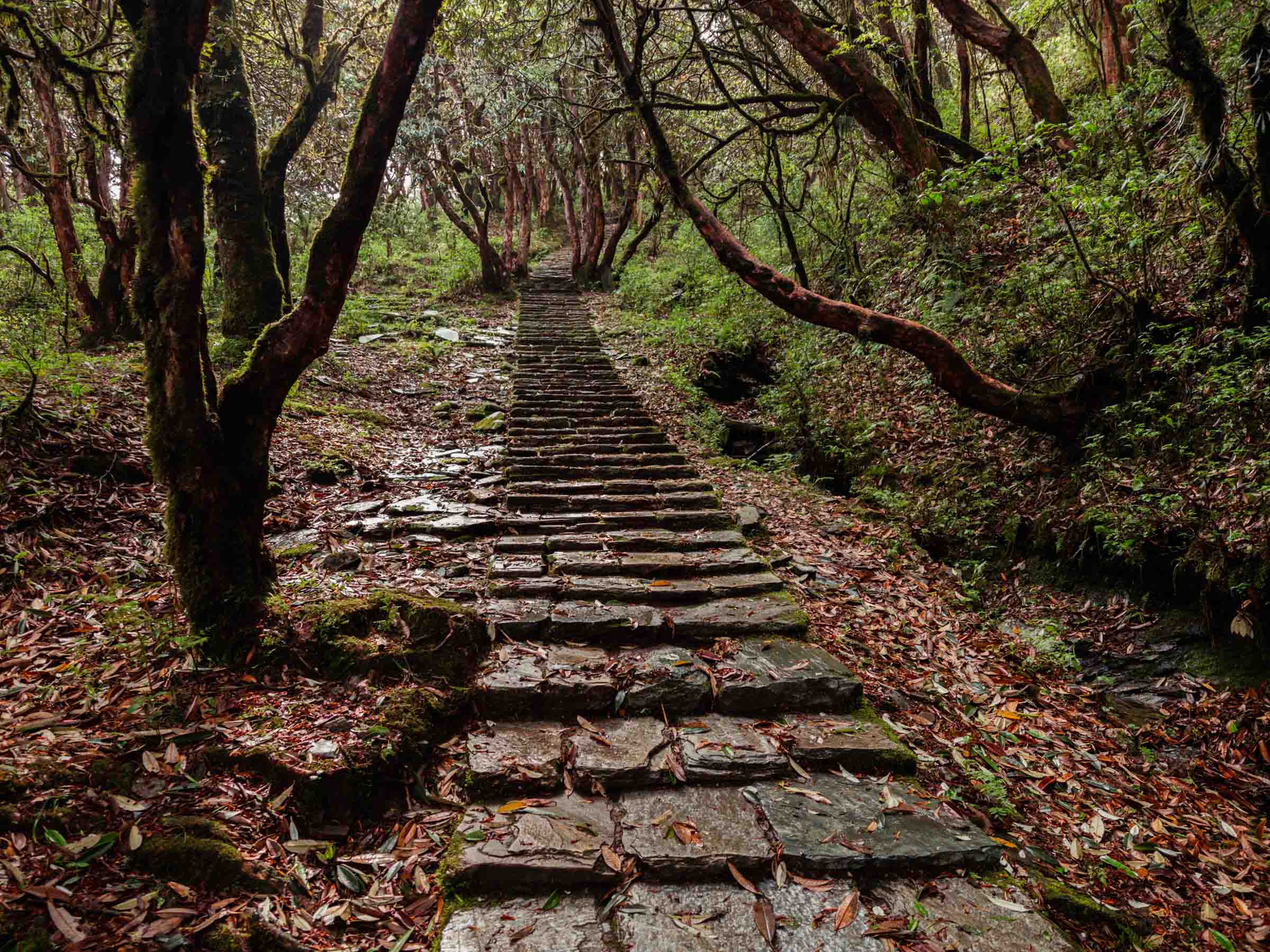
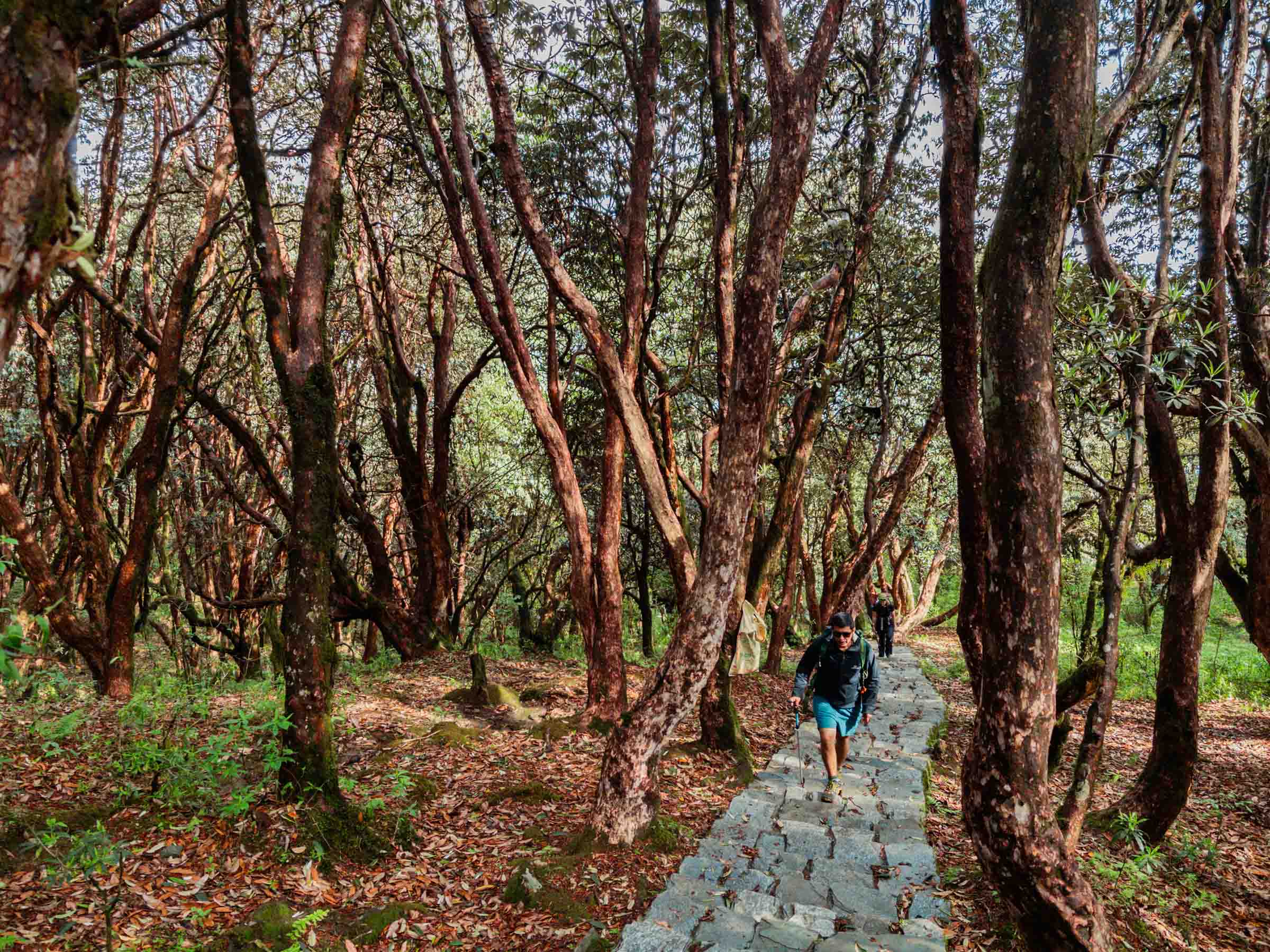
I enjoyed spending four days outdoors, with few concerns past my feet and the contents of my backpack, walking through the changing landscape. We hiked through rhododendron forests and past waterfalls; we saw goats, langur monkeys, birds with very long tails, water buffalo, and donkeys. There were miles of hand-hewn stone steps, with so much mica in the rocks that some of them looked carved from silver.
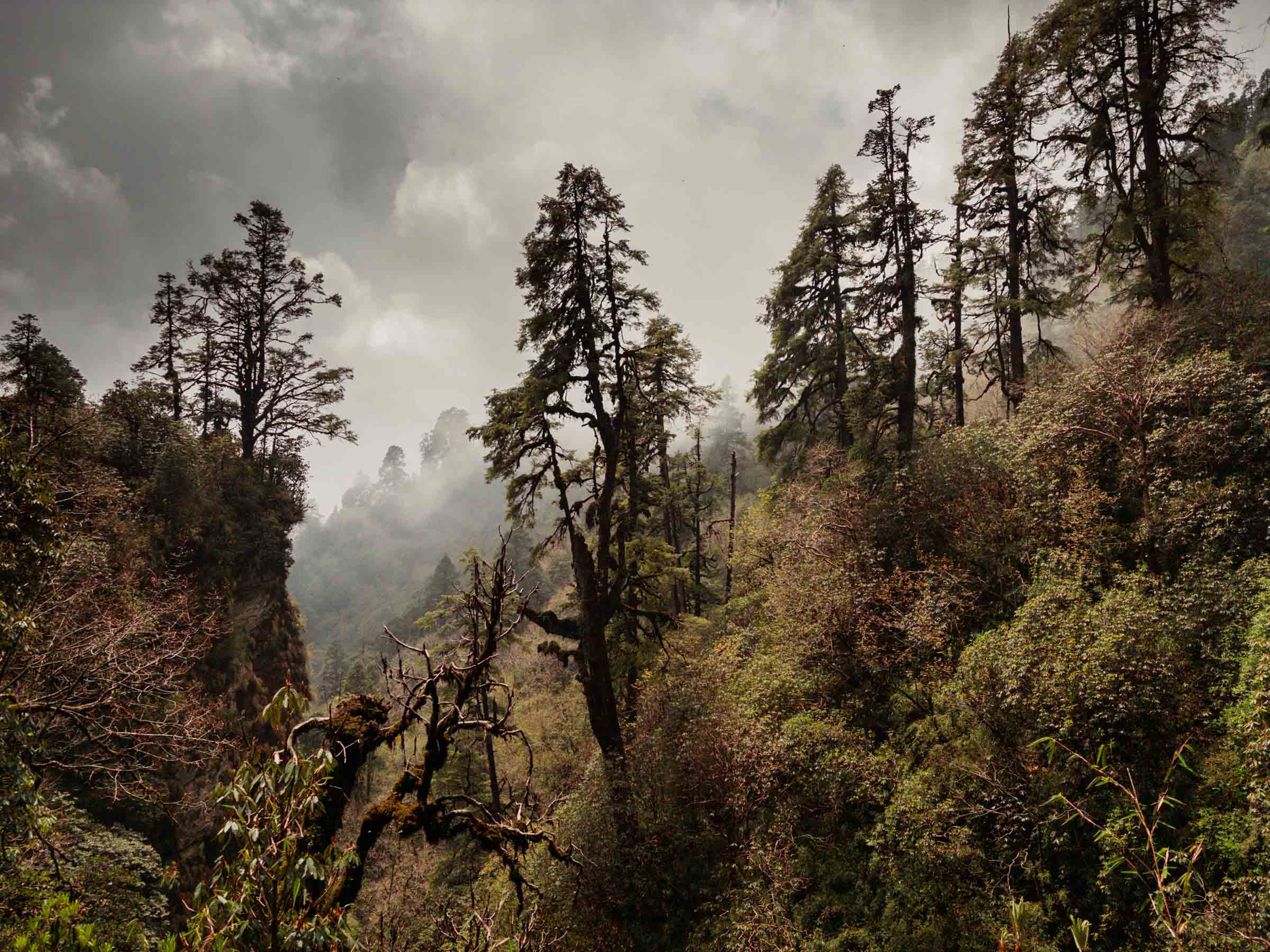
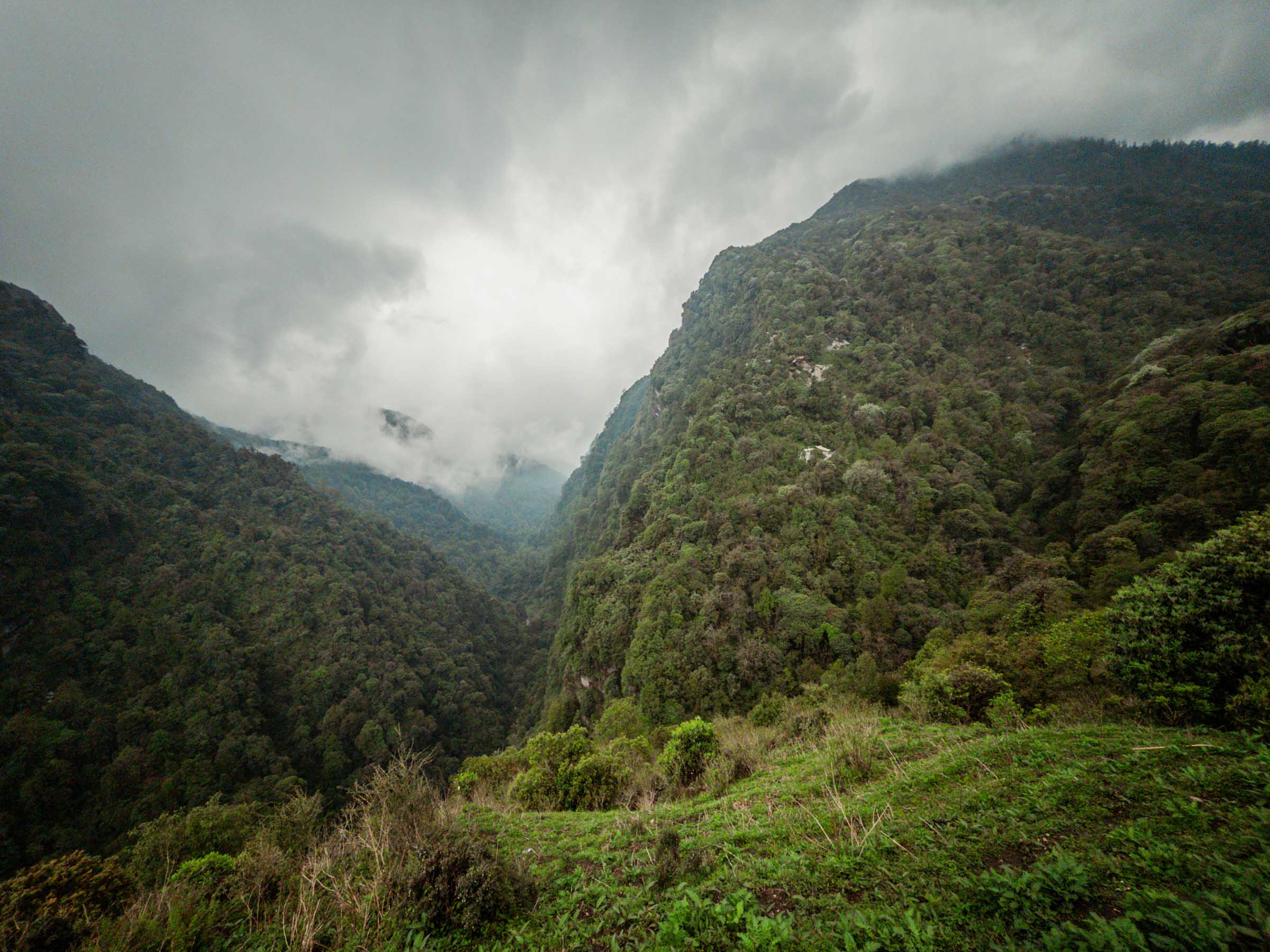
It was very wet. A monsoon downpour came every afternoon. We got soaked the first day. After that we learned to walk in the morning and get under a roof by 2pm. We hoped to see the Annapurna and Machapuchare peaks, but mostly they stayed hidden. We only caught glimpses through the mist and clouds.
Kathmandu #
We started with two days in Kathmandu. We climbed up to Swayambhunath, the hilltop stupa that’s better known as the Monkey Temple.
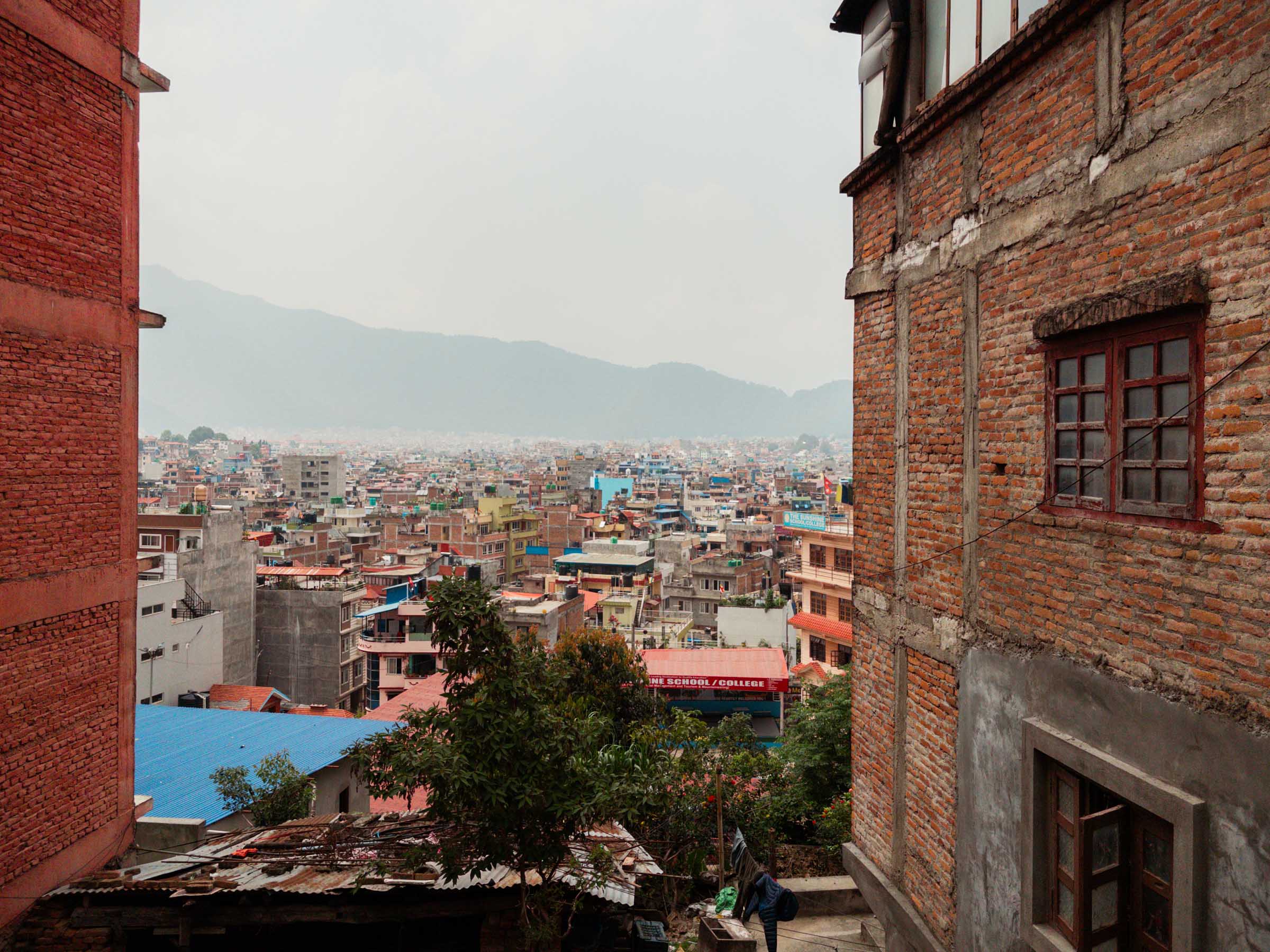
Kathmandu.
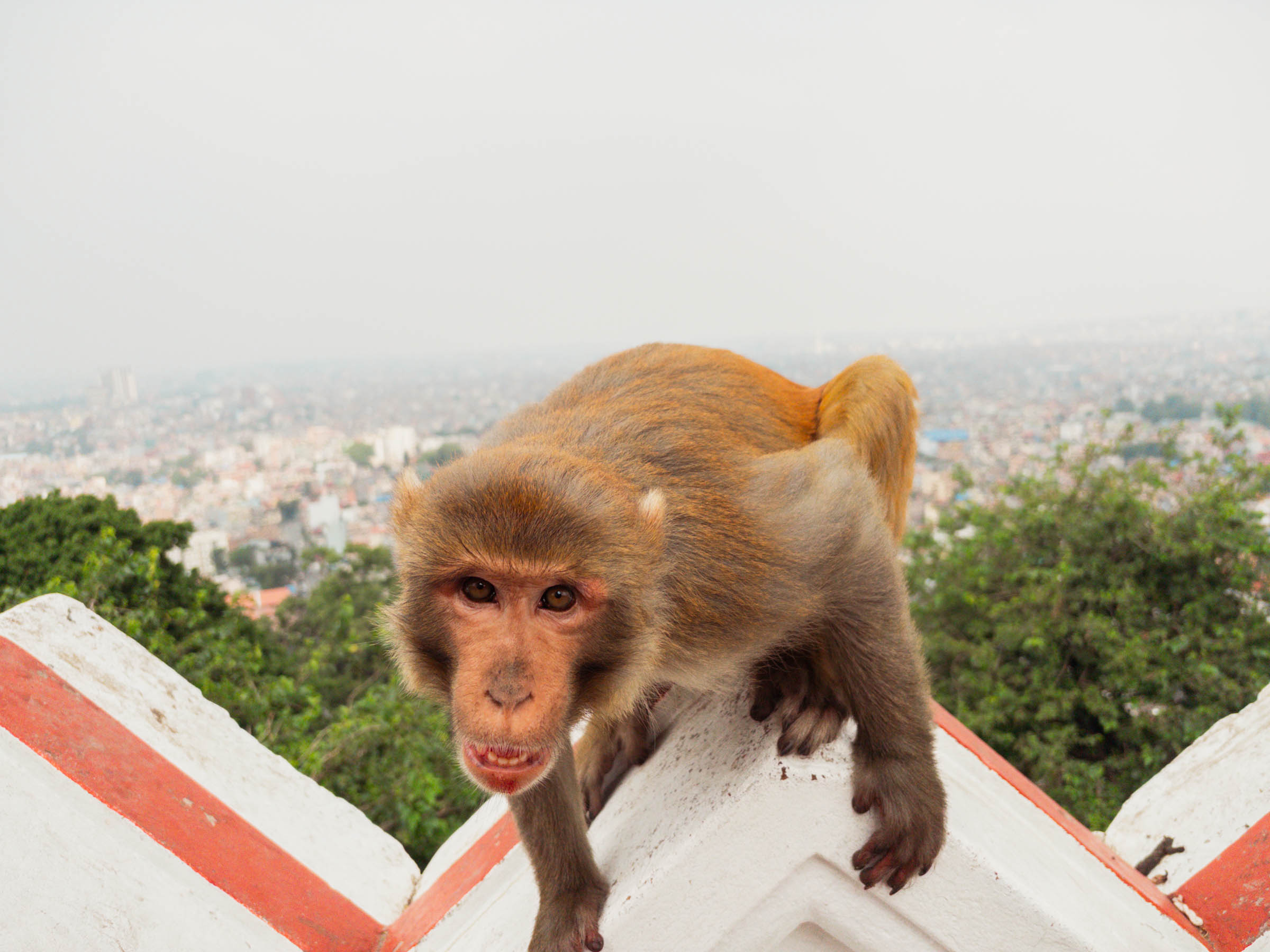
A Swayambhunath monkey—aggressive and uncouth.
The next day we toured the neighboring city of Patan and its Durbar (“Royal”) Square. We saw the Ratnakar Mahavihar—the home of the Kumari, one of the Nepali girls shut up in a temple and treated as a living goddess until puberty. Our guide offered to arrange a meeting with her, but I felt repelled. It seems worse than a zoo.
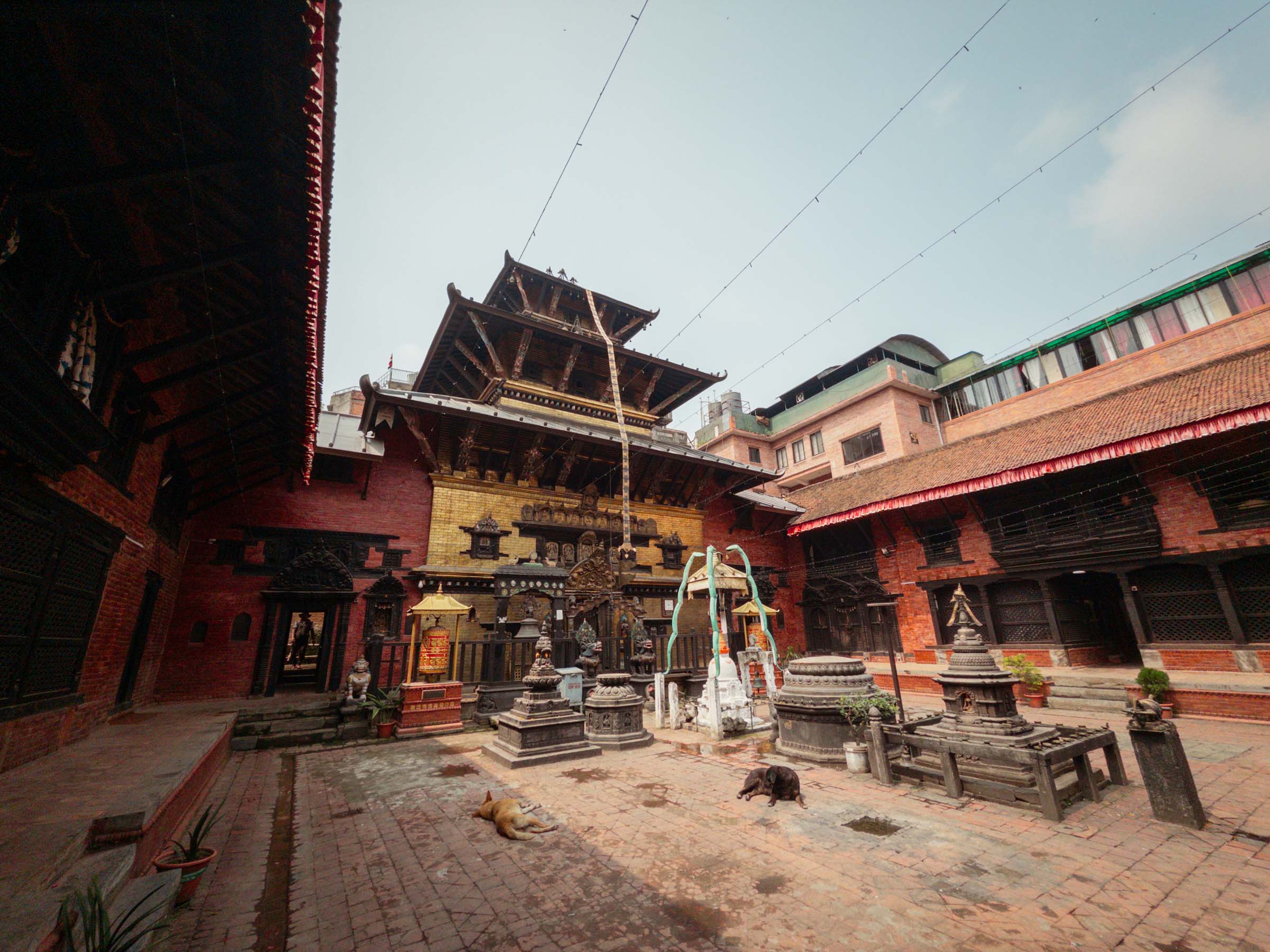
Ratnakar Mahavihar.
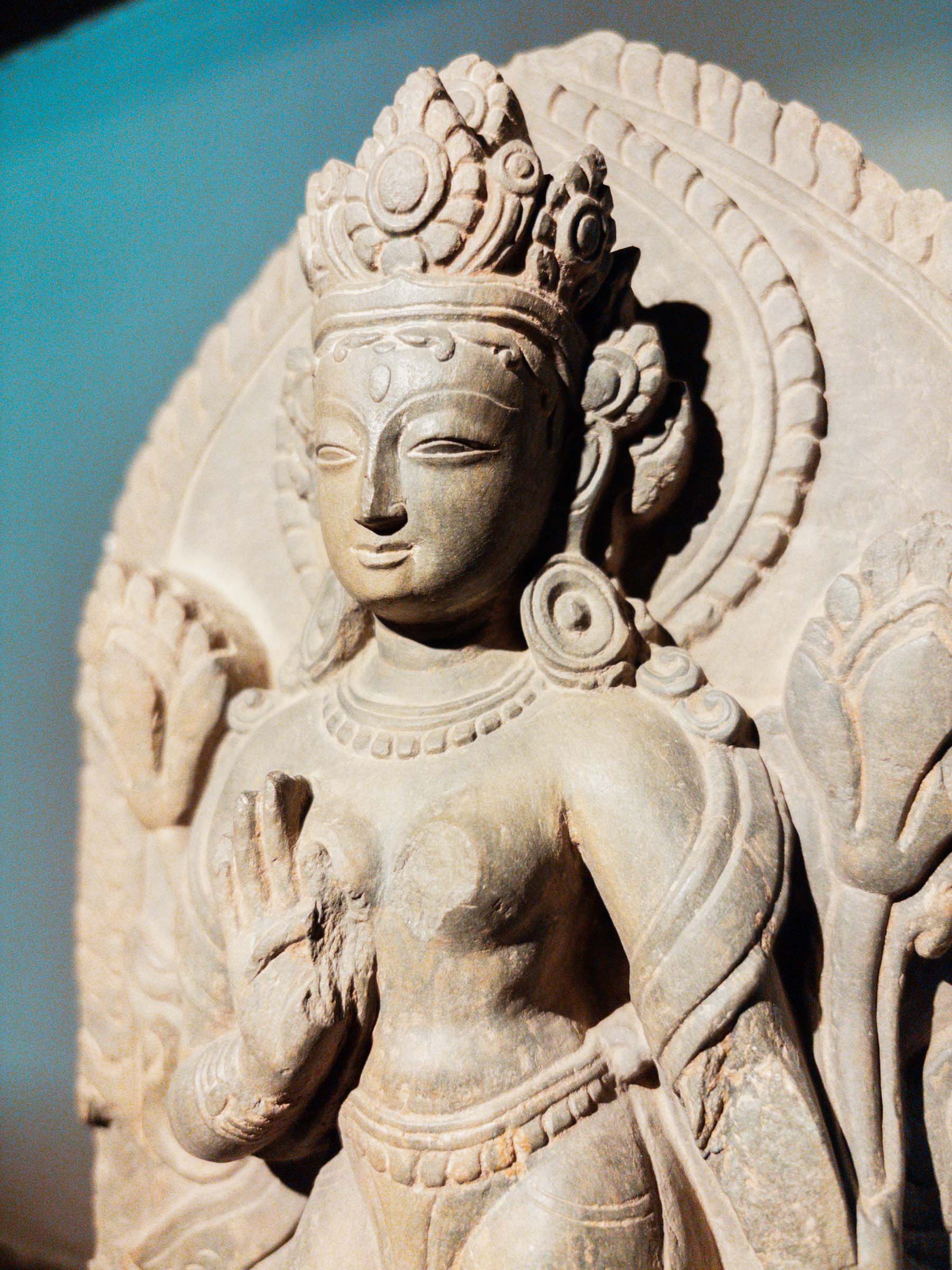
Sculpture in a terrific museum of Newari architecture in Patan Durbar Square.
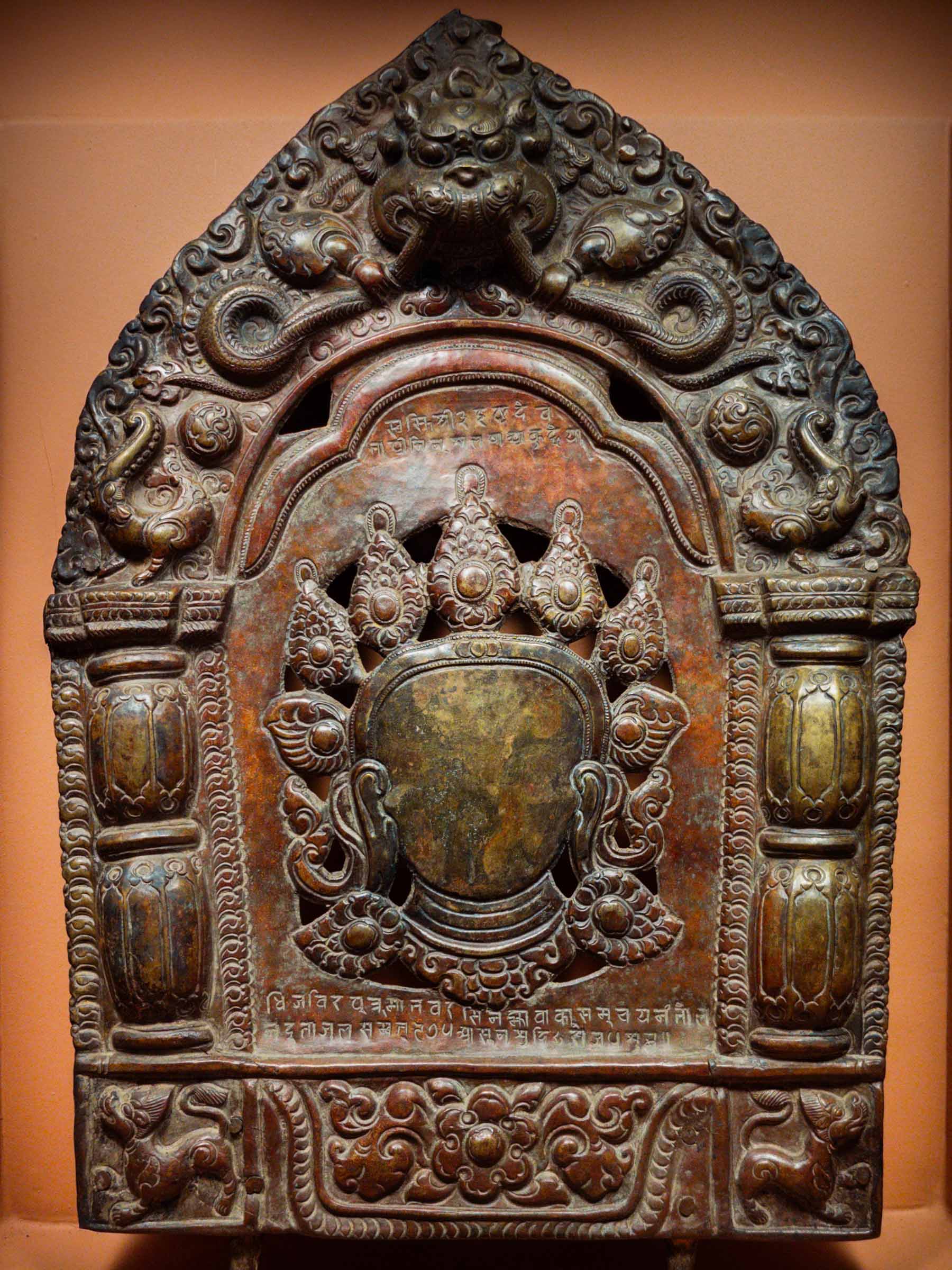
A faceless deity in the museum. I didn’t record what the label said.
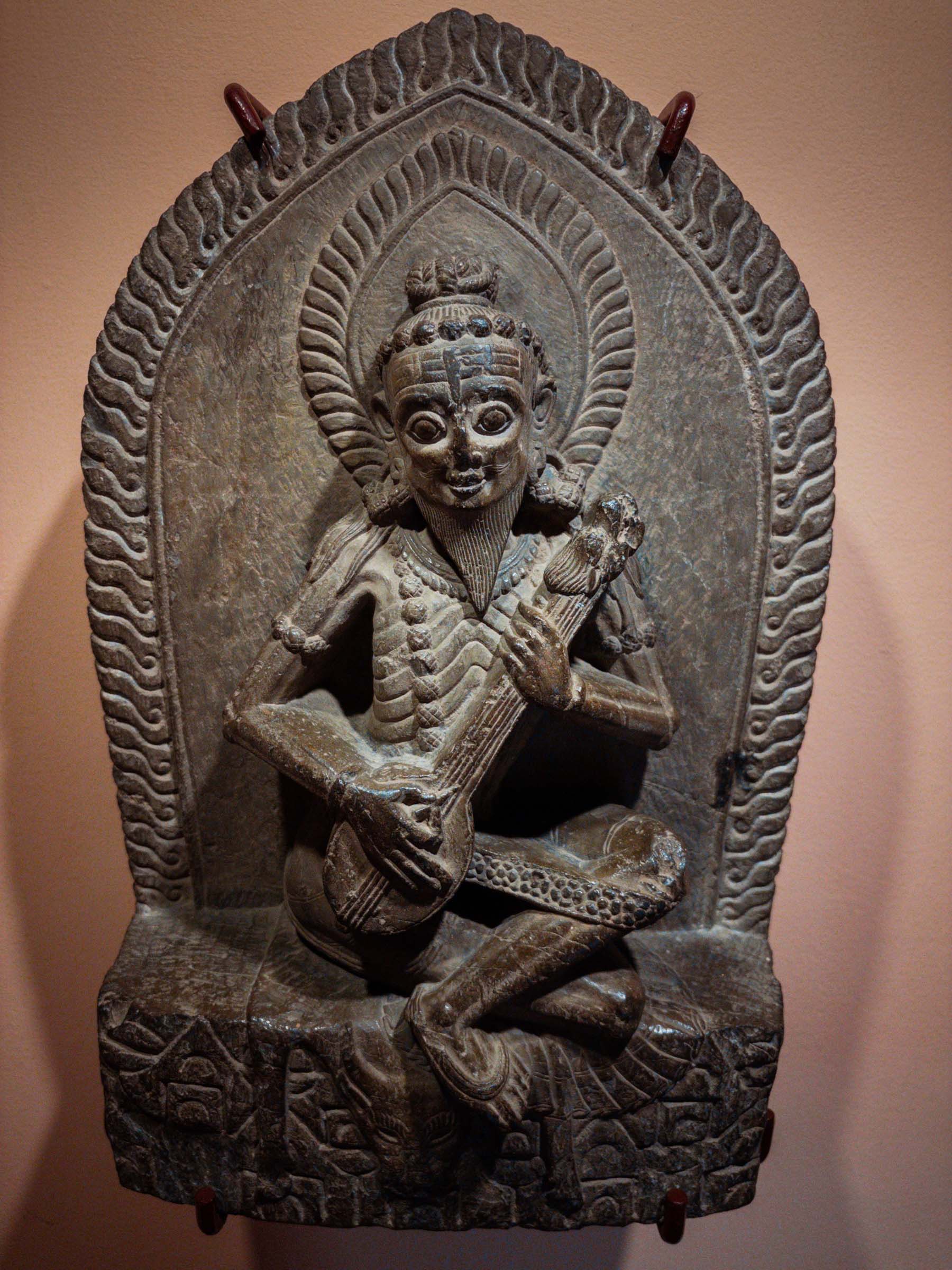
Narada, the Heavenly Musician.
We visited another stupa, Boudhanath, where crowds of pilgrims circumambulated clockwise.
We watched cremations at the ghat (river steps) at Pashupatinath, a Shiva temple. We took photos from a respectful distance, then walked up close to observe the burning corpses. How different from the squeamish American way of death!
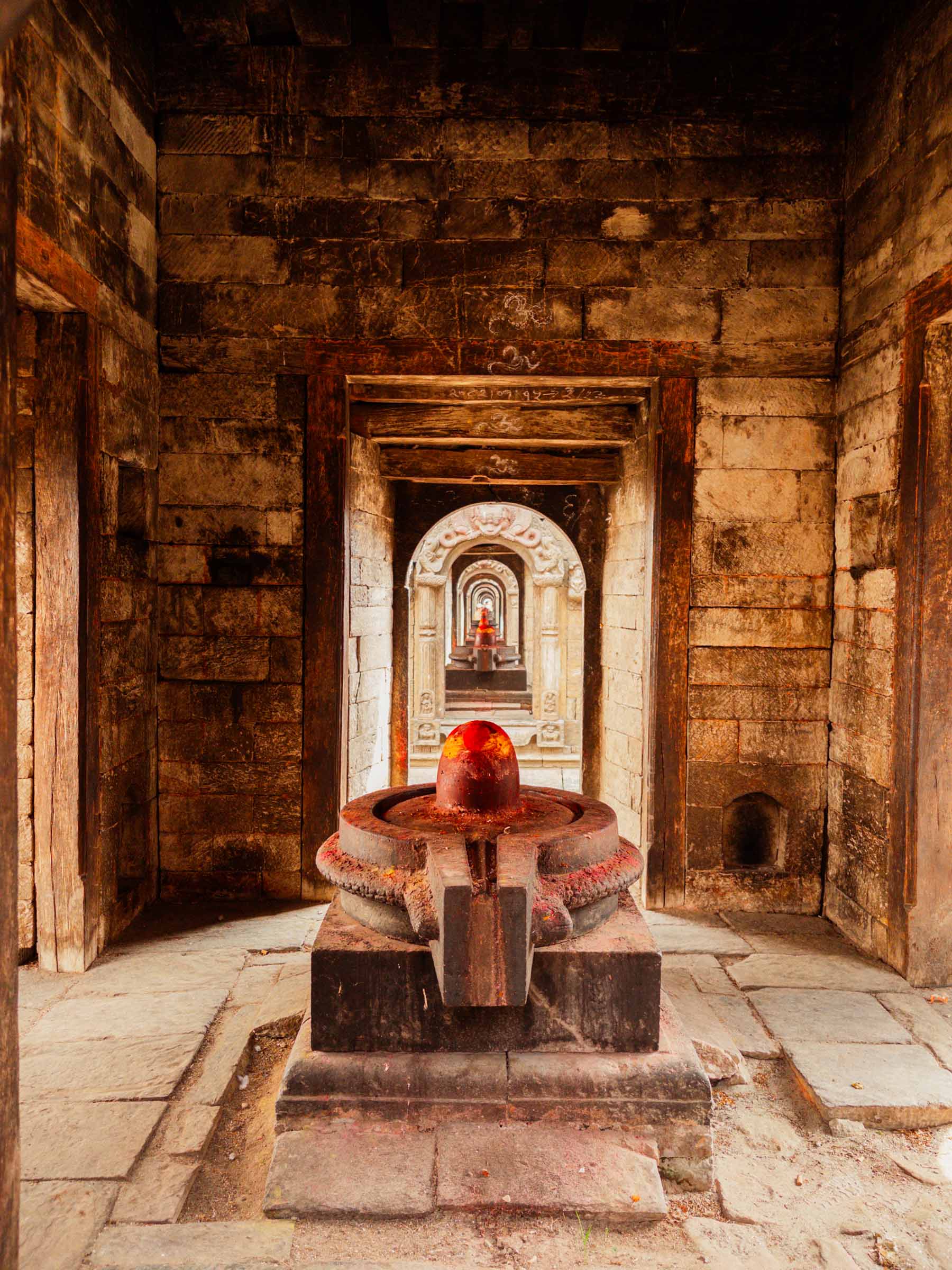
There are dozens of little shrines with Shiva lingams across from the cremation area.
Day 1: Ulleri to Ghorepani #
On Saturday we flew to Pokhara and drove up the heinously bumpy “road” to Ulleri, where the trek began. We started with a steep hike up to Ghorepani.
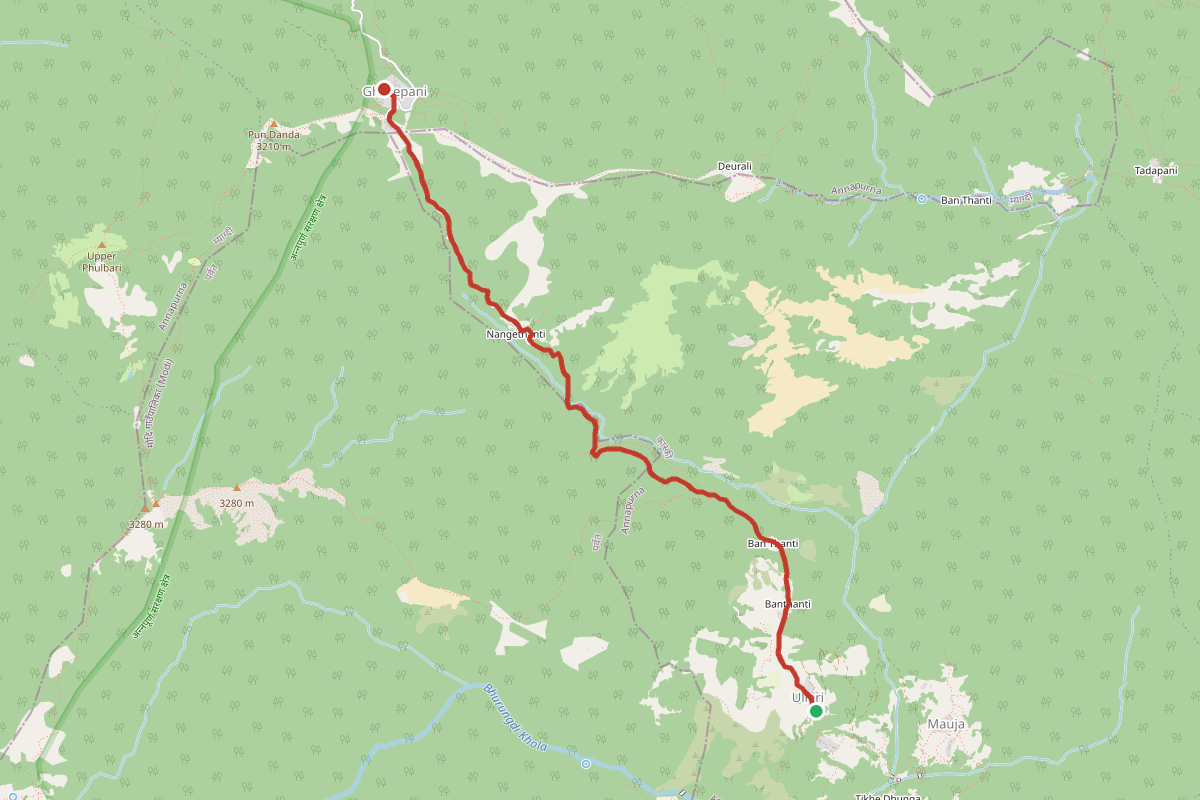
Ulleri to Ghorepani. 5.2 miles, 3,150 ft up, 200 ft down, 3h 24m.
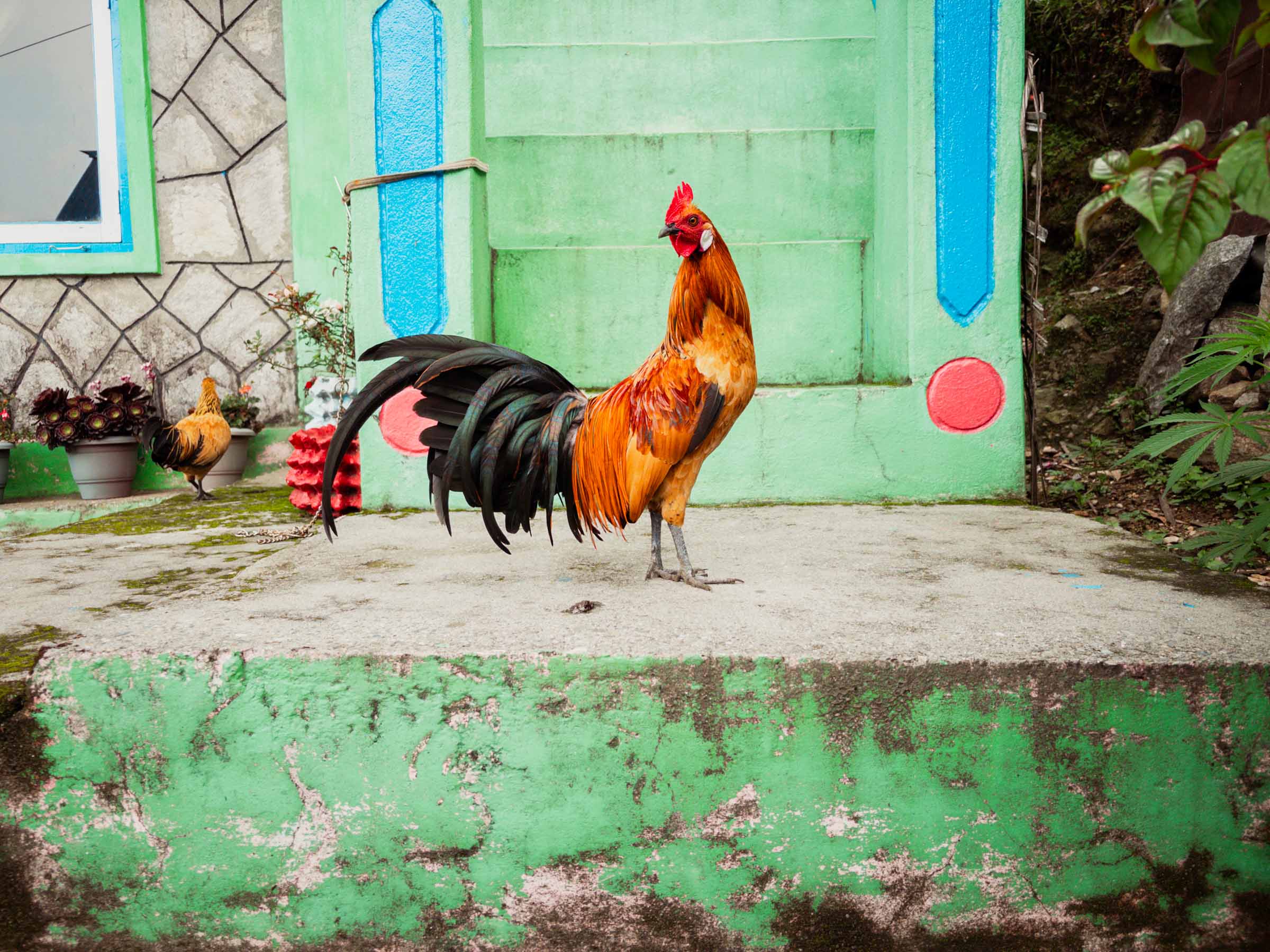
A rooster, on the trail from Ulleri to Ghorepani.
This day was intense. The altitude and the uphill hiking were fine, but we spent the final two hours in a total tropical downpour. The trail turned into a river. I passed a rat swimming for its life. We finally reached the teahouse on a hilltop, sopping wet. Emily, Bijaya, and I all picked several leeches off our legs. I had a big one that had somehow crawled up inside my shorts and attached to my inner thigh.
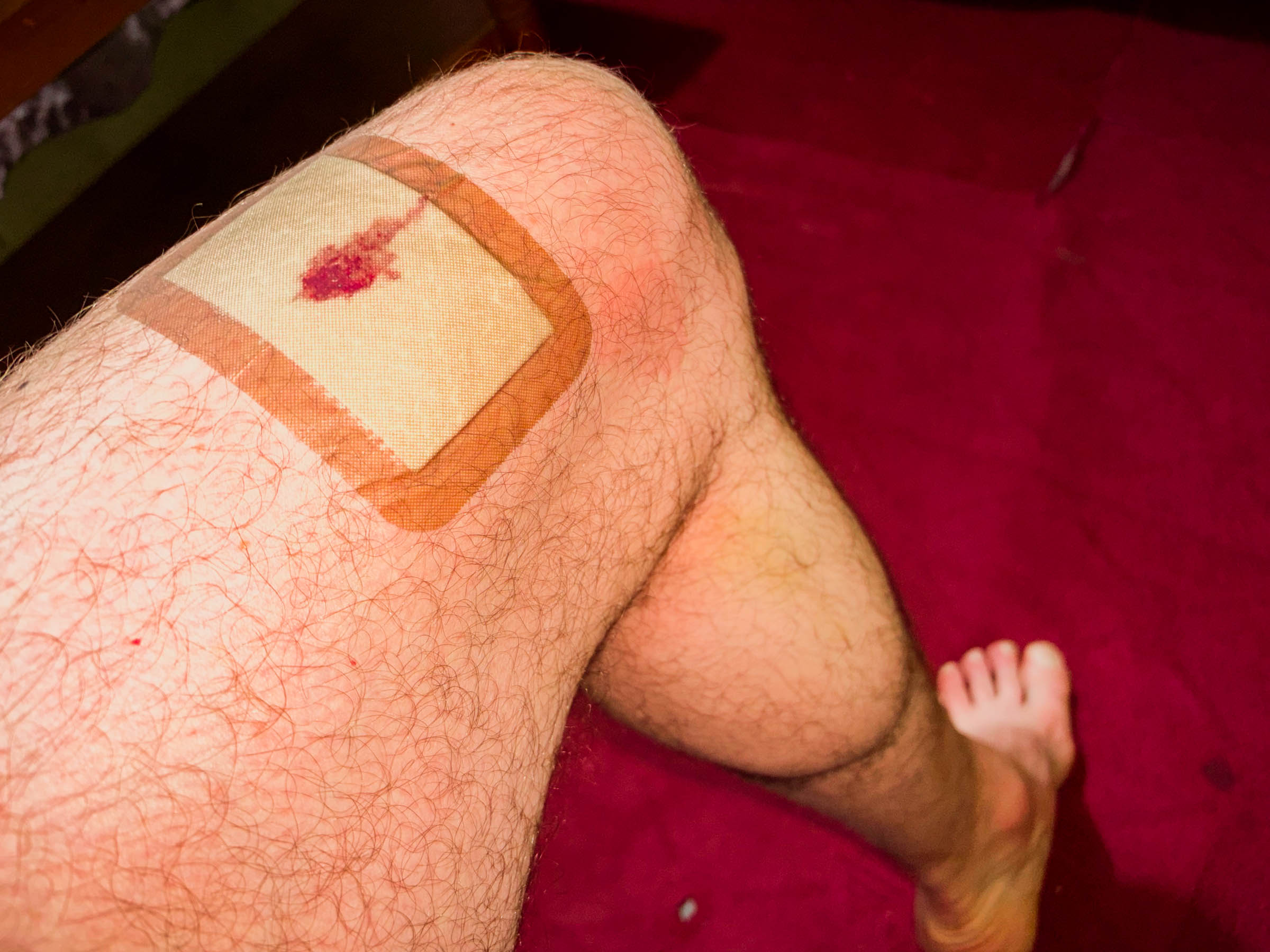
Leeches inject anticoagulant. This little puncture bled for hours.
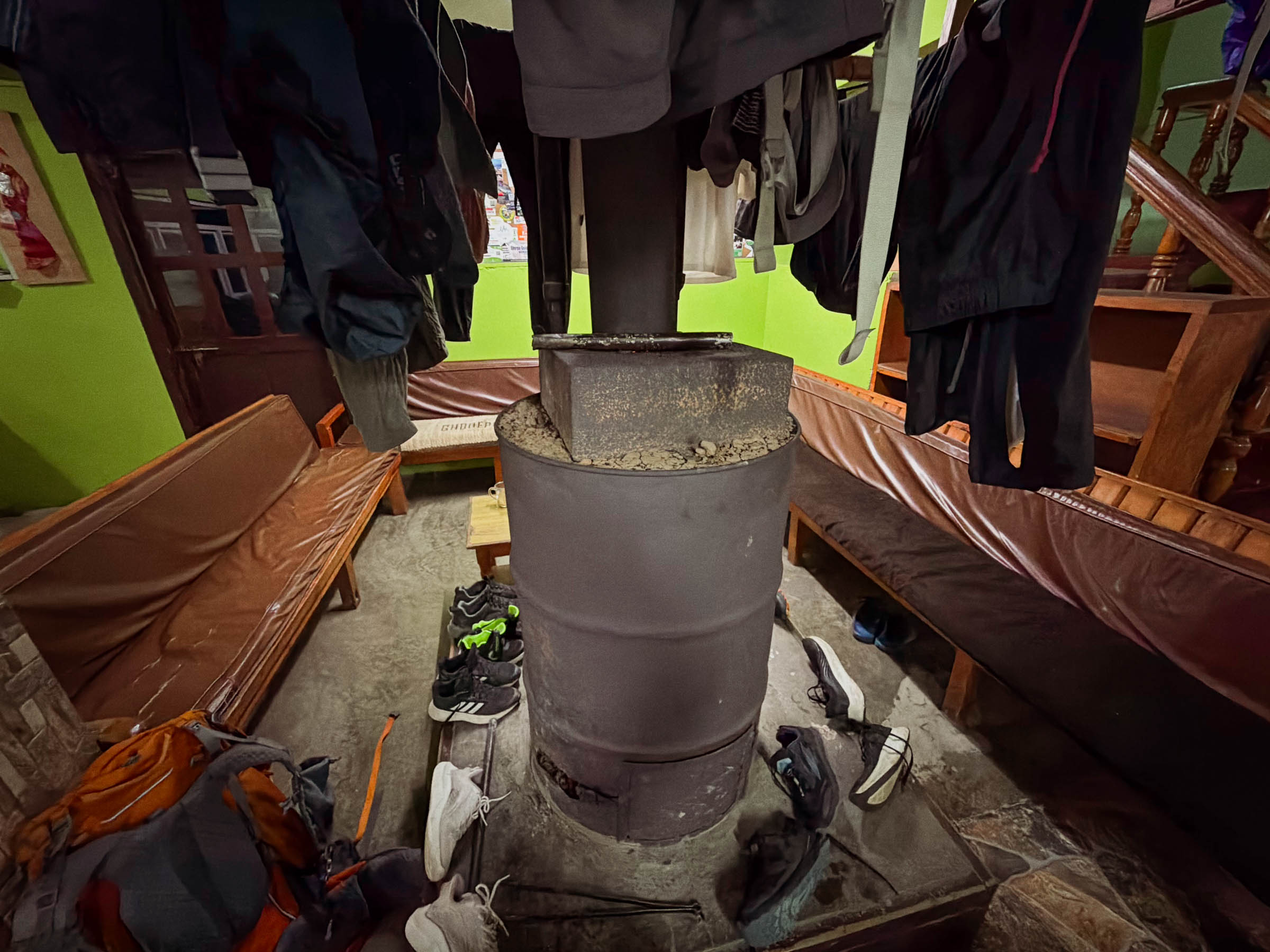
By evening we were warm and dry. We arranged our wet gear around the wood stove, where a couple other trekking parties had already hung their stuff. I watched a tiny leech inch off my boot and shrivel up in the heat, to my satisfaction.
Day 2: Poon Hill, then on to Tadapani #
The crescendo of the trek is to climb Poon Hill (3,210m) before dawn and watch the sun rise behind the Annapurnas. We left our packs in the teahouse and started uphill at 4:30am.
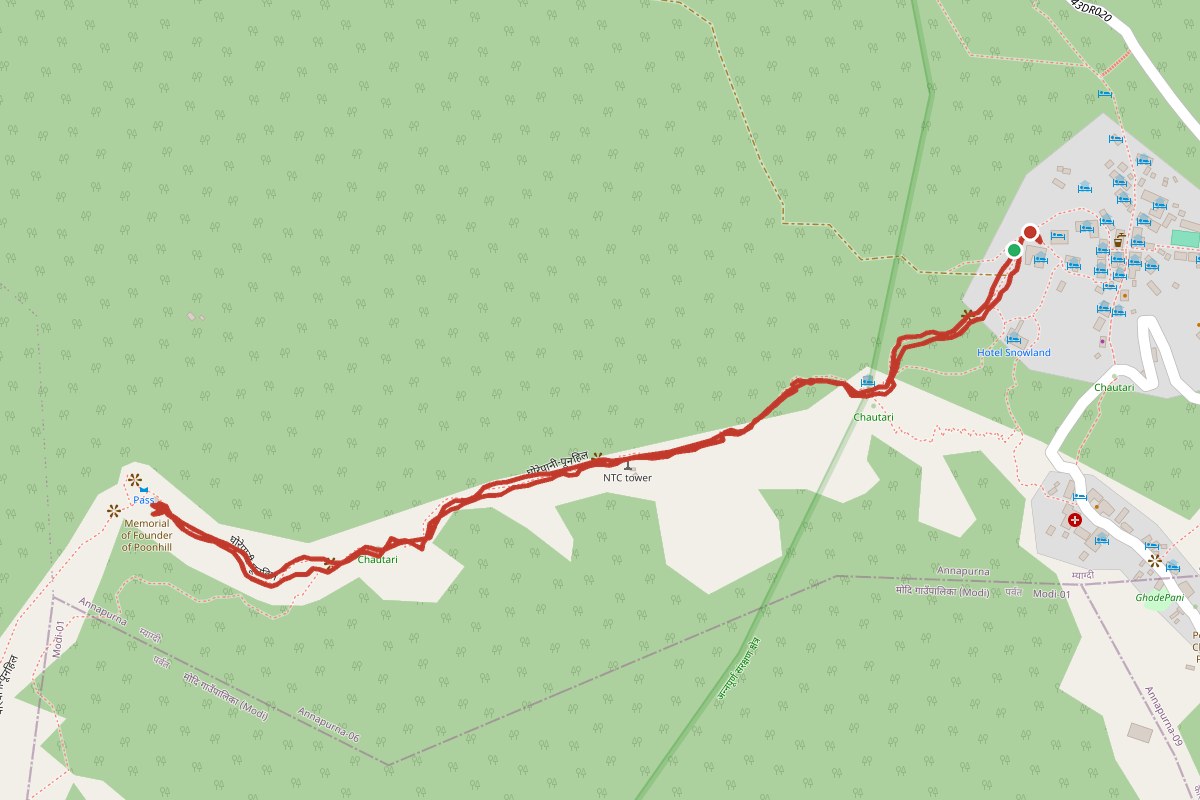
The pre-dawn loop up Poon Hill and back. 1.5 miles, 950 ft up, 950 ft down, 2h 31m.
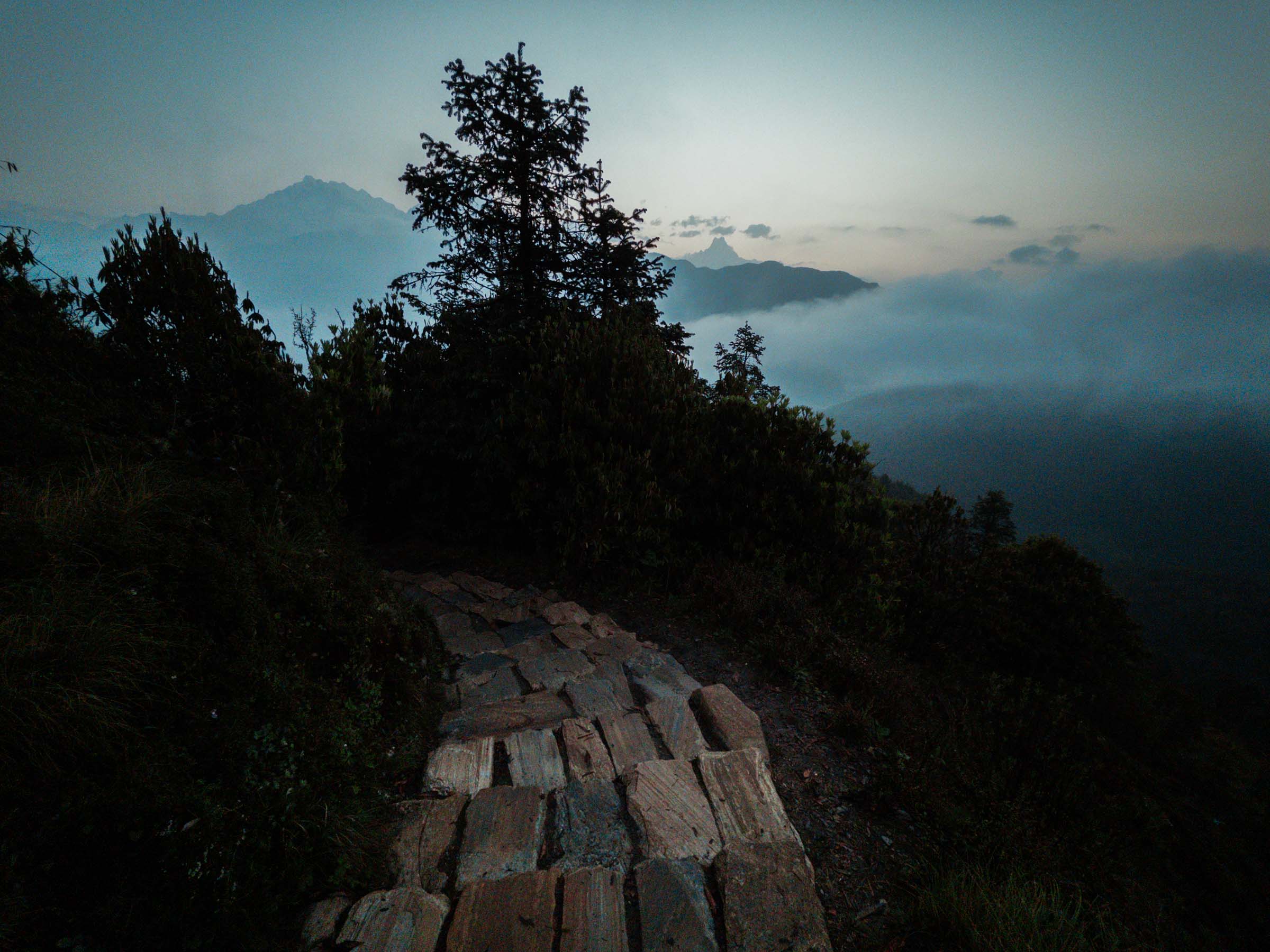
Poon Hill at dawn.
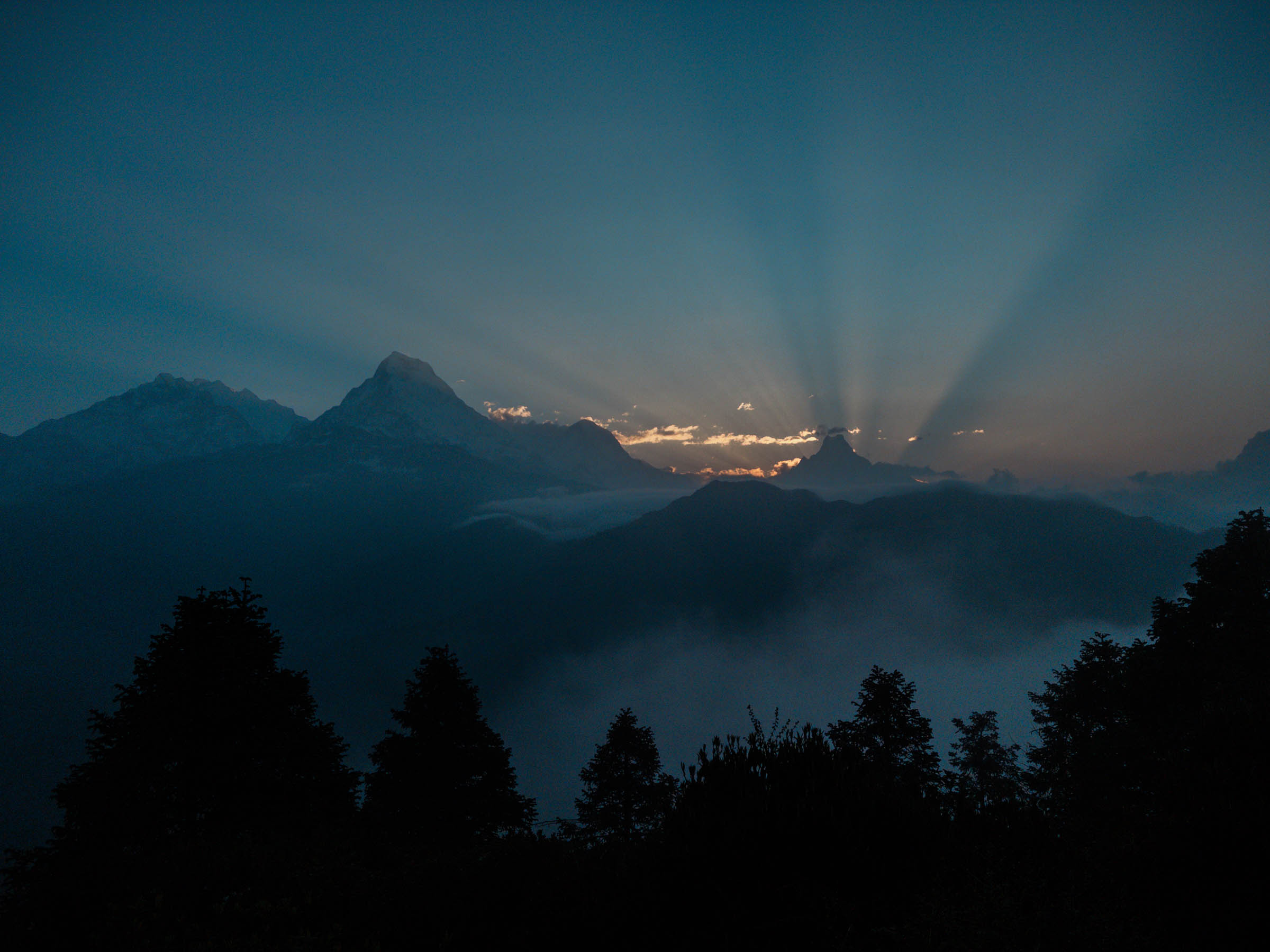
The Annapurnas from the hilltop.
After sunrise we walked back down to Ghorepani for breakfast, and continued onward to Tadapani. We walked until 3pm. The trails and teahouses were mostly empty, since it was the end of the trekking season. At times, if I was walking in front or if I stopped to take photos, I didn’t see anyone around. I could imagine that I was in a remote wilderness. But the trail was usually wide and obvious, and there were villages every few hours.
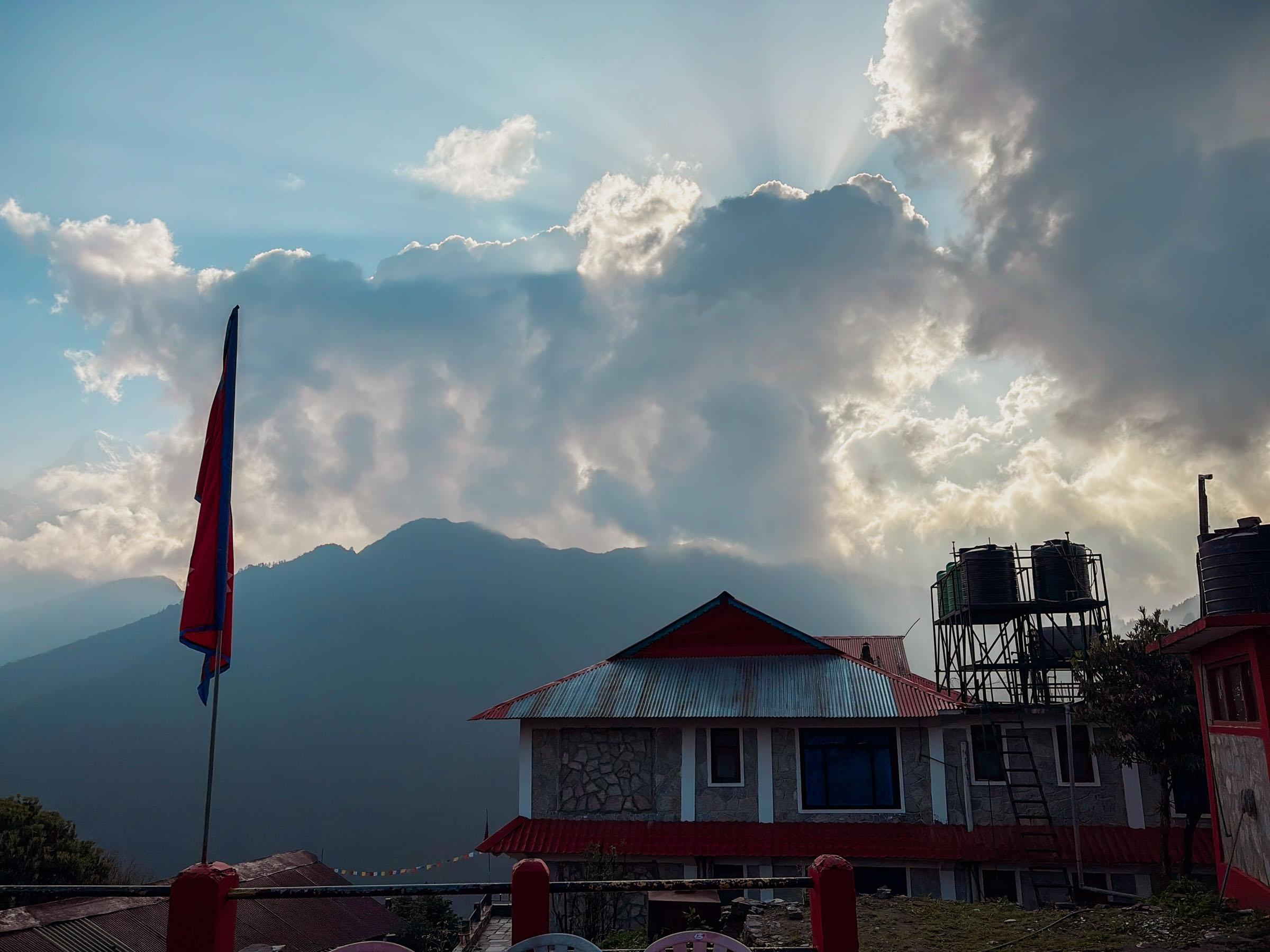
Ghorepani.
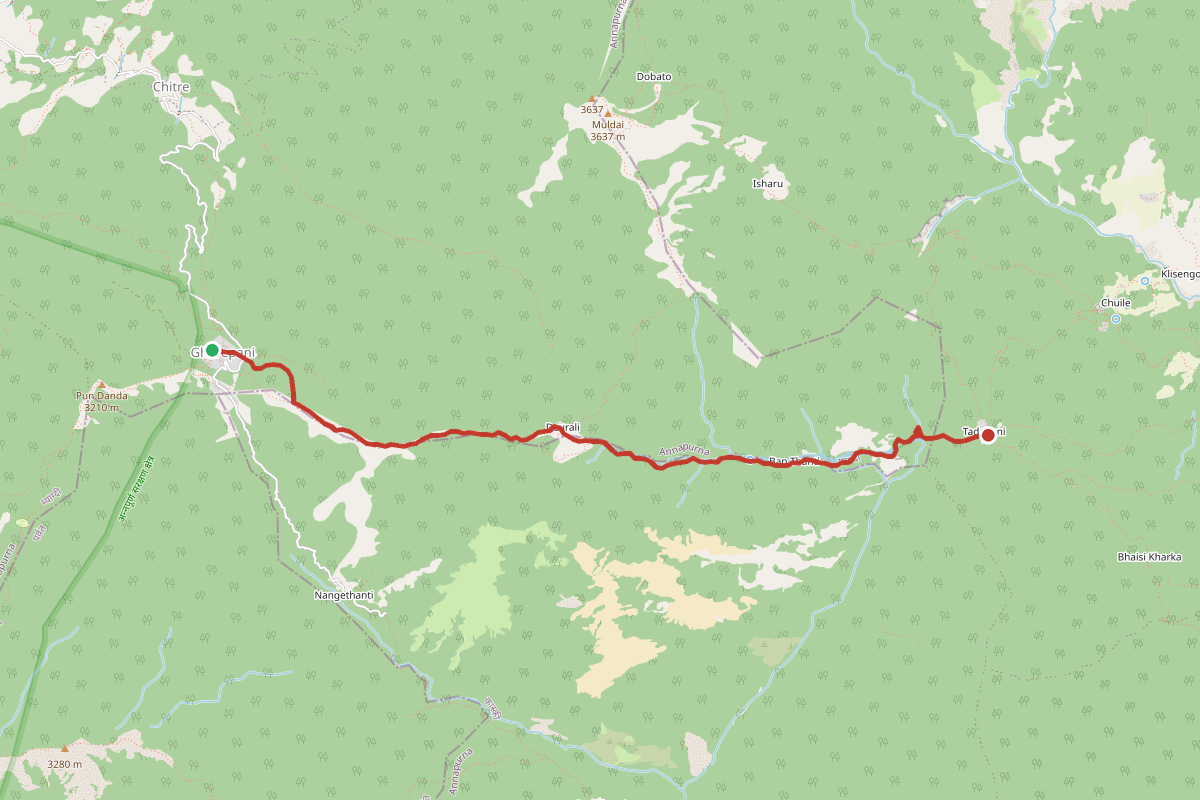
Ghorepani to Tadapani. 5.8 miles, 1,700 ft up, 2,400 ft down, 6h 30m.
Most of the day we walked through a rhododendron forest. Bijaya said this was his favorite part of the trek, which he’s done more times than he can count.
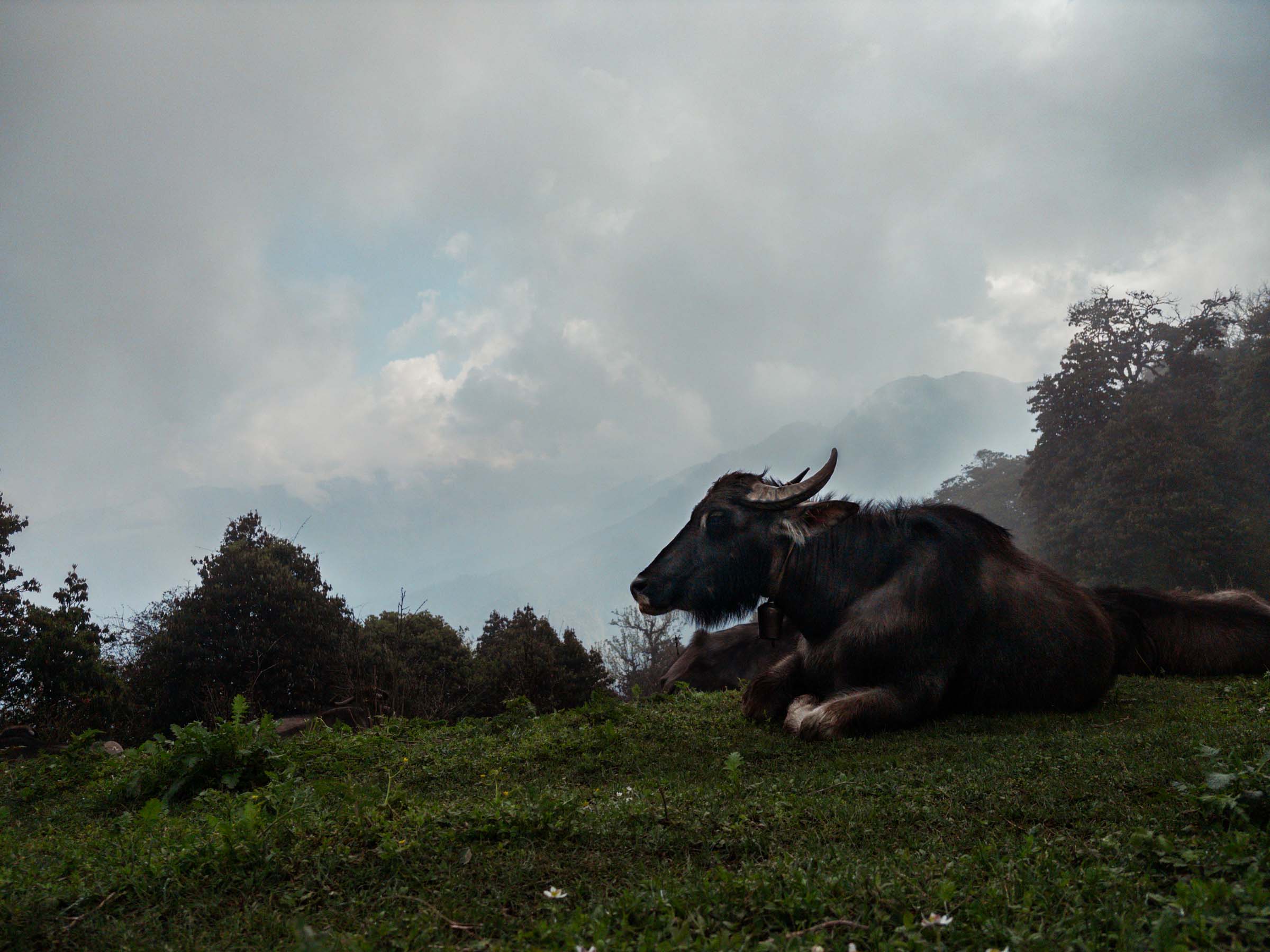
A water buffalo.
Every village had a couple of teahouses and a store selling toilet paper and Coke. Every teahouse had exactly the same menu, due to a non-compete system in the region. I had a mediocre thali with chicken curry for lunch and dinner, every day, and either eggs or muesli for breakfast. One day we passed a high-altitude coffee shop with a decent cappuccino.
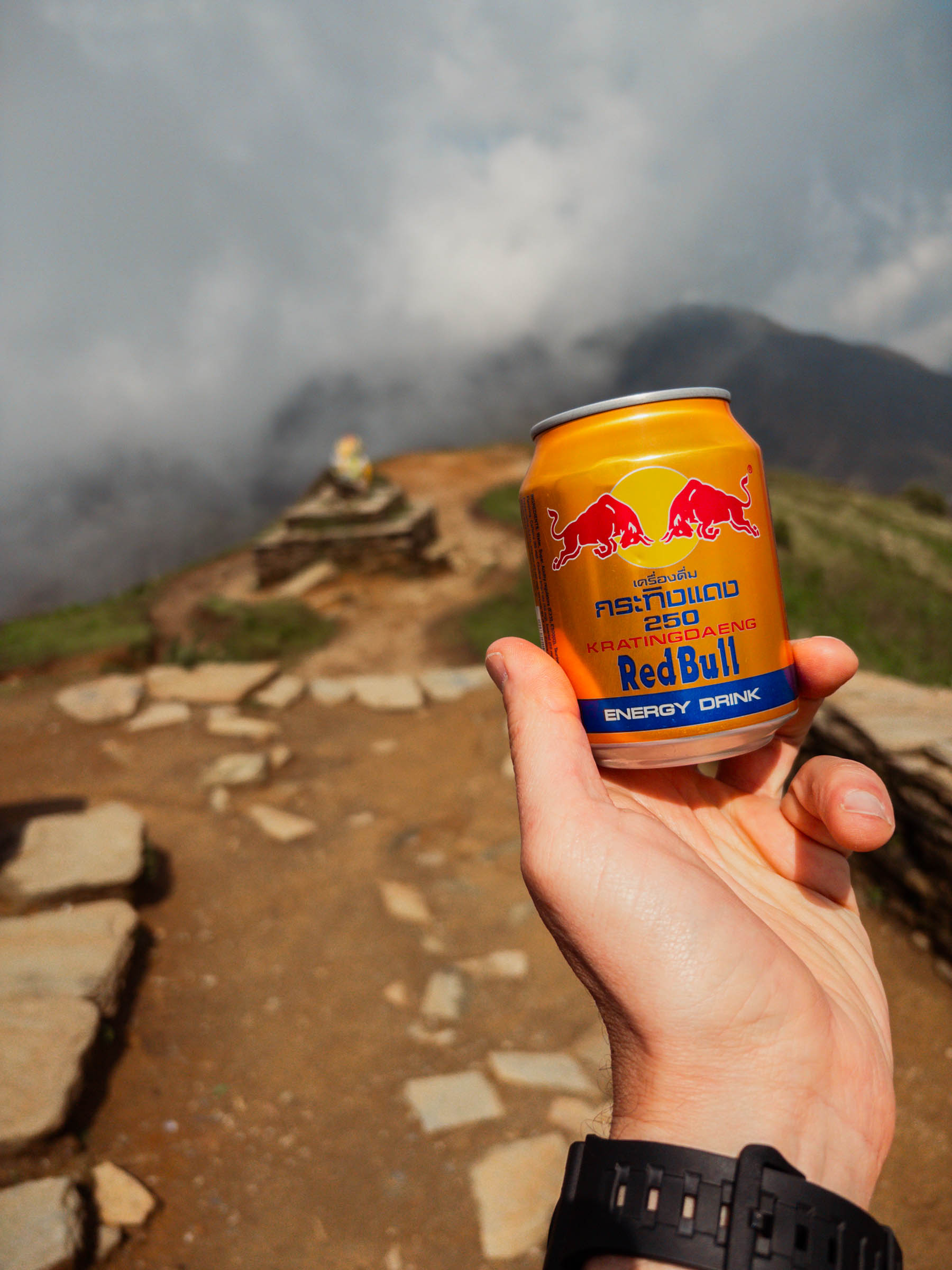
Nepali Red Bull—a welcome jolt on the trail.
There were practically no temples or shrines out here—the country folk are either less religious than in Kathmandu or just too poor to build anything more than their home altars. We sometimes passed cairns, mani stones, sticks, and prayer flags.
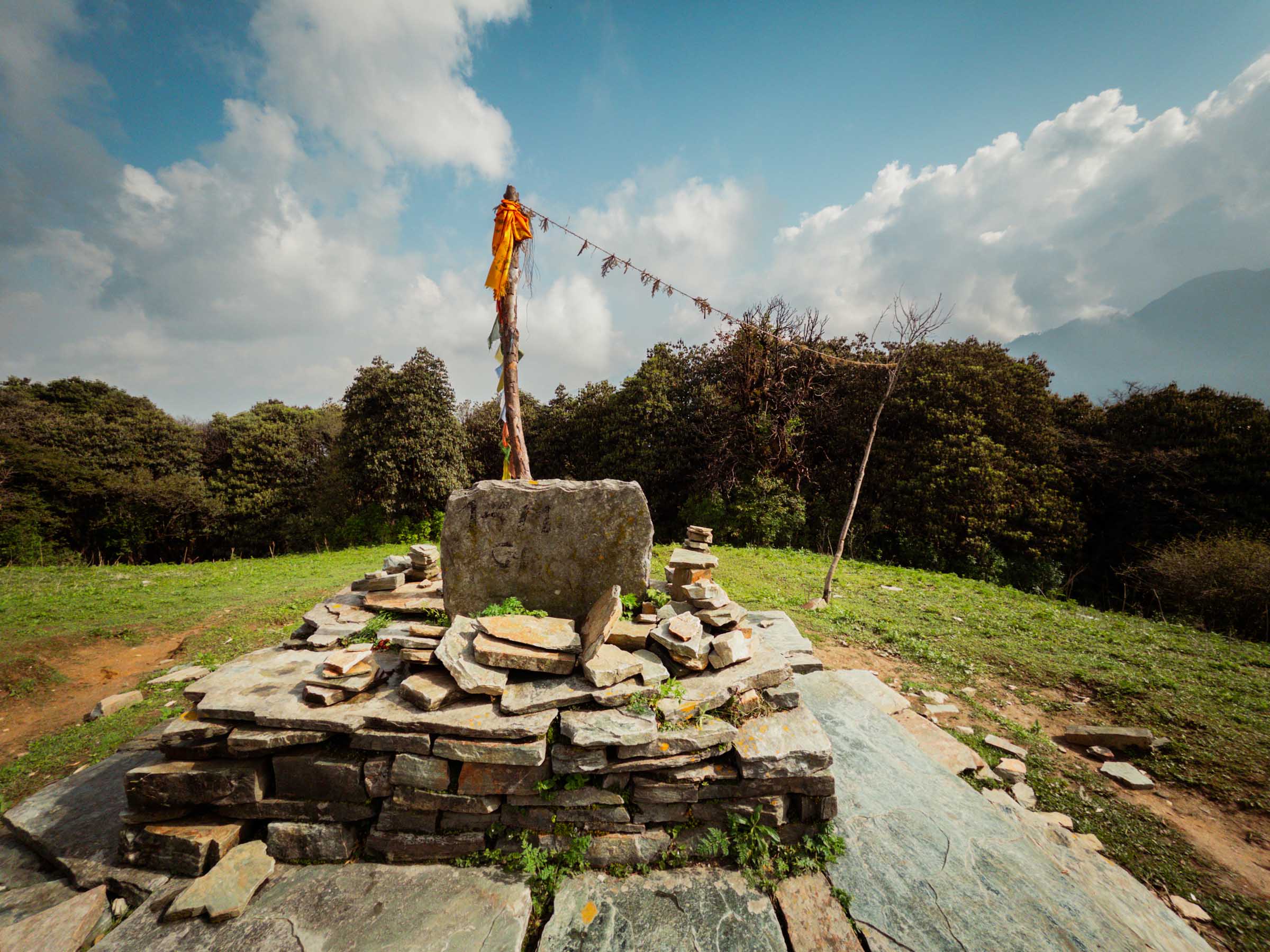
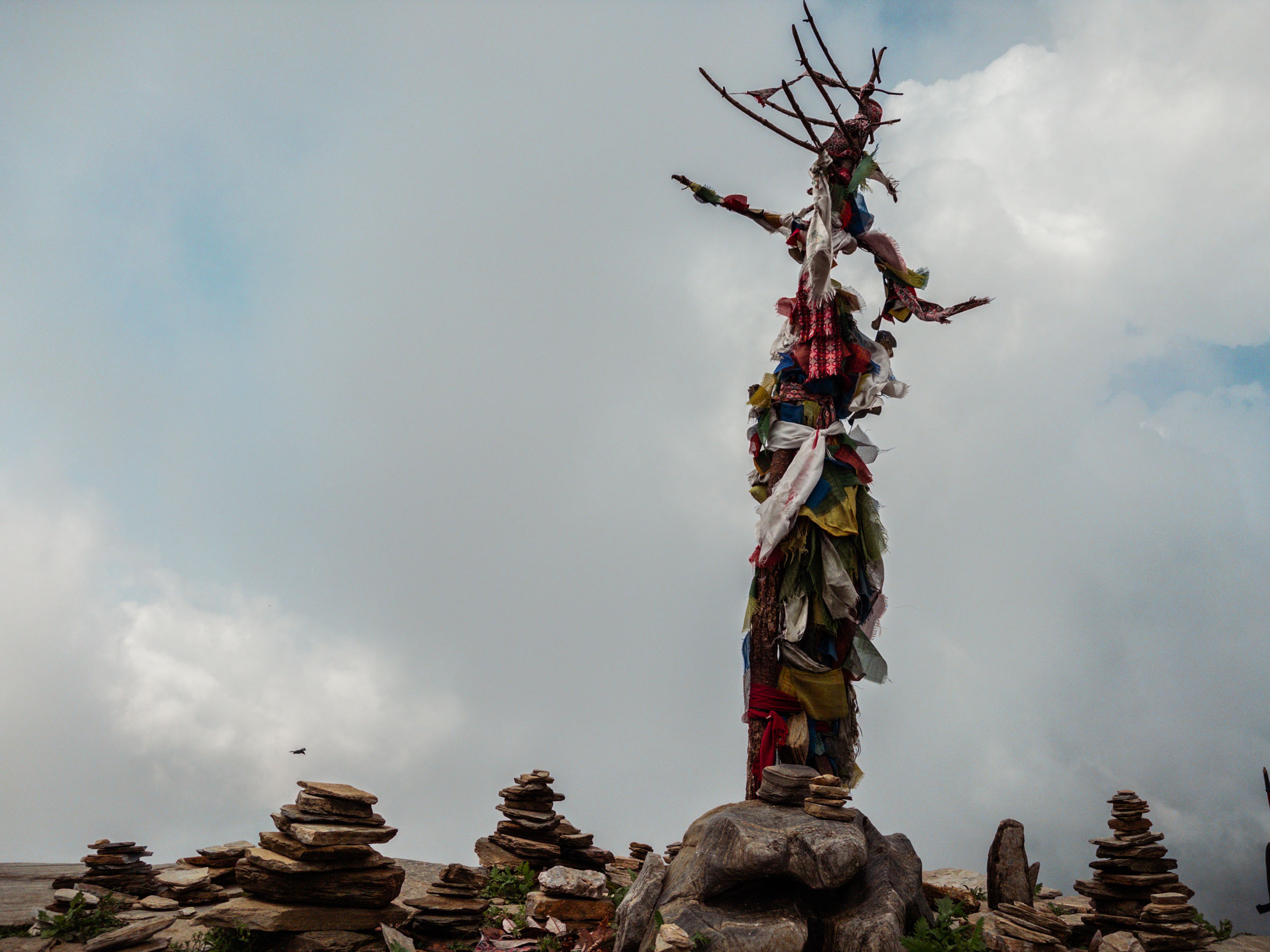
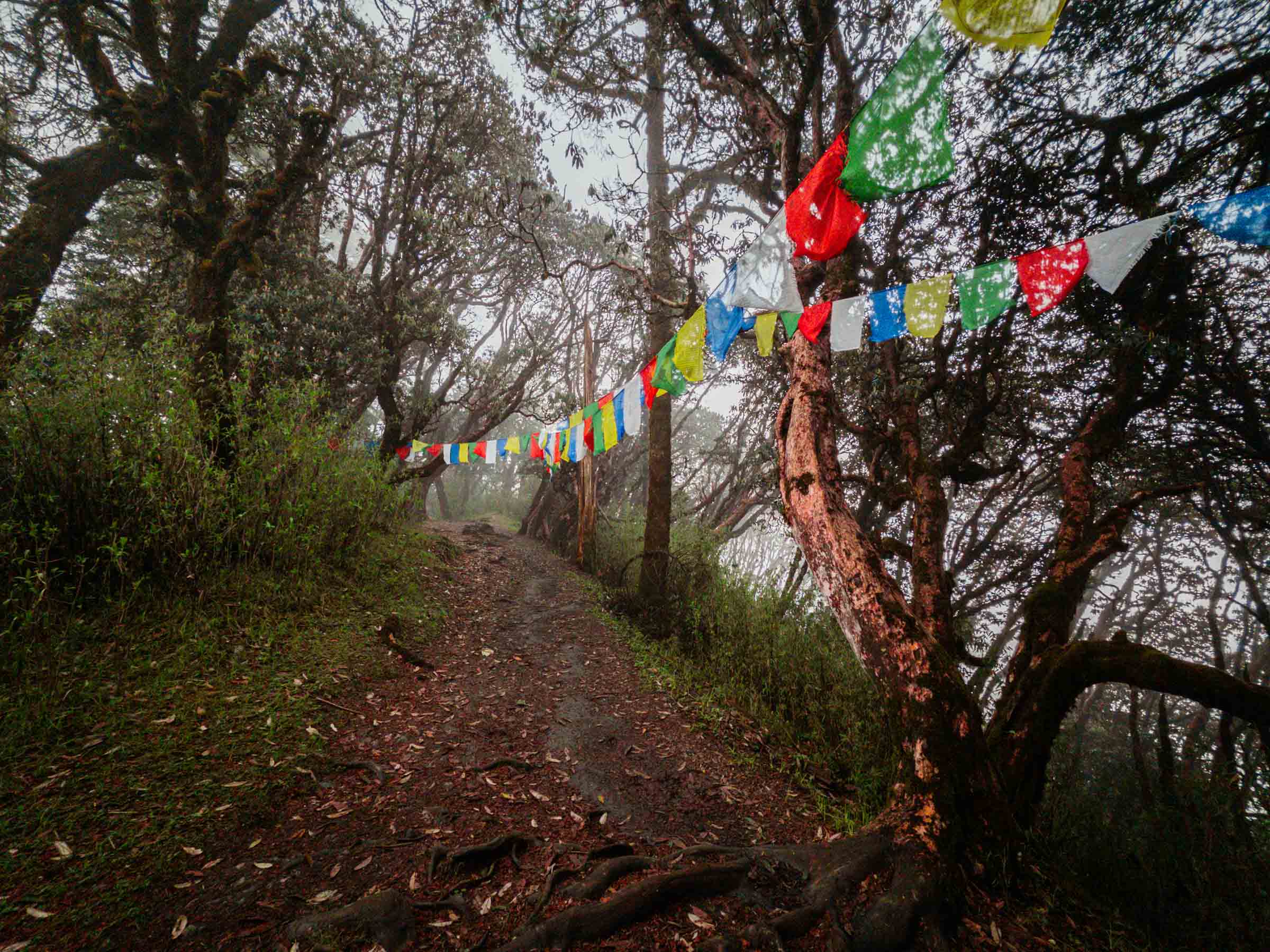
We walked steeply downhill along a creek and a series of seeps and cascades.
Having learned our lesson the previous day, we reached the Tadapani teahouse minutes before the regularly scheduled afternoon monsoon. The shared toilets were nasty, the shower was cold and dirty, and I’d left my towel at Ghorepani and had to dry off with a pillowcase. I would’ve felt cleaner if I was camping. This was the low point of the trek for me. I kept telling myself, two more days until white fluffy towels and flush toilets…
Day 3: Down to Ghandruk #
We left the primitive Tadapani hostel in the morning. Emily was getting fed up with the trek’s sanitation—the toilets, plus all the manure left on the trail by donkeys and water buffalo. By contrast, I turned a corner emotionally and I was having a good time.
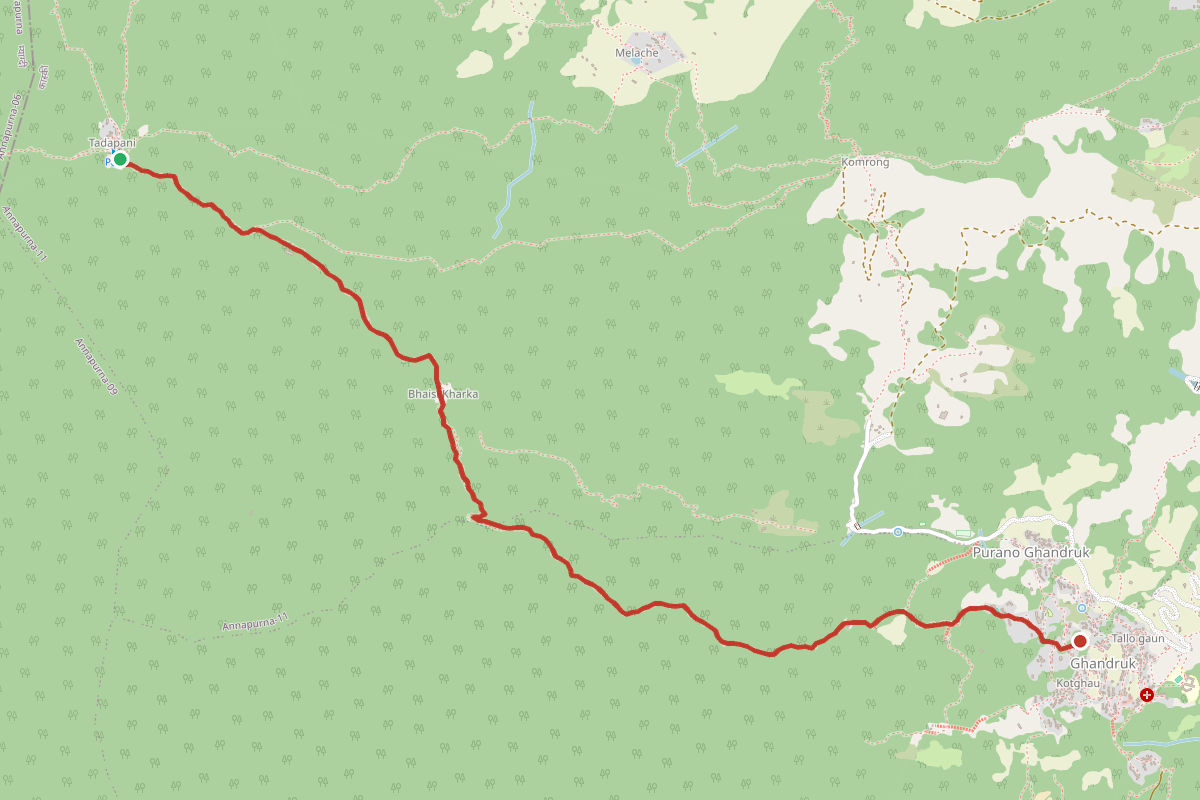
Tadapani to Ghandruk. 3.7 miles, 50 ft up, 2,050 ft down, 2h 54m.
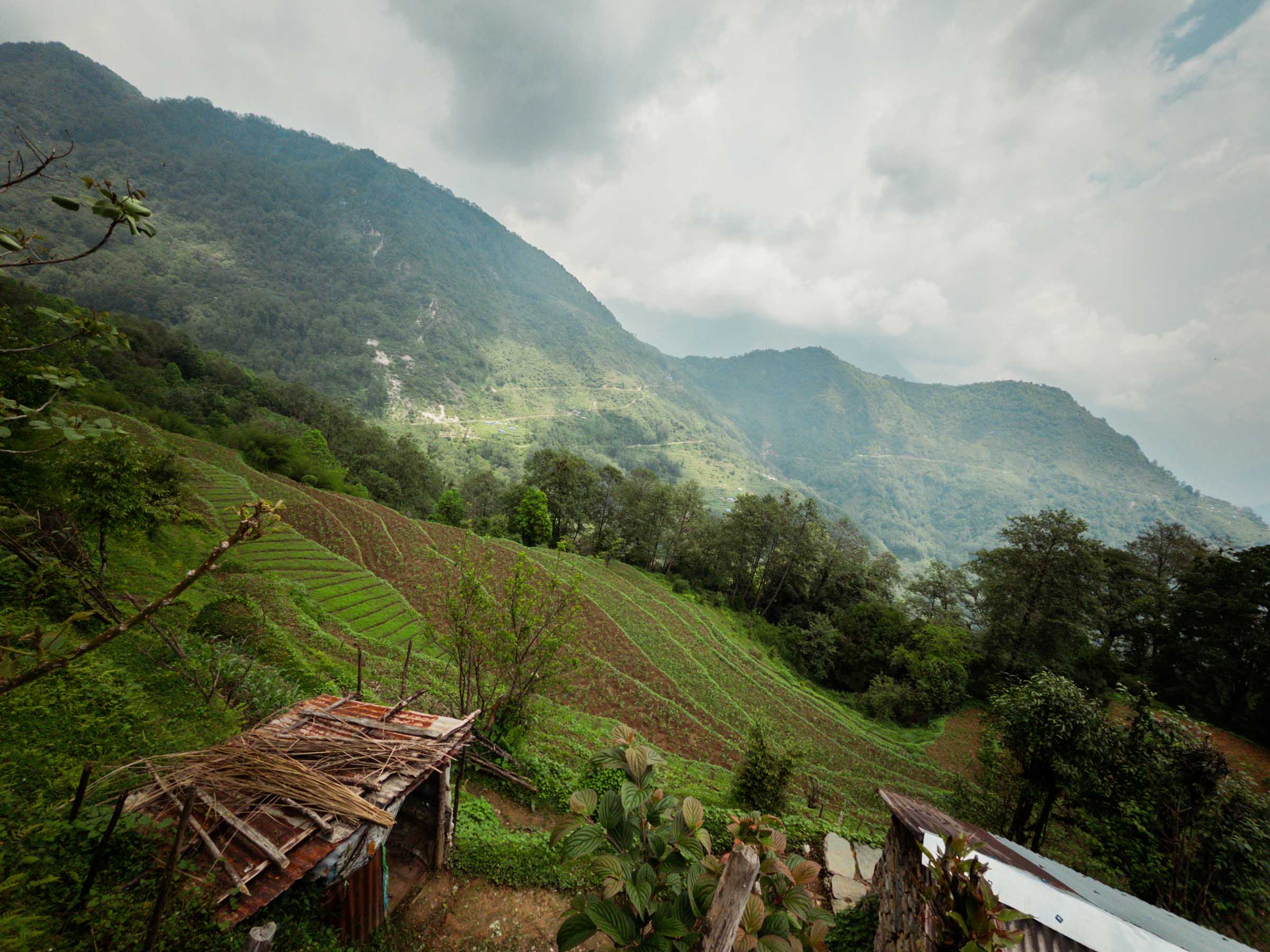
The trail to Ghandruk.
We reached a comparatively nice multistory hotel in Ghandruk before the inevitable afternoon rain. We each had a flush toilet and hot shower en suite, with a towel provided, a day earlier than I expected! In the evening we watched the peaks appear and disappear as storms passed, until a busload of shouting Bengali tourists arrived and broke the quiet.
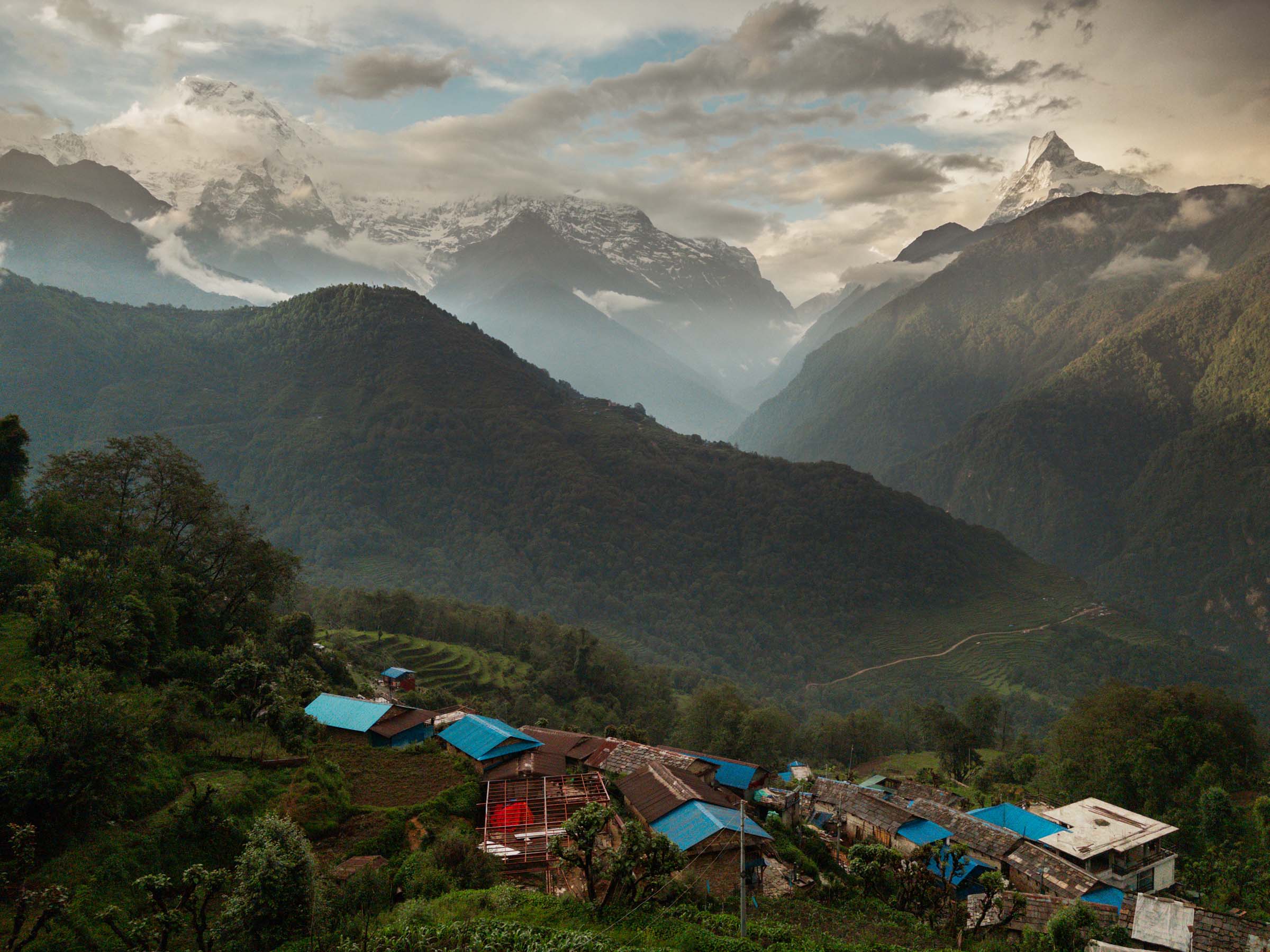
Ghandruk.
Day 4: Ghandruk to Kilu, and a blessing #
We walked around Ghandruk at dawn. It has traditional stone huts, and everyone was coming out early to burn incense at their home altars and start the day. Teams of donkeys carried rocks uphill for some construction project, then came downhill with empty saddle packs.
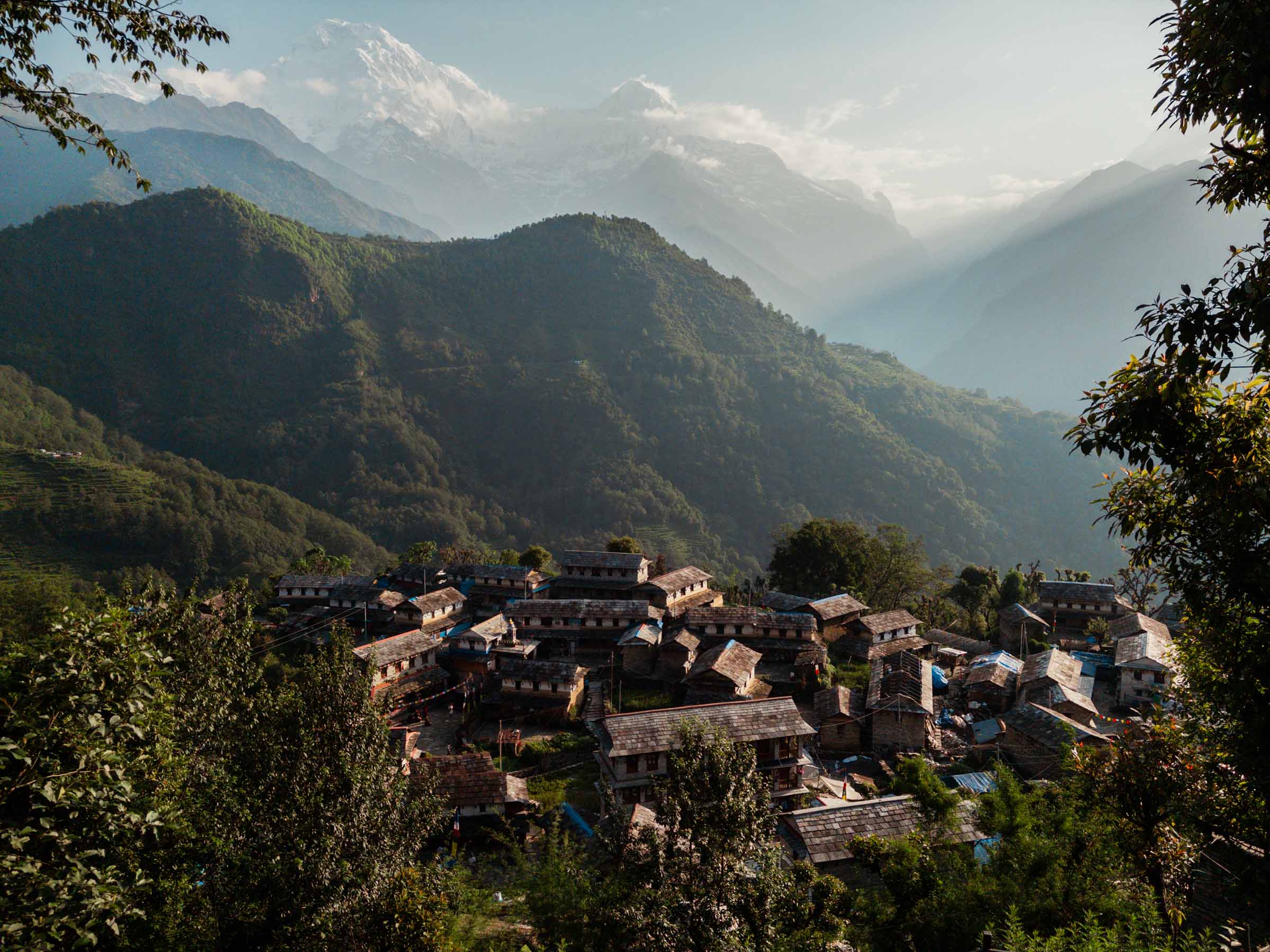
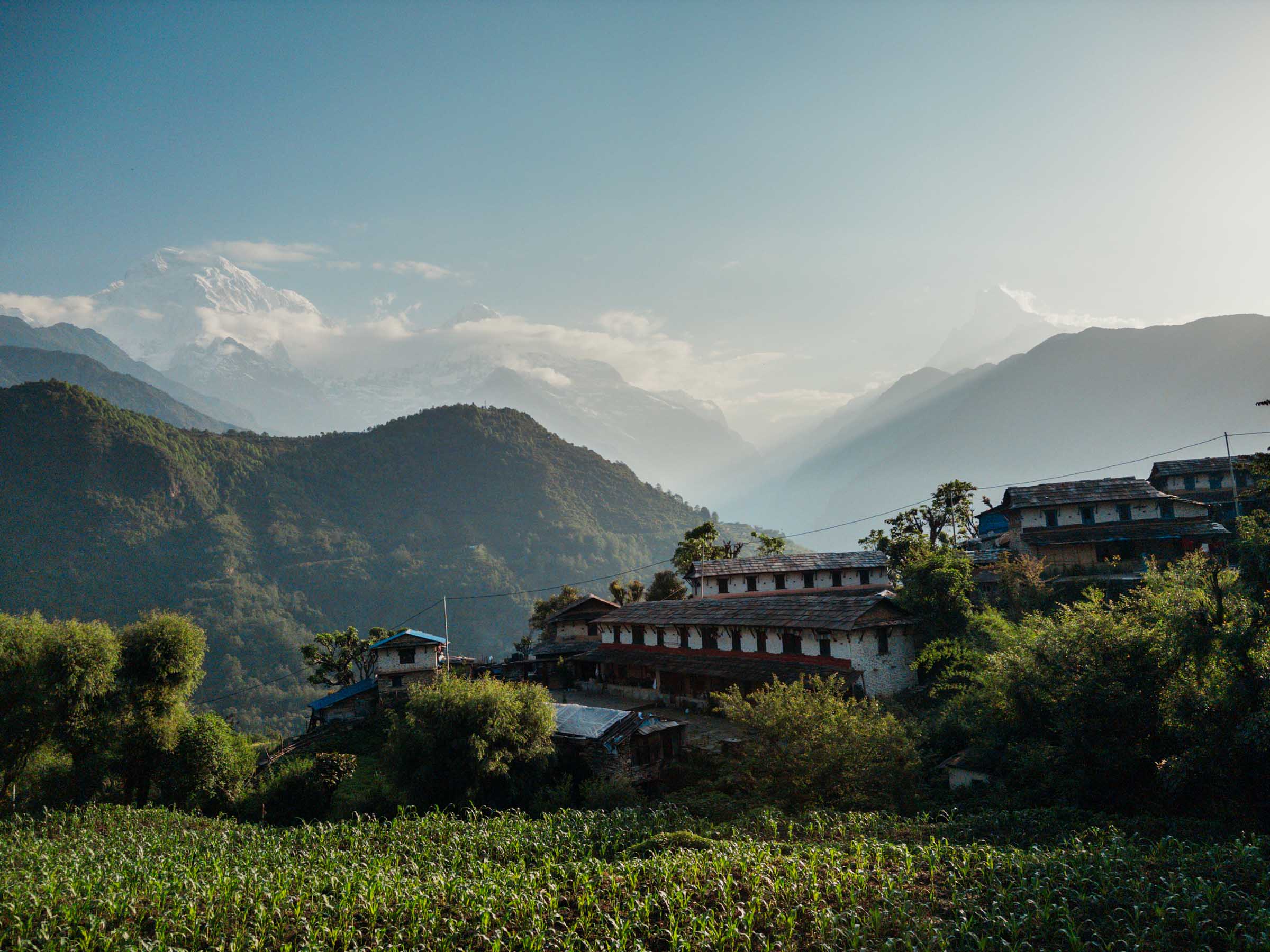
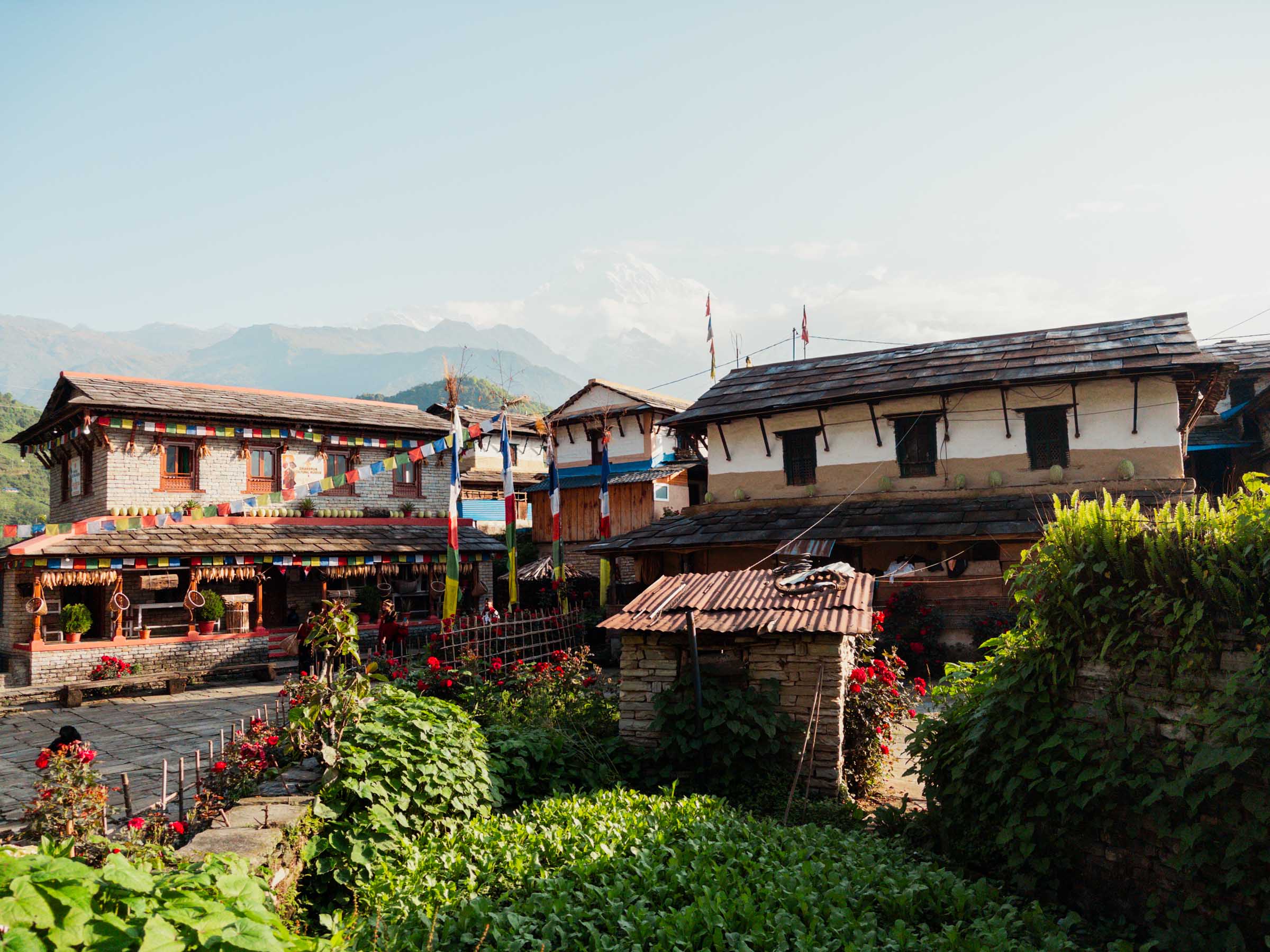
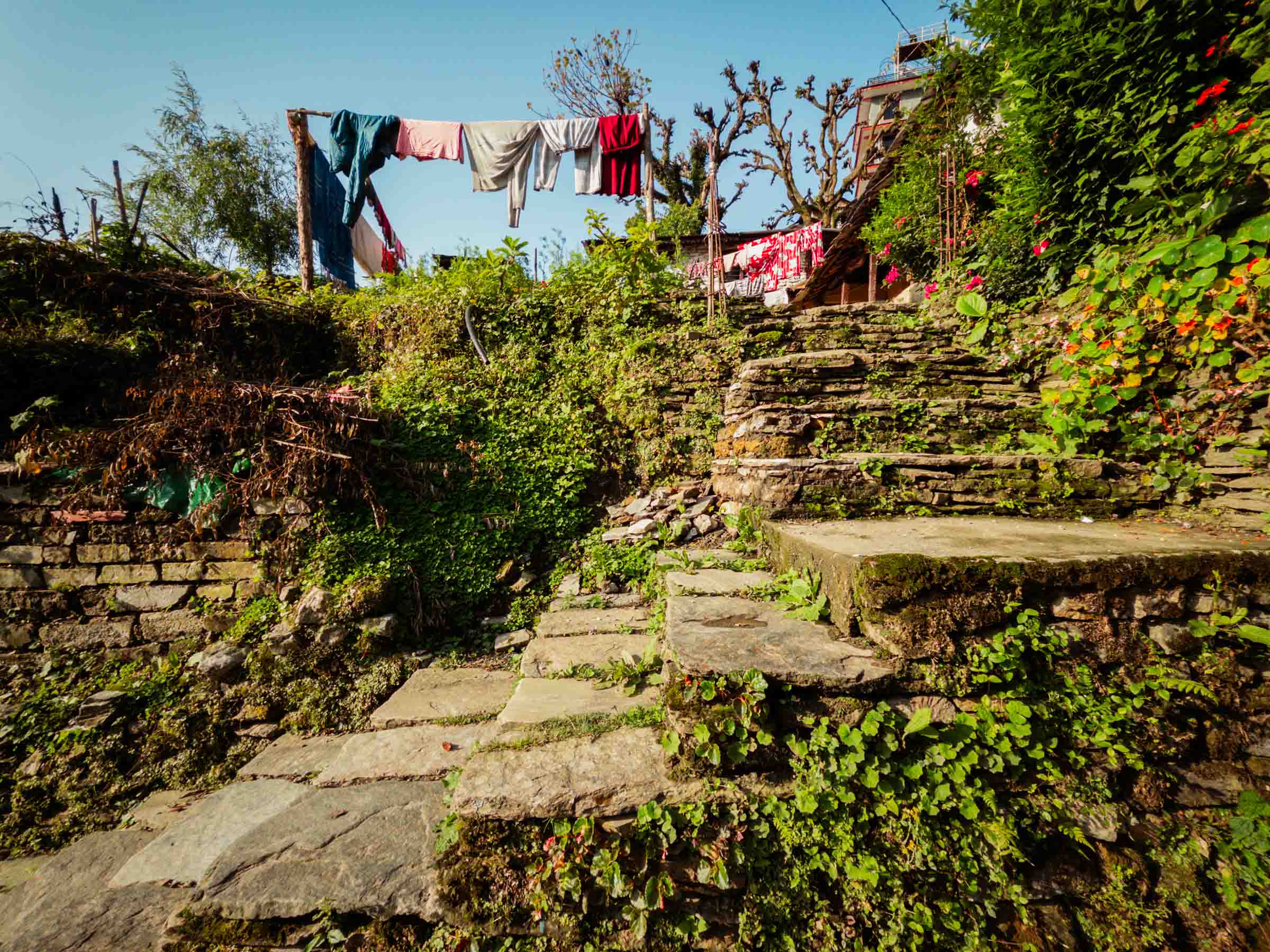
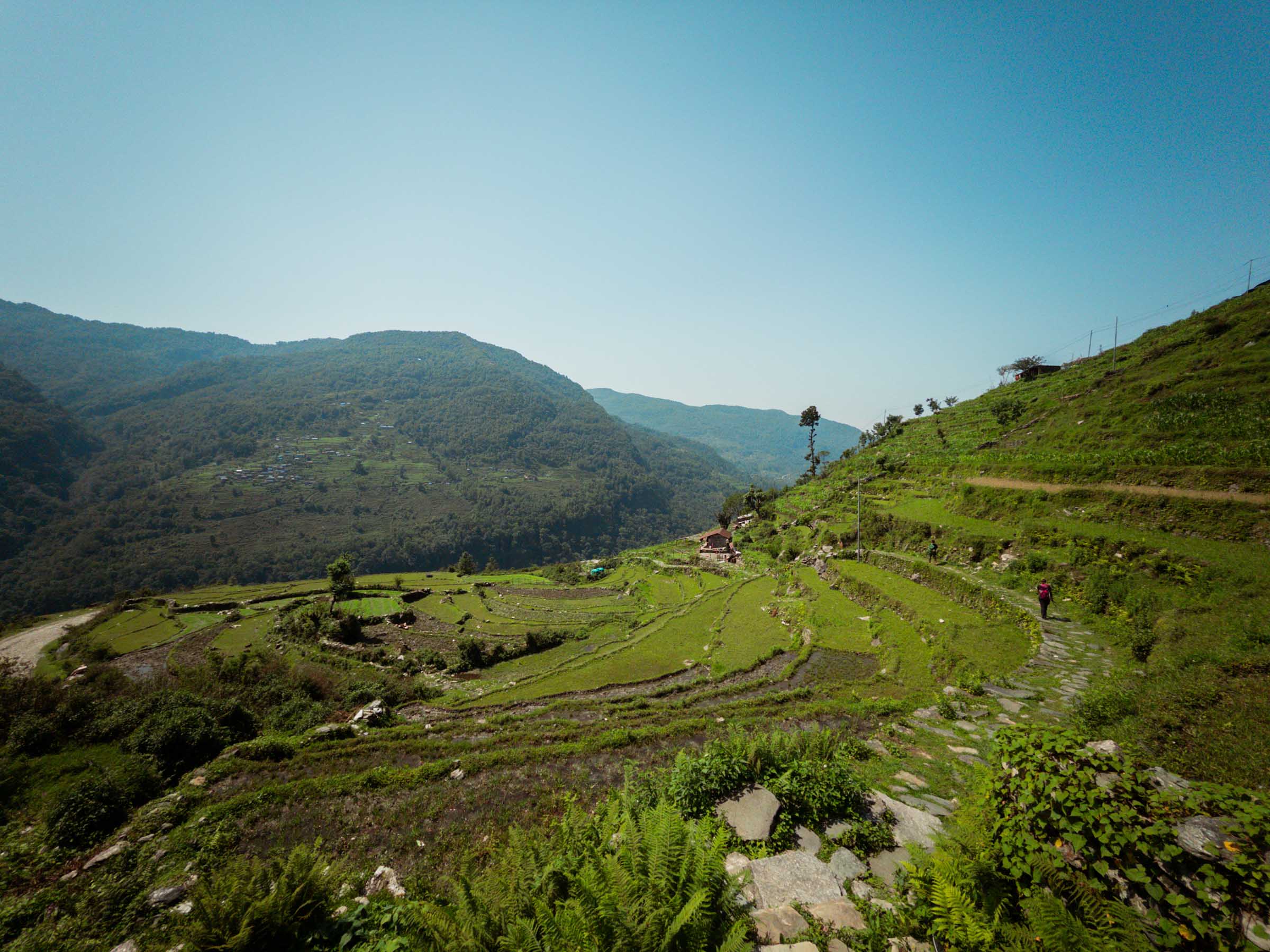
After breakfast we walked downhill, 3.5 miles horizontally and nearly half a mile vertically, mostly on stone steps. There were miles of stone steps: I can’t believe the effort these people expend building them. We were traveling on their work of art. The variety of stone colors and textures was a pleasure to watch passing beneath my feet.
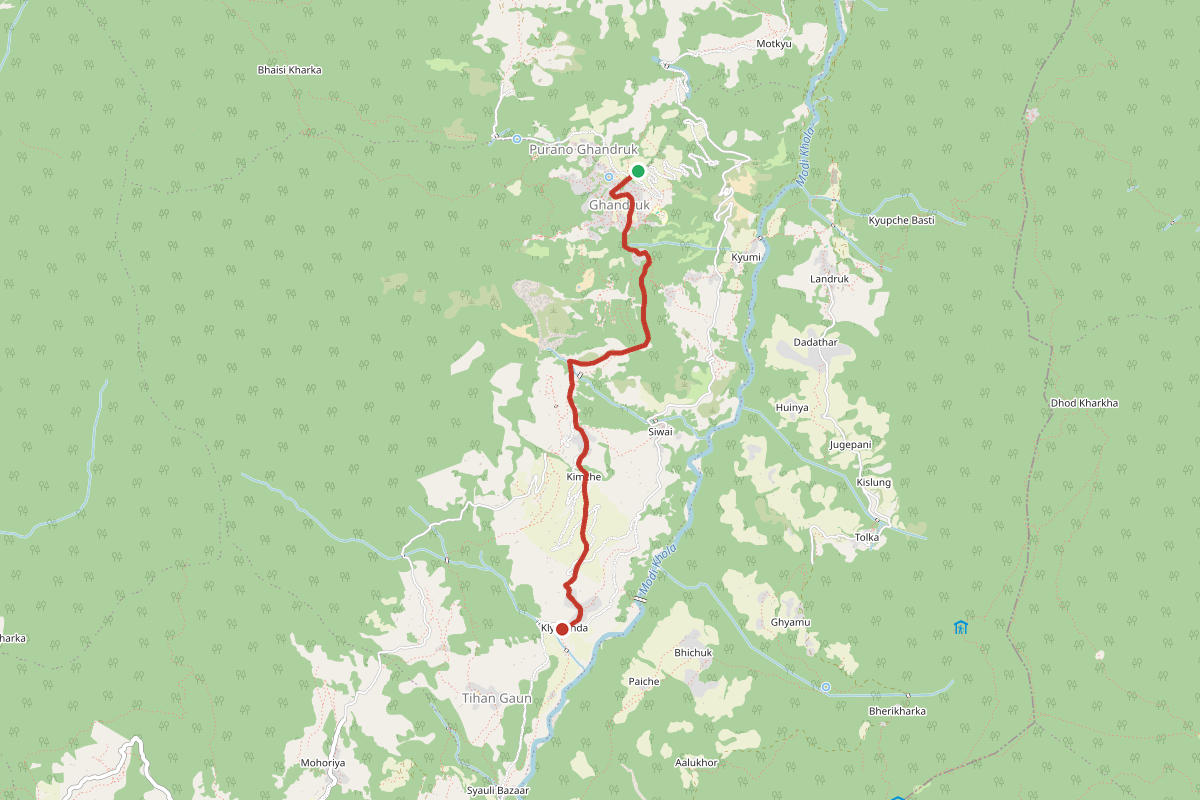
Ghandruk to Kilu. 3.5 miles, 0 ft up, 2,300 ft down, 1h 46m.
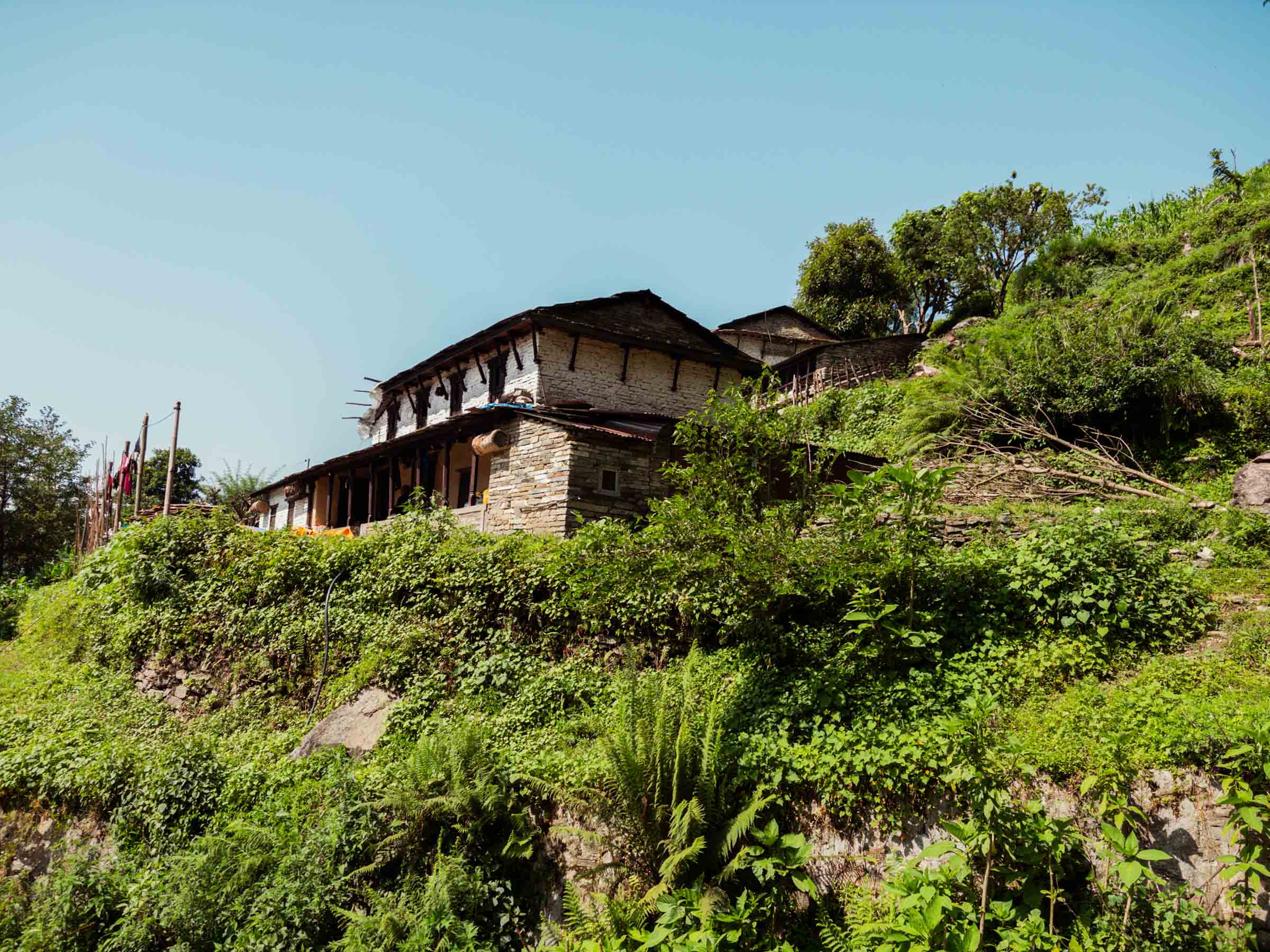
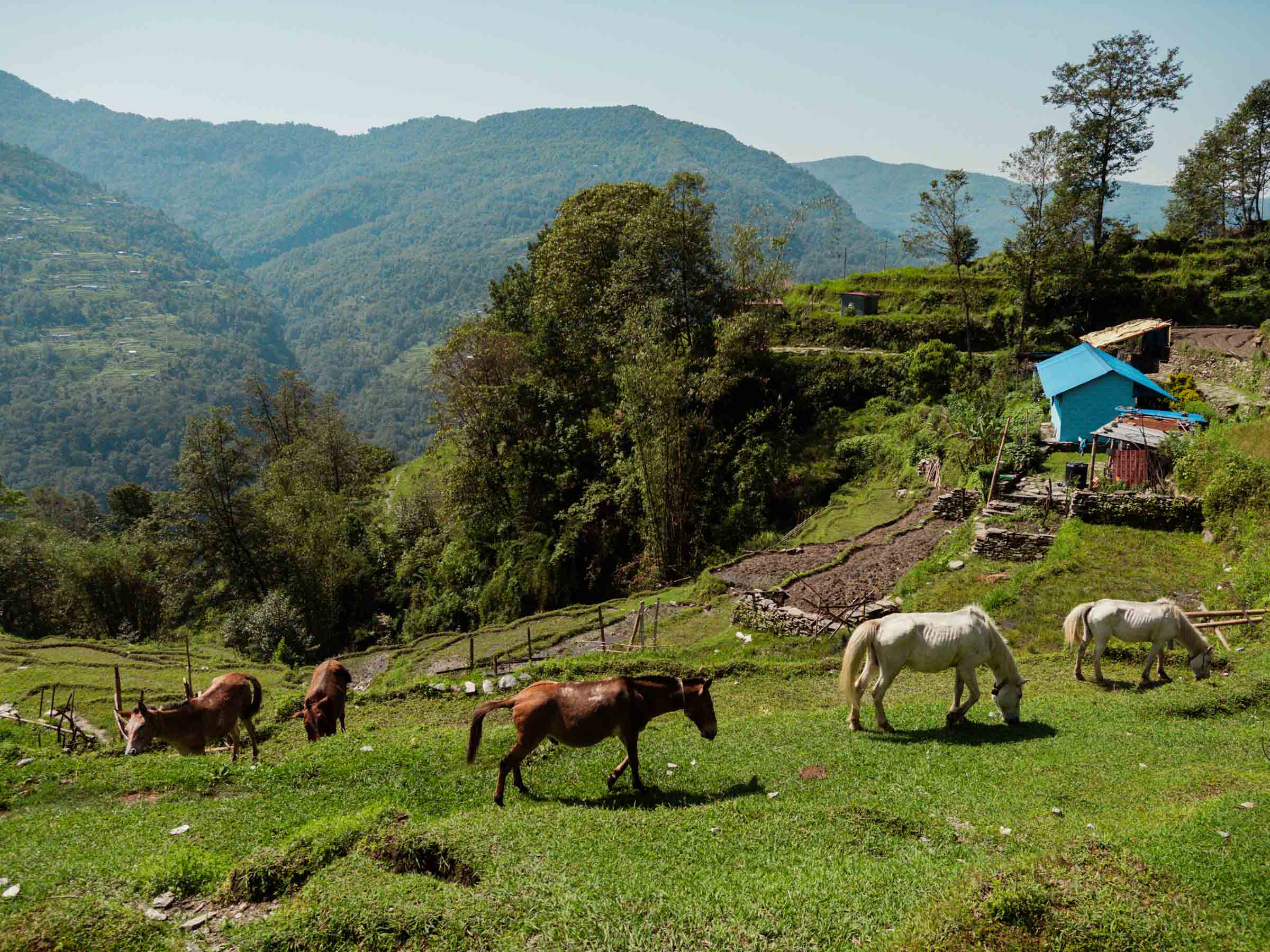
For the first time we were in farmland. I was fascinated by the houses and terraced fields.
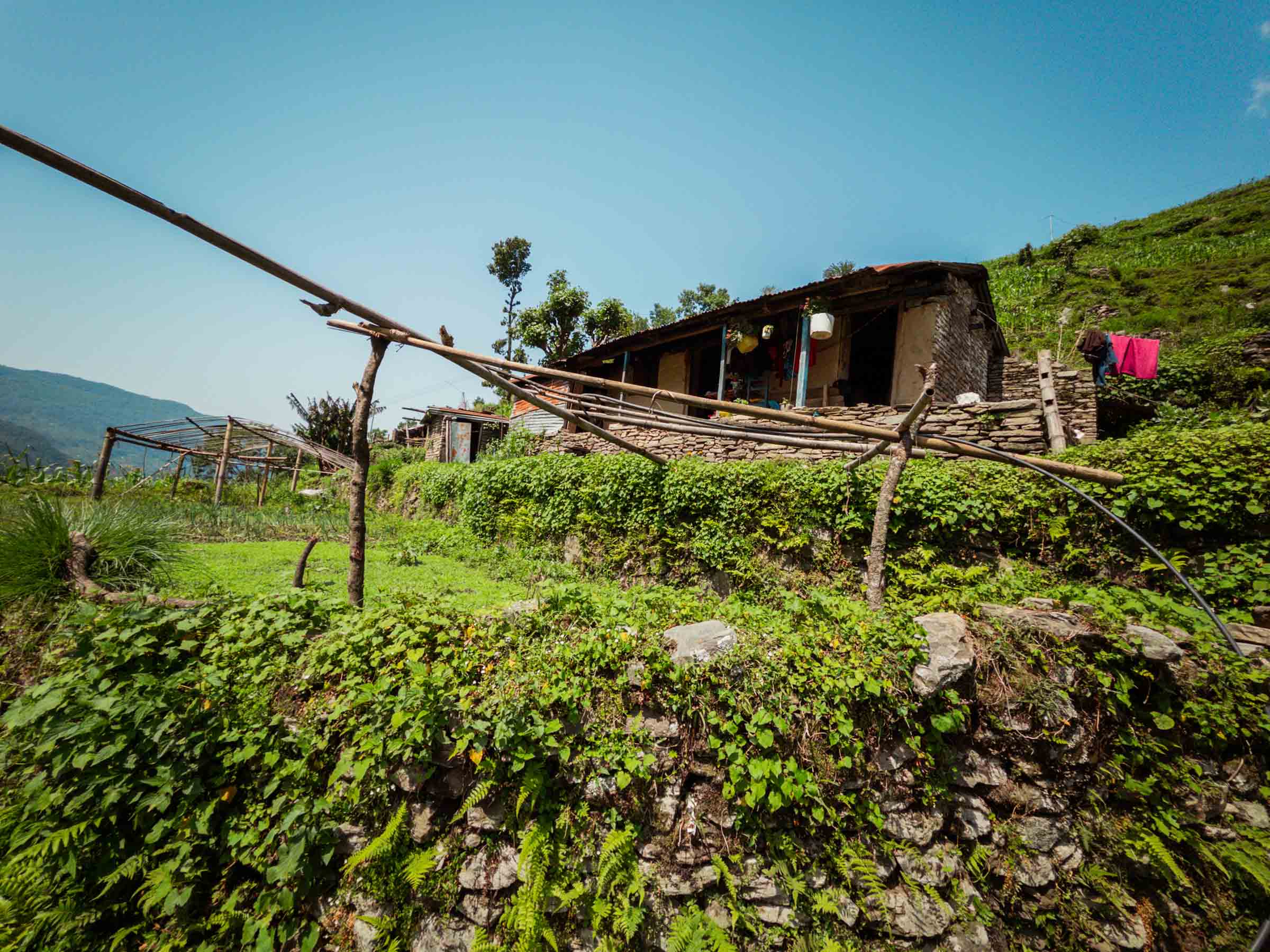
A man was plowing his terraces with a team of two water buffalo, doing an intricate turn at the end of each narrow strip on the hillside. That might have been the best part of the whole trek for me, because I was finally seeing normal people going about their lives.
In Kilu we stopped walking and a car picked us up. On the way we stopped at the Pema Ts’al Sakya Monastic Institute, a Tibetan Buddhist school. The junior abbot gave us a personal half-hour dharma talk, which I would’ve titled “Buddhism for white idiots”: do good, avoid evil, control the mind. I told him I’m Buddhist and tried repeatedly to interrupt with questions and get him onto a more interesting track, but he was determined to stick with the basics. Then he gave us a Vajrakilaya blessing with a sacred phurba dagger to remove negativity, so that was fun.
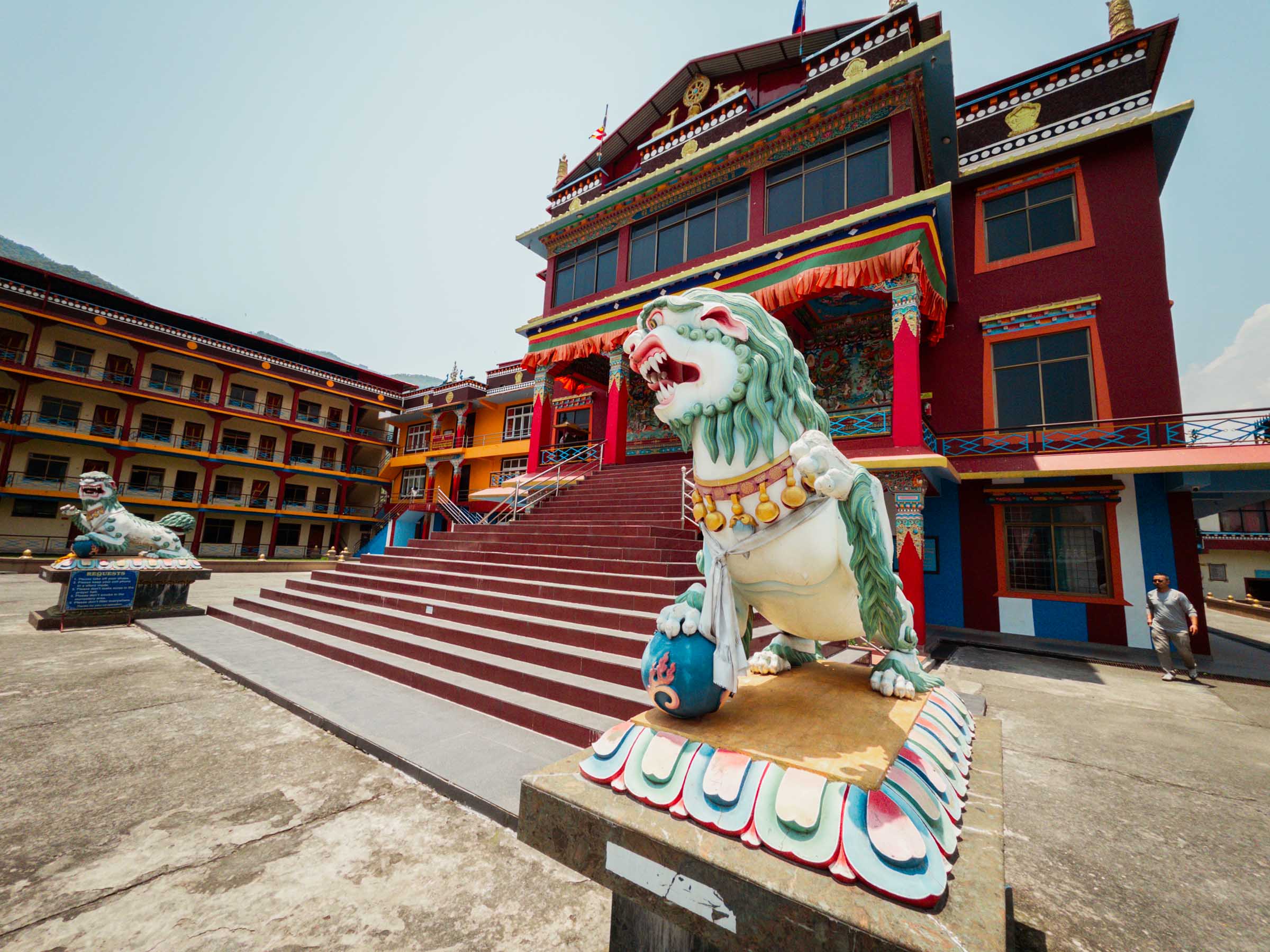
Pema Ts’al Sakya Monastic Institute.
We finished our car ride back in Pokhara, Nepal’s second-biggest city, at an absurdly nice spa hotel, still in our dirty clothes. Emily and I said goodbye to Bijaya. We walked along the lakeshore at sunset. There’s a fake Disneyland with bumper cars and a little ferris wheel, and masala chai sellers by the lake, and kayakers on the water.
The next day we returned to Kathmandu. Then I flew to Bengaluru for a conference and Emily embarked on a longer, more remote trek.
Advice #
If you’re going to do this trek or one like it, I have some advice.
Use Lonely Planet Journeys to book your trip while you’re still at home, or use Aarya Village travel agency directly. They will arrange intra-Nepal air travel, cars, guides, hotels, and so on. Start booking far in advance; if you’re in the US then the timezone difference means you can exchange only one pair of emails a day.
I found a helpful trip report and packing list on this blog.
I wish we’d budgeted more time in Pokhara for thrills like paragliding and an ultralight flight, though perhaps the late May monsoons would have precluded these activities.
In the monsoon season, start early each day and find shelter by 2pm. Plan to get wet anyway.
My packing list:
- Water-resistant hiking boots—my La Sportiva Ultra Raptor 2s are a few years old but they were champs. I’ll definitely get another pair of these when mine die.
- Hiking backpack—my 65L Mystery Ranch Bridger was twice as big as I needed, but I liked having its padded hip belt and convenient front pockets.
- Rain jacket, 5L dry bag for all my possessions inside my pack, rain cover for the outside of my pack, Ziploc bags for phone and wallet.
- Two T-shirts, zip-away hiking pants with elastic belt, lots of socks.
- Many handkerchiefs.
- Puffy coat, warm hat—I needed them sometimes when we weren’t walking. The tea houses are not heated.
- Pajama pants for evenings.
- Sunglasses, sun hat, sunscreen, chapstick.
- Watch.
- Phone—we had cell service most of the time, and Wi-Fi at most of the teahouses. I didn’t bring a separate camera, which saved weight and kept my photography quick and casual.
- Phone charger and travel power adapter (though the Nepali sockets all seem to be promiscuous orifices that will accept any plug).
- Wallet, passport.
- Toothbrush and toothpaste, floss, face wash.
- Camp soap—I used it in the shower. I planned to wash some clothes in the sink but didn’t bother, and the sinks were usually shared so it seemed rude.
- Camp towel, which was helpful until I lost it. Most teahouses do not provide towels.
- Melatonin, ear plugs, eye mask.
- E-reader with a few books loaded.
- Mini first aid kit, Band-Aids, blister pads, nail clippers.
- 2L hydration bladder.
- Water disinfectant tabs for use in the bladder.
- LifeStraw bottle as a convenient supplement to the bladder and tabs.
- Headlamp for pre-dawn walking and unlit bathrooms.
- Hand sanitizer, wet wipes.
- Starbucks instant coffee packets—very useful, the coffee on the trail was unreliable, but I could get hot water on demand.
- Imodium—I didn’t use it! I strictly decontaminated all the water I drank and I didn’t get sick, for which I’m thankful.
I brought but didn’t need:
- Wool leggings and warm wool shirt—it wasn’t that cold in late May. I didn’t bring a sleeping bag and I didn’t miss it, but I hear it’s necessary earlier in the season.
- Protein bars—I didn’t eat them, we passed teahouses every few hours.
- Camp utensils and pocket knife—I didn’t use them.
I wish I’d brought:
- Flip flops!
- Itch cream for bug bites.
- Dirty laundry bag to separate the clothes that had become disreputable.
- Good trekking poles. I’m very grateful Emily convinced me to buy a pair in Kathmandu before we started the trek. I’d never used poles before, but some steep and wet sections would be hard or a bit risky without them. The poles I got from the Kathmandu gear shop were crummy knockoffs; it would’ve been better to get a good pair in the US.